Want to write software for a living in France? What the job covers, which diplomas and State titles lead to it, the skills French employers test, what it costs to train, and how an international student moves from a first class to a first contract.
What does a software developer do in France?
One profession, many job titles, and four types of employer.
In French job listings you will meet many names for the same core work: développeur, concepteur développeur, développeur full stack, ingénieur d’études et développement, analyste programmeur. France Compétences, the national body that registers professional certifications, groups them under the job code ROME M1805, Études et développement informatique (software design and development).
The official sheet for the State title Concepteur développeur d’applications (RNCP37873) lists the jobs it leads to: application developer, back-end, front-end or full-stack developer, mobile application developer, web and web mobile developer, design and development engineer, and analyst programmer. It also names the employers:
- Digital services companies (entreprises de services numériques, ESN), which place developers on client projects;
- Software vendors that build and sell their own products;
- Private or public organisations with an in-house development team;
- Self-employment as an independent developer.
Day to day, the work follows the three competency blocks of that title: develop a secure application, design and build a secure application organised in layers, and prepare the secure deployment of an application. In plain terms, you write the interface and the business logic, you model and query the data, you test, and you ship to a server or the cloud.
Is there demand for software developers in France?
Yes. Europe-wide data shows a large workforce and persistent recruiting difficulties.
The European statistics office gives the clearest picture. According to Eurostat (data extracted in April 2026), the EU employed more than 10 million ICT specialists in 2025, 5.0% of total employment, and France accounted for about 1.4 million of them, 13.7% of the EU total. In 2025, 68.8% of EU ICT specialists who reported their education level had completed tertiary education, and 19.5% were women.
Recruiting remains hard. Eurostat’s survey of enterprises shows that in 2023, 9.55% of EU enterprises recruited or tried to recruit ICT specialists, and 57.5% of those reported vacancies that were hard to fill. Eurostat does not publish a reliable French figure for that indicator, so treat it as a European signal rather than a French statistic.
Which diplomas lead to a software developer job in France?
Five routes, from a three-year degree to a master’s level title.
France does not have a single entry door. The RNCP sheet for Concepteur développeur d’applications lists six ways to obtain the title: after a course as a student, through an apprenticeship contract, through continuing education, through a professionalisation contract, by individual application, or by validating experience (VAE). What employers look for is a recognised level and proof that you can ship working code.
Campus France reminds students that the State guarantees the value of a diploma when it is a national diploma, a diploma approved by the Ministry, or a title registered in the RNCP. The level (5, 6 or 7) tells you where it sits: level 6 is bachelor’s level (EQF 6), level 7 is master’s level (EQF 7).
| Route | Length | Who it suits | What to know |
|---|---|---|---|
| Bachelor universitaire de technologie (BUT) at a public IUT | 3 years, six semesters | School leavers | Offered by university institutes of technology (IUT) in 24 specialties; 22 to 26 weeks of internships; check the teaching language; €2,902 a year for non-EU students in 2026-27 |
| Licence (national bachelor’s) in computing | 3 years, 180 ECTS | School leavers | Check the teaching language; €2,902 a year for non-EU students in 2026-27 |
| State title Développeur web et web mobile (RNCP37674) | Set by each training provider | Learners in training, apprenticeship, continuing education or through experience (VAE) | Level 5; two blocks: front-end and back-end of a secure web or mobile application |
| State title Concepteur développeur d’applications (RNCP37873) | Set by each training provider; often a final bachelor year | Varies by provider; at AI2, two years of higher education in computing | Level 6 (EQF 6); certifier: Ministry of Labour; registered until 18 December 2028 |
| Master’s or master’s-level title (national master’s, engineering degree, RNCP level 7) | Usually 2 years after a bachelor’s (120 ECTS for a national master’s) | Bachelor’s graduates | Leads to engineering and architect roles; opens the talent permit for qualified employees |
Which skills do French employers test?
The official competency blocks are the best guide.
The competency blocks of RNCP37873 are a good checklist because certification juries assess exactly these points. Expect technical tests and portfolio reviews built around them:
Build a secure application
Design a layered application
Prepare deployment
Three things separate candidates who get interviews from those who do not:
- A public portfolio: two or three projects that are deployed and that a recruiter can open, with a readme that explains your choices;
- Version control habits: clean commits, pull requests and code review, because every team works this way;
- AI-assisted development used responsibly: knowing how to integrate a language model or an agent into an application, and how to check what an assistant writes, is now part of many job descriptions.
How to become a software developer in France as an international student: seven steps
- 1Choose your entry pointWith a secondary-school certificate, start a three-year bachelor’s. With two years of higher education in computing (HND, BTEC Level 5, BTS or two years of a BSc), aim for a final bachelor year that prepares a level 6 title. With a bachelor’s, consider a master’s.
- 2Check the language of teachingMany public programmes are taught in French. If you do not speak French, look for programmes taught entirely in English, and add professional French for the workplace.
- 3Check the legal statusFind the RNCP code, level and certifier on France Compétences before you pay a deposit.
- 4Apply early for the visaYou need an admission letter, then a long-stay student visa. Resources of at least €877.50 a month must be shown on top of tuition (Service-Public F2231).
- 5Work alongside your studiesA student permit allows up to 964 hours of paid work a year (Service-Public F2713). A part-time developer or support job counts as experience.
- 6Do a long internshipInternships of more than two months are paid at least €4.50 an hour (Service-Public F32131). In tech, the internship is the most common path to a first contract.
- 7Change status when you are hiredPlan your residence permit before your student permit runs out: the rules depend on the level of your diploma and the salary offered.
Can you stay and work in France as a developer after graduating?
The level of your diploma decides which permit you can request.
Yes, but the permit depends on your diploma level and your salary. Service-Public sets out three main doors (all verified 1 June 2026):
| Permit | Main condition | Source |
|---|---|---|
| Job-search or business-creation permit, one year | A licence professionnelle, a Mastère Spécialisé, a labelled MSc or another diploma at least equivalent to a master’s, obtained in the last 12 months | Service-Public F17319 |
| Talent permit, qualified employee | A diploma at least equivalent to a master’s obtained in France and a gross salary of at least €39,582 a year | Service-Public F16922 |
| Talent permit, EU Blue Card | A diploma covering at least 3 years of higher education (or 5 years of comparable experience), a contract of at least 6 months and a gross salary of at least €59,373 a year | Service-Public F16922 |
The practical lesson: a level 6 bachelor gets you into the profession, and a master’s level diploma gives you more ways to stay. Many developers start working after a bachelor’s and continue to a master’s later. Our guides to working while you study and working in France after graduation go through each permit in detail.
Do you need to speak French to work as a developer in France?
Not to study, often yes to progress.
Programming languages, documentation and much technical material are in English, so you can study and start working with good English. French still helps: depending on the company, client meetings, internal tools, administrative steps and the job interview itself may be in French.
A sensible plan is to study in English and take professional French in parallel from your first year. Our guide Do I need French to study in France? explains what each level allows.
How much does it cost to train as a developer in France?
Tuition depends on the type of institution; living costs are set by the visa rules.
| Item | Amount | Source |
|---|---|---|
| Public bachelor’s (licence or BUT), non-EU student | €2,902 a year (2026-27) | Campus France, updated 25 June 2026 |
| Public master’s, non-EU student | €3,950 a year (2026-27) | Campus France, updated 25 June 2026 |
| Private higher education institution | About €6,000 to €18,000 or more a year | Campus France, updated 25 June 2026 |
| AI2 Bachelor in Applied AI, Years 1 and 2 | €9,000 a year, AI2 scholarships possible | AI2 tuition fees, read 29 October 2026 |
| AI2 final bachelor year (RNCP37873 or RNCP41370) | €9,900, AI2 scholarships possible (excellence, early application) | AI2 tuition fees, read 29 October 2026 |
| Living costs to show for the visa | At least €877.50 a month, €10,530 for 12 months | Service-Public F2231, verified 1 August 2026 |
Compare total cost, not tuition alone: a programme with a paid internship or a work-study option reduces the real price, and an English-taught route avoids a preparatory year of French. Full detail on AI2 tuition fees.
AI2’s route to software development, taught in English
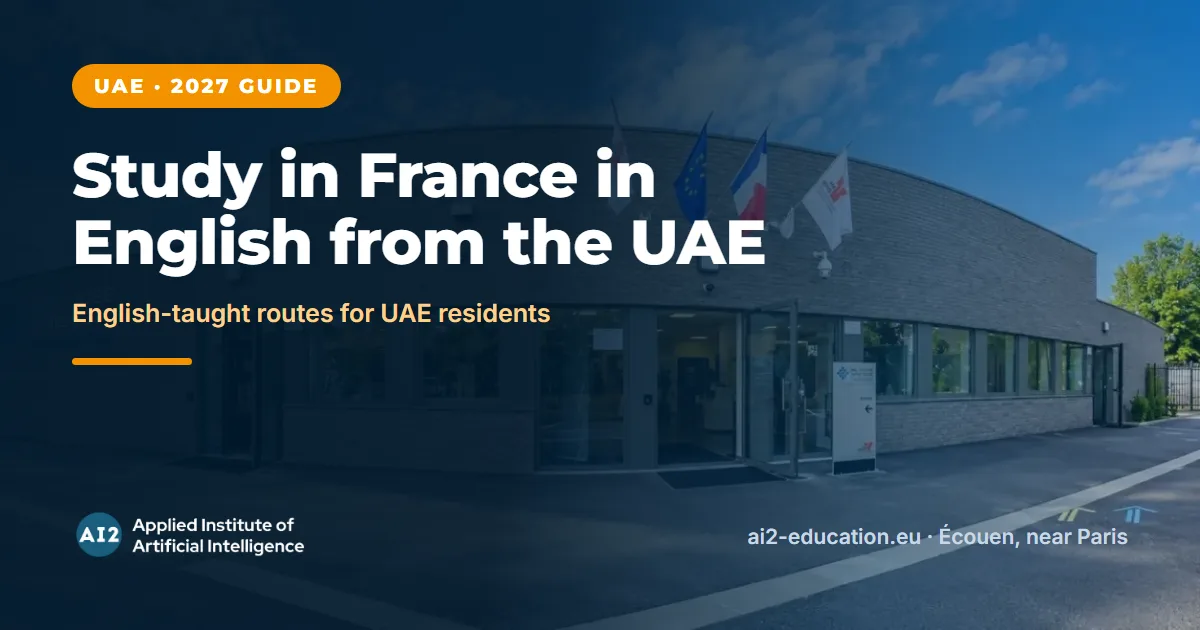
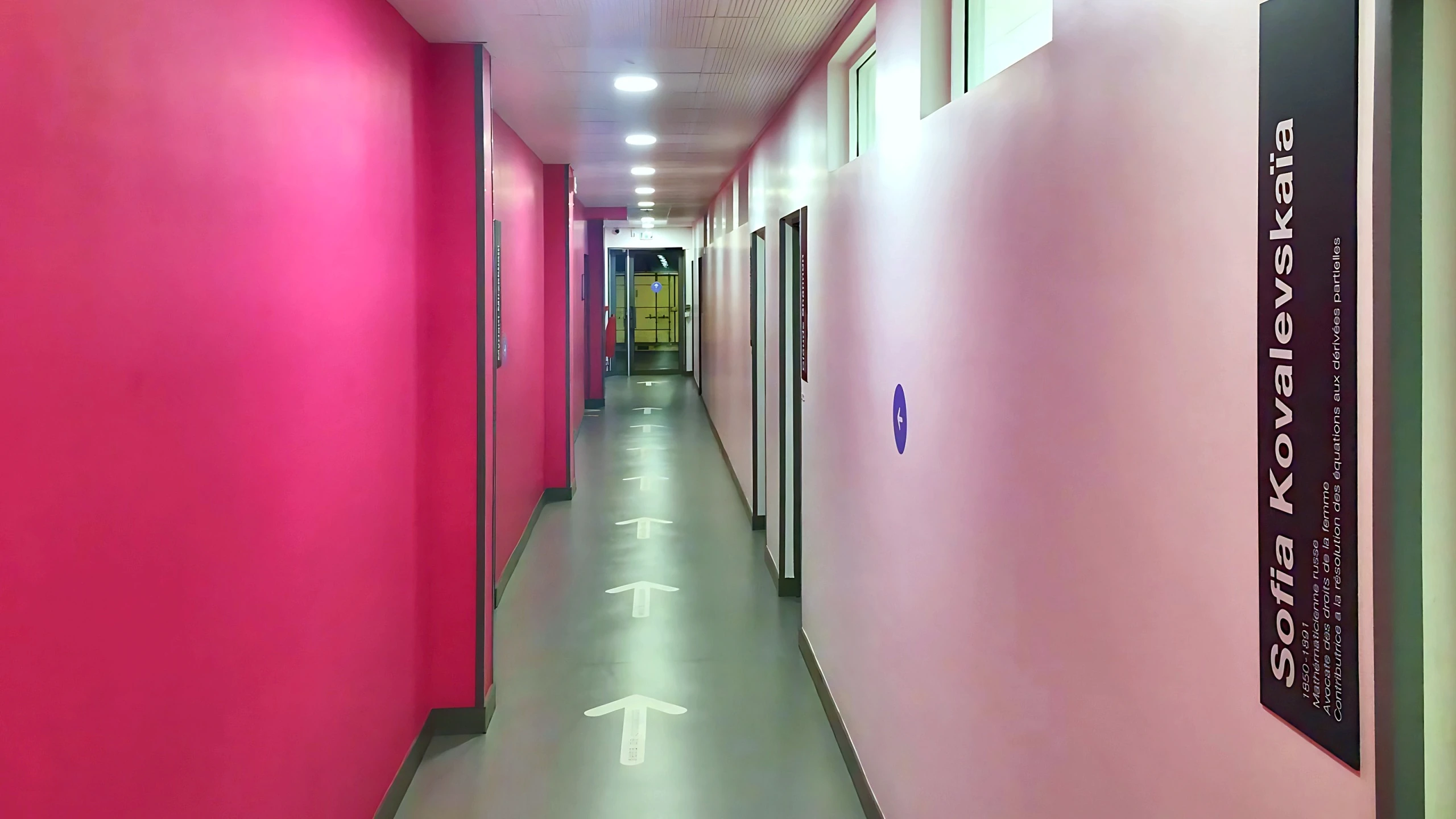
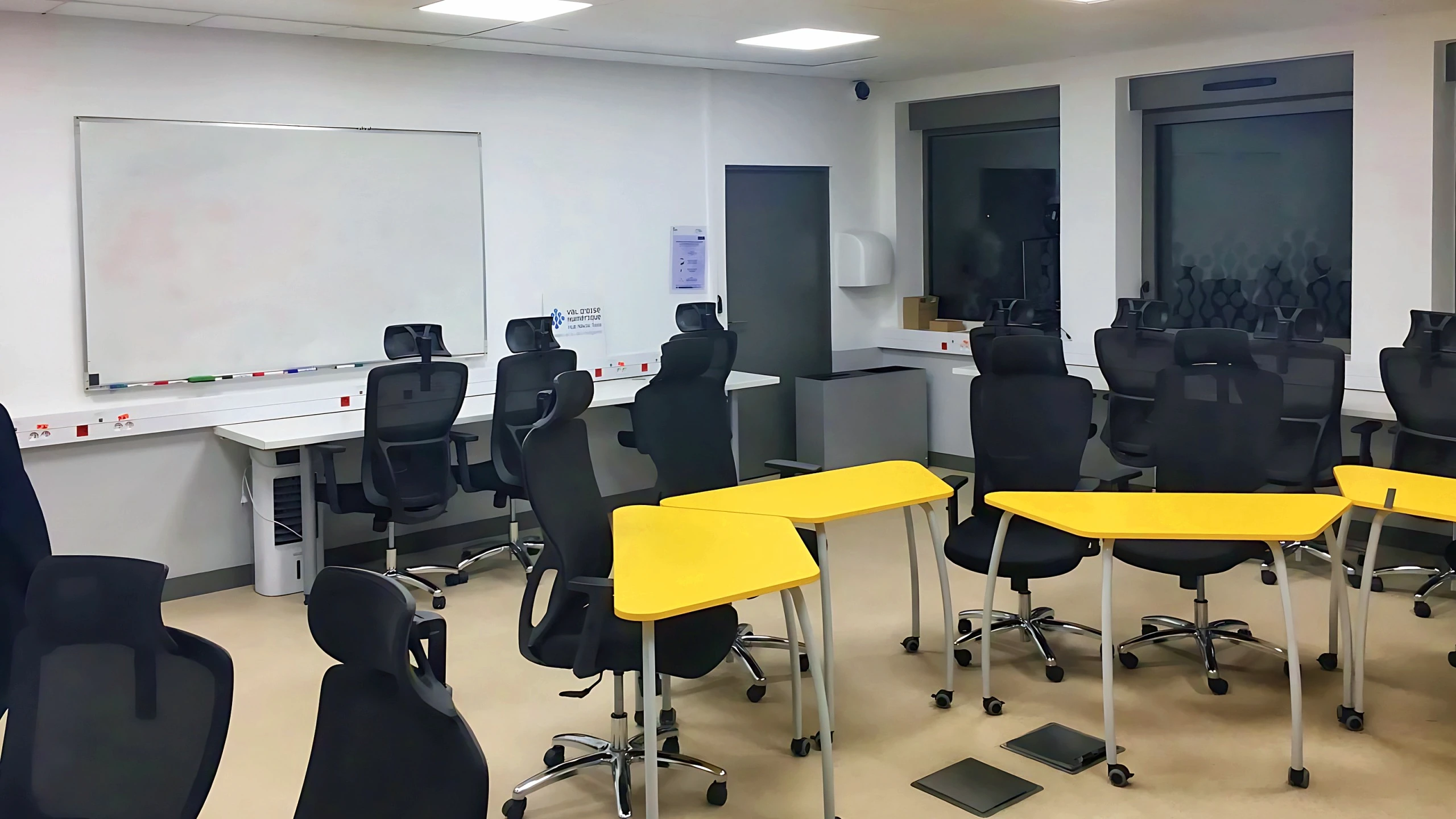
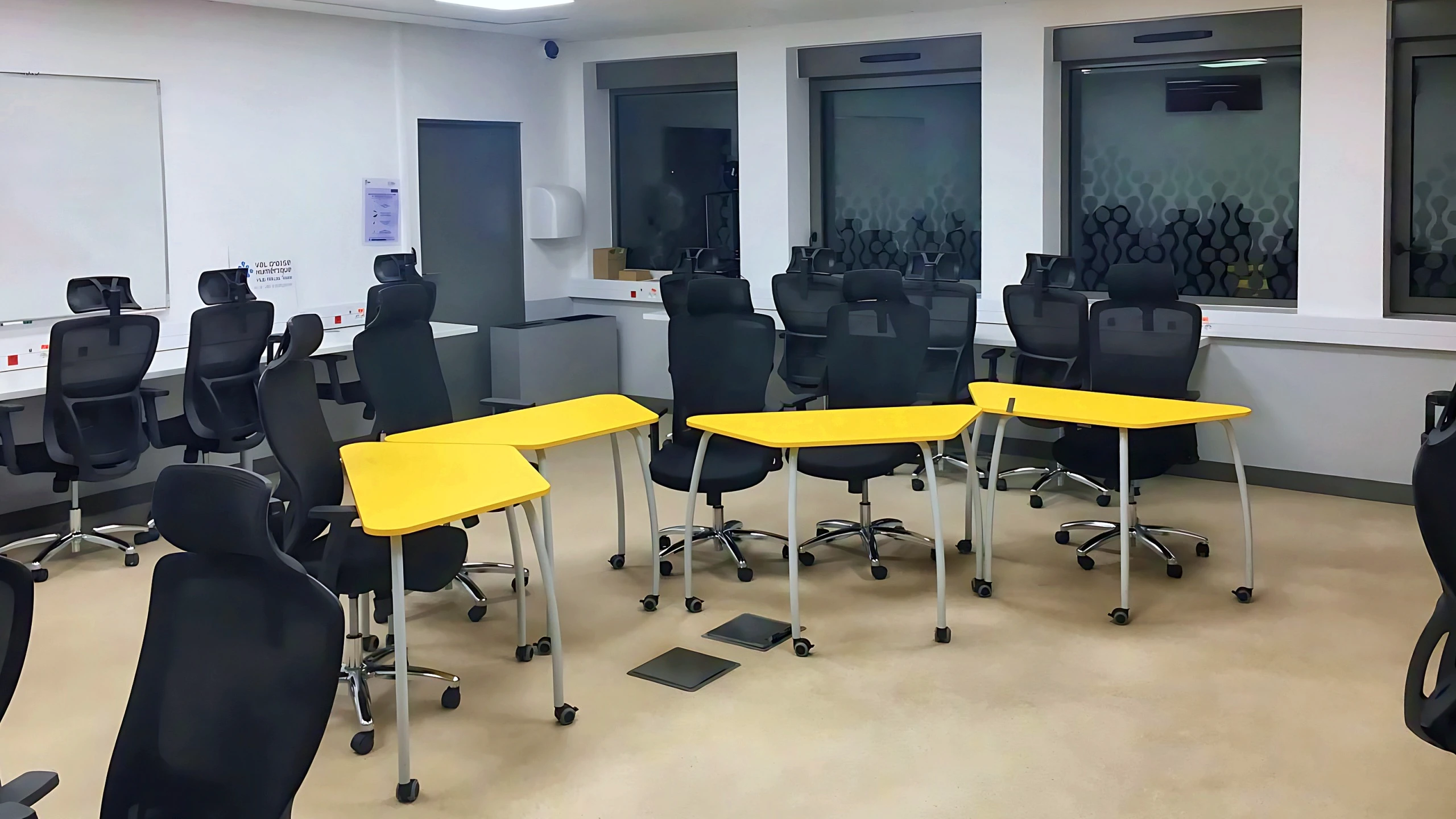
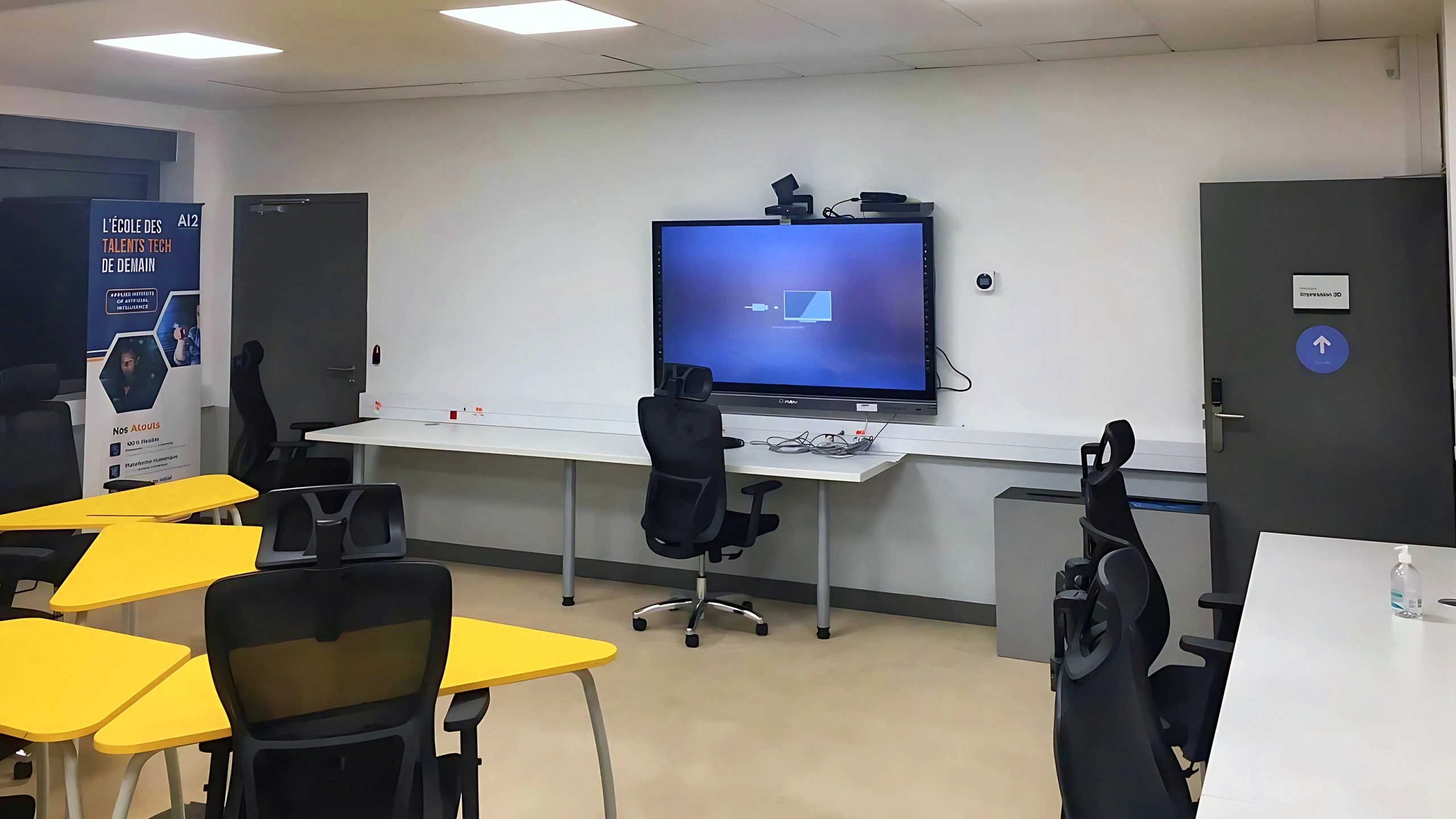
AI2, the Applied Institute of Artificial Intelligence, trains developers on its campus at the Hub Nikola Tesla in Écouen, 22 minutes from Paris Gare du Nord by Transilien line H. The Bachelor in Applied AI lasts three years and is taught 100% in English, with no French required for admission.
| Year | What you do | Detail |
|---|---|---|
| Year 1, Data & AI track | Foundations in programming, data and AI | 420 hours, 25 subjects |
| Year 2, Applied Data, BI & Cloud | Data, business intelligence and cloud | 350 hours, 21 subjects; work-study possible from Year 2, subject to a contract |
| Final year: BSc AI-Powered Application Development | Build, secure and deploy applications with AI features, then a company placement and the final jury | About 500 hours on campus; prepares RNCP37873, level 6 |
The final year, the BSc AI-Powered Application Development, follows the three official blocks of RNCP37873 (98, 105 and 84 hours), adds a 105-hour specialisation on building with AI (language model integration and retrieval, AI agents in applications, security of AI applications, technical English and portfolio), and a 108-hour project and certification module that includes professional French. It awards the AI2 diploma and prepares the State professional title Concepteur développeur d’applications, registered in the RNCP at level 6 (EQF 6), certified by the Ministry of Labour. Target jobs listed by AI2: AI-assisted full-stack developer, AI application developer, software engineer, web and mobile developer.
- Year 1 entry: Grade 12, A-levels or a baccalauréat with mathematics, and English at B2 (IELTS 6.0, TOEFL iBT 72 or English-medium schooling).
- Final-year entry: two years of higher education in computing, such as an HND, BTEC Level 5, BTS or Years 1 and 2 of a BSc. See our guide to the top-up degree after an HND.
- Selection: file review and an online interview. Intakes in February, May and September 2027.
- After the bachelor: continue to the MSc Applied AI and Data Science, which prepares a level 7 title.
If you are still comparing bachelor’s options, our guide to the computer science bachelor in France in English compares programme types year by year.
Frequently asked questions
Do you need a degree to become a software developer in France?
No single diploma is legally required, but employers look for a recognised level. The State title Concepteur développeur d’applications (RNCP37873) can be obtained through studies, apprenticeship, continuing education or validation of experience, and a bachelor’s or master’s in computing is the most common route.
How long does it take to become a developer in France?
Usually three years after secondary school for a bachelor’s level qualification such as a BUT, a licence or a level 6 State title. With two years of higher education in computing, a single final year can lead to the level 6 title.
What is RNCP37873?
It is the State professional title Concepteur développeur d’applications, registered in the RNCP at level 6 (EQF 6) and certified by the French Ministry of Labour. It covers three blocks: developing a secure application, designing a layered application and preparing its secure deployment.
Can I study software development in France in English?
Yes. Many public programmes are taught in French, but some programmes are taught entirely in English. AI2’s Bachelor in Applied AI and its BSc AI-Powered Application Development are taught 100% in English and do not require French for admission.
Can international students work as developers while studying in France?
Yes. A student residence permit allows up to 964 hours of paid work a year, according to Service-Public. Internships of more than two months must be paid at least €4.50 an hour.
Can I get an EU Blue Card in France as a software developer?
Possibly. Service-Public lists a diploma covering at least three years of higher education, or five years of comparable experience, a contract of at least six months and a gross salary of at least €59,373 a year.
How much does it cost to study software development at AI2?
Years 1 and 2 of the Bachelor in Applied AI cost €9,000 a year and the final year €9,900, with AI2 scholarships possible. Housing, insurance, travel and visa fees are not included, and the visa requires resources of at least €877.50 a month.
Sources consulted on 29 October 2026: France Compétences: RNCP37873, TP Concepteur développeur d’applications · France Compétences: RNCP37674, TP Développeur web et web mobile · Eurostat: ICT specialists in employment (data extracted April 2026) · Eurostat: ICT specialists, hard-to-fill vacancies in enterprises (data extracted June 2025) · Campus France: French degrees, LMD system and equivalences · Campus France: the University Bachelor of Technology (BUT) · Campus France: tuition fees 2026-27 (updated 25 June 2026) · Service-Public: student visa and residence permit, F2231 (verified 1 August 2026) · Service-Public: work for foreign students, F2713 (verified 7 October 2025) · Service-Public: internship gratification, F32131 · Service-Public: job-search or business-creation permit, F17319 (verified 1 June 2026) · Service-Public: talent permit, F16922 (verified 1 June 2026) · AI2: Bachelor in Applied AI · AI2: BSc AI-Powered Application Development · AI2: tuition fees 2027
Apply for February, May or September 2027. AI2’s admissions team reviews your file, holds an online interview and confirms your entry year and tuition in your admission letter. Priority deadline: 30 November 2026.