BSc Data Analytics & Applied AI (Industry 4.0)
Connect industrial equipment and transform production data into supervision dashboards, alerts and AI predictions. The programme focuses on industry, energy and logistics.
BSc final year (top-up) · Industry 4.0
Turn production data into dashboards, alerts and AI predictions
Connect industrial equipment and turn production and operations data into supervision systems, dashboards, alerts and AI predictions for industry, energy and logistics.

In short: the BSc Data Analytics & Applied AI is a one-year, English-taught final Bachelor year (top-up) at AI2 in Écouen, near Paris, focused on Industry 4.0. It prepares the RNCP41370 Level 6 title (EQF 6), certified by the French Ministry of Labour, with 399 hours on campus and a mandatory company placement after the two campus semesters. Tuition is €9,900 a year, with AI2 scholarships possible, and intakes are in February, May and September 2027. Information verified on 30 October 2026.
How the year is structured
Two campus semesters connect industrial networks and data acquisition with supervision, data management and applied AI, followed by the mandatory company placement.
Networks and data acquisition
Industrial networks and protocols, cybersecurity, automation, sensors and IIoT, AI for industry.
Data, SCADA and AI
Databases, SCADA development, ISA-88 and ISA-95 modelling, industrial BI, ETL and the capstone project.
Placement and jury
Apply your skills on site, then present your project, answer the professional questionnaire and meet the jury.
What you will be able to do
Connect the shop floor
Industrial networks, OPC-UA, Modbus TCP, MQTT, IO-Link, Profinet and VLANs to integrate and connect equipment.
Automate and monitor
Programmable controllers, sensor interfacing and IIoT to monitor production.
Build supervision
SCADA platforms and process modelling with ISA-88 and ISA-95.
Manage industrial data
SQL and NoSQL databases, data extraction and ETL pipelines.
Steer with KPIs
Industrial business intelligence, Power BI and Grafana dashboards, OEE indicators.
Predict with AI
AI for industry and anomaly detection on production data.
Tools and standards
Career directions
Continue to an MSc
Graduates can apply to the shared MSc Year 1, including progression towards Applied AI & IoT or Applied AI & Cybersecurity. Progression towards Data Science is considered on application review.
Industry, energy and logistics
A pathway focused on computing for industry, with a capstone that combines production KPIs, a live dashboard and AI anomaly detection.
After your BSc
Continue to the MSc, or start working
Most graduates continue to the AI2 MSc, which opens the 12-month job-search permit; a direct job requires a work permit requested with your employer.
Student bonus · included
Your digital toolkit, free for every AI2 student
Professional platforms and certification paths offered on top of your programme, to practise and earn extra badges.
Programme awards and certification
The AI2 programme diploma and the French RNCP professional title are distinct awards. The programme prepares for the title below. Award of the professional title requires validation of all required competency blocks and compliance with the certification’s assessment and eligibility rules.
| Professional title | RNCP reference | Qualification level | Certifying body |
|---|---|---|---|
| Développeur intégrateur en informatique industrielle | RNCP41370 | Level 6 / EQF 6 | French Ministry of Labour |
AI2 is an approved centre for RNCP41370. View the official RNCP record.
Curriculum
14 subjects, 399 hours, then a company placement
Semester 1 · Network architecture and data acquisition
Industrial Networks
Purdue model; OT VLANs; switching and routing for the plant; industrial firewalls and DMZ; secure remote access; network supervision and diagnosis.
Managed switches, pfSense, GNS3Industrial Communication Protocols
Modbus RTU/TCP; Profinet; EtherNet/IP; OPC UA information model and security; MQTT publish/subscribe; protocol gateways.
UaExpert, Node-RED, MosquittoIndustrial Cybersecurity
Risk analysis; IEC 62443 zones and conduits; hardening; patch management; logging; NIS2; incident response in production.
ANSSI ICS guides, audit toolsAutomation & Programmable Controllers
IEC 61131-3 languages; reading and modifying an existing program; simulation and tests; versioning; commissioning; machine-safety awareness.
Siemens TIA Portal, PLCSIM AdvancedSensor Interfacing & IIoT
Analogue and discrete sensors; IO-Link; RFID; wireless IIoT (Wi-Fi, Zigbee, LoRaWAN); edge acquisition and gateways.
ESP32, IIoT gateways, Node-REDProject Management
Scrum and Kanban; requirements and user stories; planning, sprint follow-up and retrospectives; project documentation.
Jira, TrelloAI for Industry
Predictive maintenance; anomaly detection on time series; introduction to industrial vision; generative AI for technical documentation.
Python, scikit-learn, AI APIsSemester 2 · Data management, SCADA and AI
SQL & NoSQL Databases
Plant data model; historians; advanced SQL; time-series databases; backup and restore; performance; access security.
PostgreSQL, TimescaleDB, InfluxDBSCADA & Supervision Development
SCADA architecture; synoptics; alarm management; historisation and trends; recipes; scripts; user rights; ergonomic interfaces.
Ignition or WinCC UnifiedProcess Modelling (ISA-88 / ISA-95)
ISA-95 levels and the role of the MES; ISA-88 batch model; production, quality and energy flows; OEE, MTBF and MTTR.
MES demonstratorIndustrial Business Intelligence
Production KPIs gathered with users; decision-support data model; Power Query and DAX; Grafana; automated reporting to the shop floor.
Power BI, GrafanaData Extraction & ETL
Machine-data acquisition; ETL pipelines; cleaning and quality control; scheduling; traceability; exposing data through REST APIs.
pandas, FastAPI, DockerData Law & Ethics
GDPR in industrial settings; EU AI Act basics; data ethics; accessibility and disability awareness; professional conduct between IT and OT.
Case studiesCapstone Project
A site supervision system with production KPIs, a live dashboard and AI anomaly detection, containerised and deployed at the edge, defended before a jury.
Docker, Proxmox, SCADARNCP41370 competency blocks
Monitor production
Adapt an automated environment to monitor production: reporting, KPIs and control-command.
M04 · M07 · M11 · part of M05 and M12Integrate equipment
Integrate and connect shop-floor equipment: networks, protocols, IIoT and security.
M01 · M02 · M03 · part of M05 and M12Global supervision
Develop and deploy global supervision: databases, SCADA and deployment.
M08 · M09 · M10 · part of M12The 14 modules total 399 hours. With certification preparation (mock jury, professional file, questionnaires) and professional French, the year represents about 450 hours on campus, before the company placement. Transversal modules: M06, M13 and the M14 capstone.
Rhythm, labs and tools
Year rhythm
Two semesters on campus from September to May, hardware labs every week, then the company placement required by the title before the State examination.
Labs
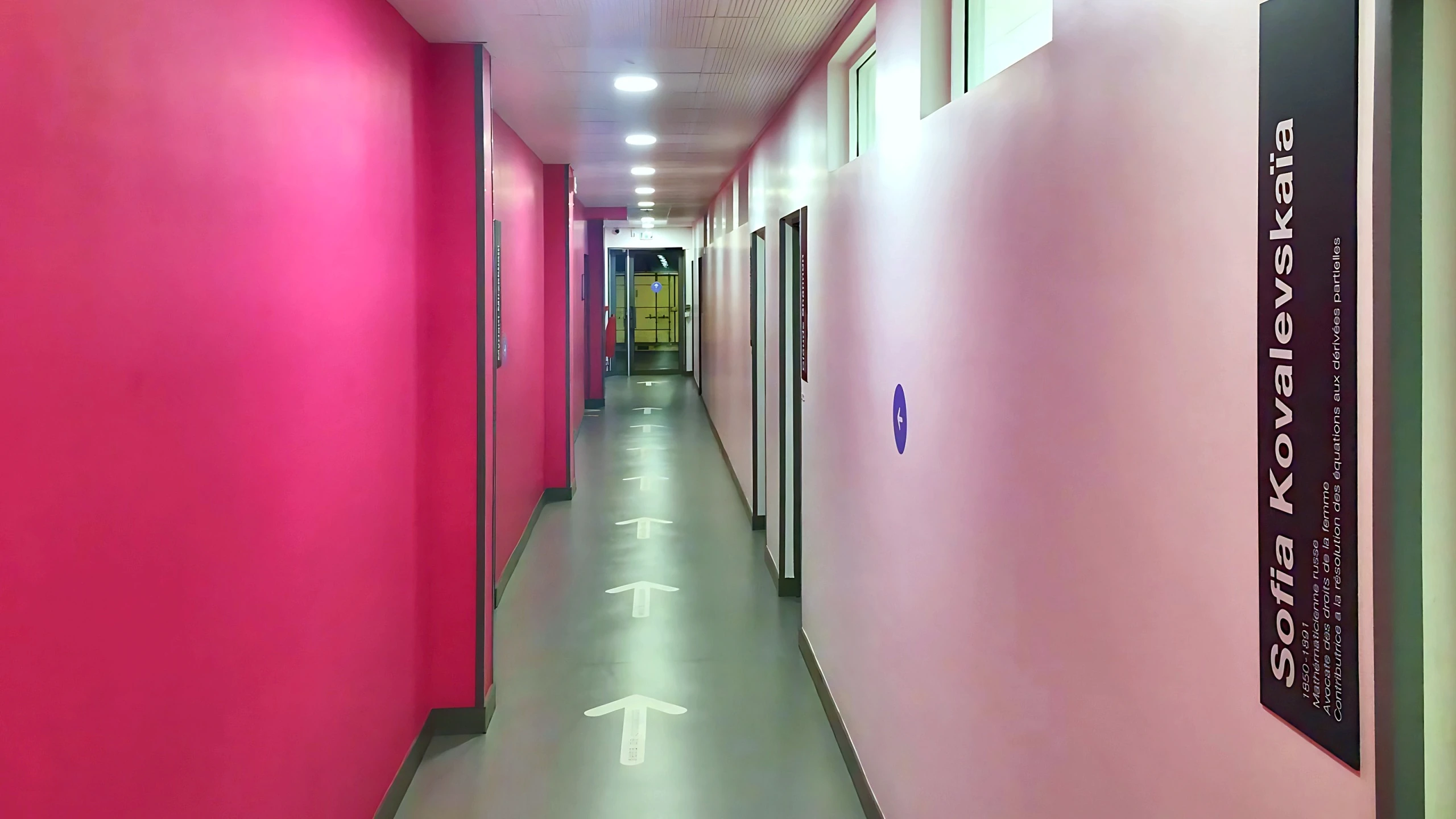
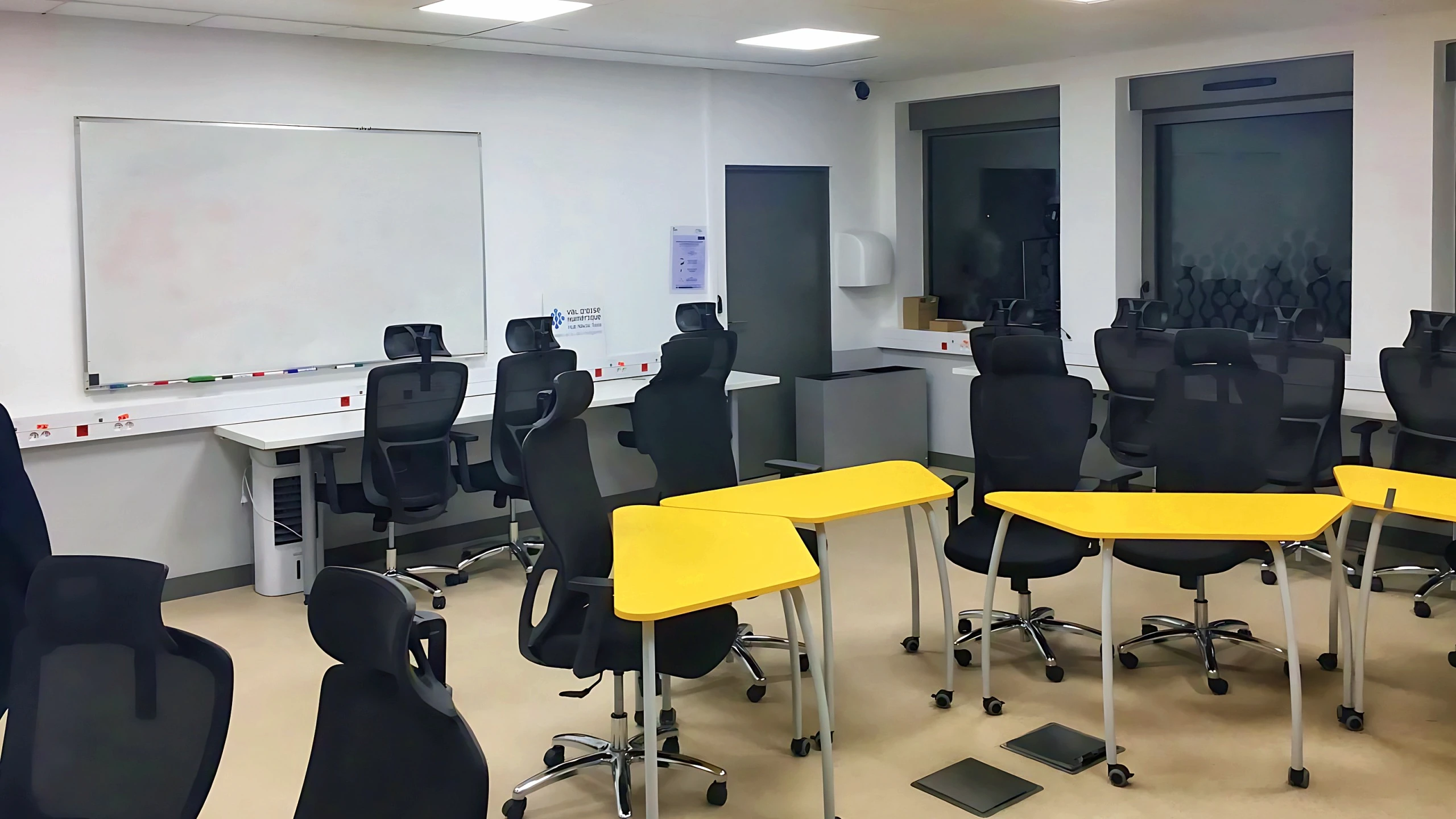
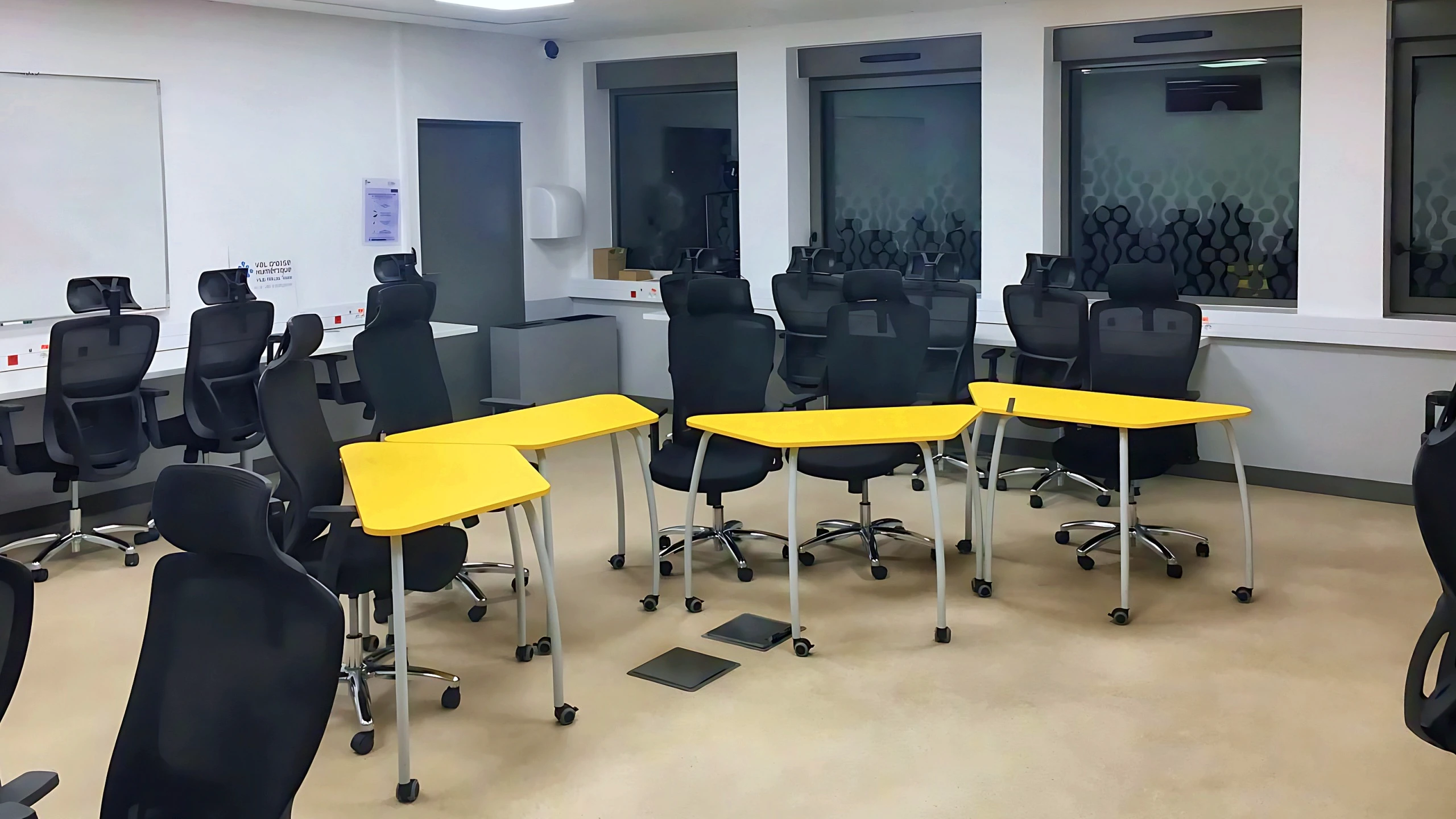
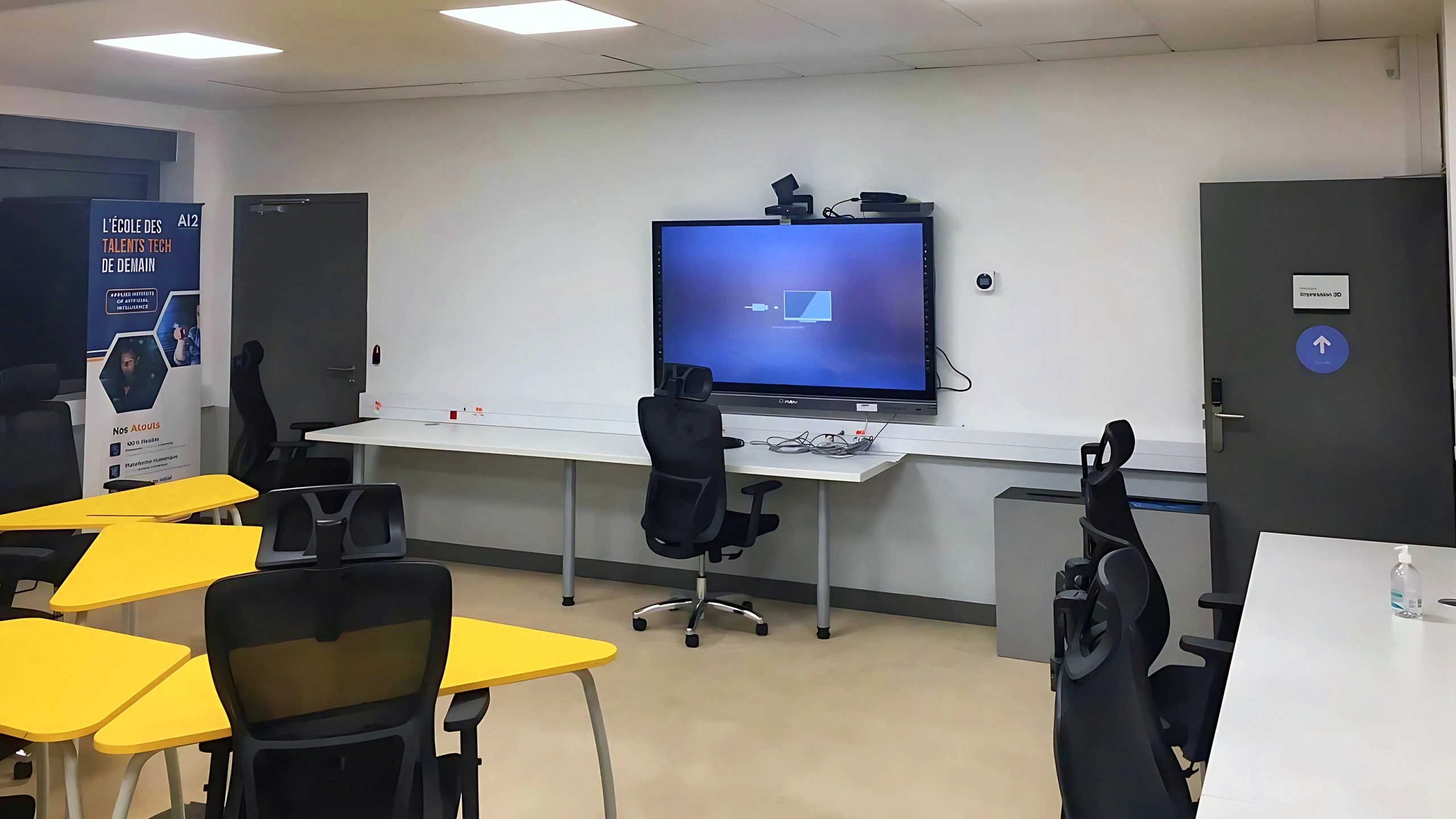
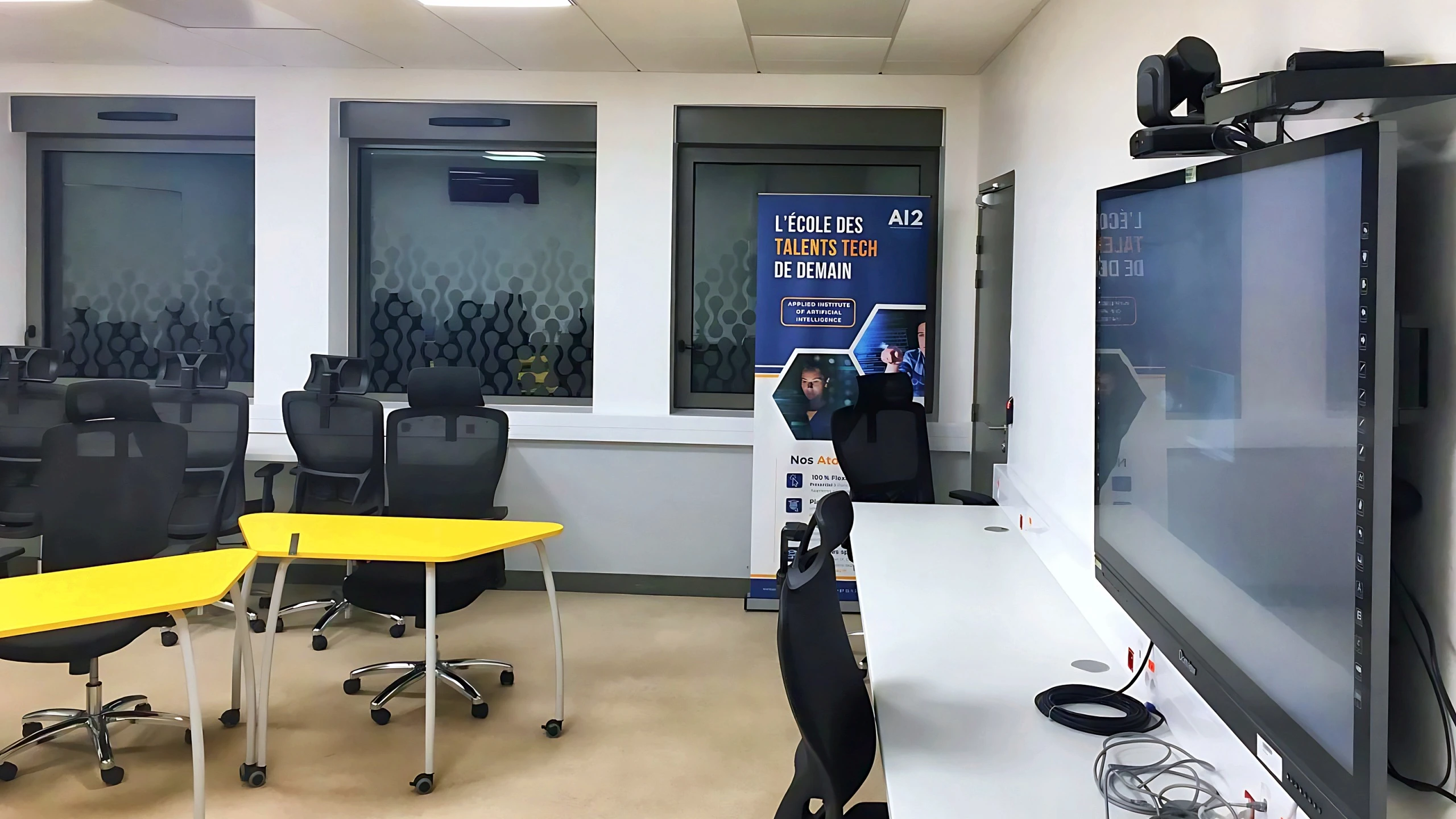
Controllers and HMIs, managed switches and firewalls, IIoT gateways, ESP32 boards and sensors, a SCADA platform and a MES demonstrator.
Entry mapping
Partners send the two-year transcript and course list; AI2 maps it to the three blocks and confirms the entry in writing.
Tools and standards
Not sure about the first two years? Students can prepare this final year through the Bachelor in Applied AI, Industrial IT track.
Capstone and assessment
Capstone project
A site supervision system with AI
Develop a site supervision system combining production KPIs, a live dashboard and AI anomaly detection.
Project presentation
Presentation of a project carried out in the company.
Professional questionnaire
A questionnaire covering each competency block.
Final jury interview
A final interview with the jury.
Teaching team
Practitioners who teach what they build
Modules are taught by AI2 faculty and practitioners in industrial systems, data and applied AI. Instructors are confirmed for each intake by the academic team.

Abdelhak Touiti, PhD
Embedded and computational systems, IoT and industrial connected systems.

Manel Boumaiza
Data engineering and machine learning for industrial data and anomaly detection.

Ammar Djebabla
Cloud computing and distributed systems; data platforms and deployment.

Yacine Aslimi
Data science and applied AI strategy; keynote speaker on the skills Industry 5.0 demands.
How we teach
Project-based learning
Every module ends with a deliverable presented before a jury: a prototype, an application, a report or a live demo.
Industry inside the classroom
Real company cases, professional data and practitioners who bring industrial experience into each block.
Academic support
An academic adviser, small groups and tutor follow-up throughout the company placement and final project.
Faculty interview
Why concrete projects matter
Abdelhak Touiti explains why AI2 students learn the business impact of every technical choice, build efficient data pipelines and apply cloud and ETL technologies inside real industrial projects, drawing on experience with companies such as Safran and Capgemini.
Tuition 2027 · international portfolio
Transparent tuition, with conditional scholarships
Tuition is charged per academic year. The amounts below are reference figures; the award and its conditions are confirmed individually in your admission letter.
Final Bachelor year · Data Analytics & Applied AI
per year · AI2 scholarships possible (excellence, early application)
Scholarship conditions
- Awards apply to the first year of enrolment.
- Awards are non-transferable.
- They cannot be combined with other discounts.
- Assessment for a scholarship does not guarantee an award.
Funding options
Work-study
Work-study may be available subject to eligibility and a separate employer contract: tuition funded by the employer’s training-fund operator and a salary. Confirm the conditions in writing; admission does not guarantee a host employer. How work-study works
Plan your budget
Before enrolling, request the applicable deposit, payment schedule and any additional costs. Plan separately for accommodation, transport, insurance and living expenses. Tuition and scholarships
Budget checklist
- Annual tuition and scholarship confirmed in the admission letter
- Deposit and payment schedule
- Accommodation in the Paris region
- Transport and health insurance
- Visa and Campus France fees for international students
- Living expenses for the full study period
Questions about tuition or funding?
contact@ai2-education.com · +33 1 80 87 35 11
Admissions
Entry requirements
Academic entry
Two years of higher education in computing, networks, electronics or industrial engineering: HND, BTEC Level 5, BTS, or Years 1–2 of a BSc.
English
Fluent English; no IELTS or other English test required. AI2 checks your English during the online admission interview.
French
French is not an admission requirement for the international portfolio.
Selection
Academic file review and an online interview. GRE and GMAT are not required.
Application documents
- Passport
- Degree certificates and academic transcripts, with certified translations where needed
- CV and a one-page statement of purpose
- Proof of English level or a medium-of-instruction certificate
Application process
2027 intakes
February, May and September 2027 intakes are planned in the international portfolio. Programme availability and your entry route are confirmed in the admission letter.
February 2027 intake · application calendar
Contact admissions for the current deadlines of the May and September 2027 intakes. Visa decisions are made by the French authorities; admission does not guarantee visa approval. Visa guidance
Student support
Academic adviser
Personal follow-up from admission to the final defence.
Housing and French
Housing guidance and optional French classes for international students.
Careers
Internship and work-study search preparation, CV and interview coaching.
Ready to apply for 2027?
Start your application or ask admissions any question: contact@ai2-education.com · +33 1 80 87 35 11
Study the BSc Data Analytics & Applied AI from your country
International students take this programme in English on our Écouen campus near Paris. Entry requirements, fees, Campus France and visa steps for your country:
Guides for future data analysts
Data science Bachelor in EnglishIndustrial IoT and Industry 4.0Top-up degree after an HNDTop-up for Sri Lankan studentsTop-up from DubaiBachelor scholarshipsBSc Data Analytics & Applied AI: frequently asked questions
Is the BSc Data Analytics & Applied AI taught in English?
Yes. It is taught 100% in English on the Écouen campus near Paris. No French is required.
Who can apply?
Students with two years of higher education in computing, networks, electronics or industrial engineering: HND, BTEC Level 5, BTS, or Years 1 and 2 of a BSc, plus English at B2 level.
What does the programme cover?
14 subjects and 399 hours on campus in data analytics, business intelligence and applied AI for industry, followed by a company placement.
How much does it cost?
€9,900 a year, with AI2 scholarships possible (excellence, early application).
What qualification do I get?
The French State qualification RNCP41370 at level 6 (EQF 6), certified by the French Ministry of Labour.
When are the intakes?
February, May and September 2027.
Can I continue to a master’s afterwards?
Yes. Graduates can apply to an MSc, such as the MSc Applied AI and Data Science.
What jobs can I target after the BSc Data Analytics & Applied AI?
The programme leads to industrial data analyst, industrial IT engineer, IIoT and SCADA integrator, and operations analytics specialist roles. See the guide to data jobs in France.
Is there a company placement?
Yes. A mandatory company placement follows the two campus semesters, before the final jury.
What English level do I need?
Fluent English; no IELTS or other English test required. AI2 checks your English during the online admission interview. French is not required.
More answers: FAQ · top-up degree after an HND · scholarships


