AI2 — the Applied Institute of Artificial Intelligence — offers programmes in applied AI, data and connected technologies. Explore programme requirements, teaching formats and certification information, or contact our team.

Quick Contact:
Follow Us:

AI2 — the Applied Institute of Artificial Intelligence — offers programmes in applied AI, data and connected technologies. Explore programme requirements, teaching formats and certification information, or contact our team.

Quick Contact:
Follow Us:

MSc Applied AI & Cybersecurity

Apply AI to cyber defence and secure industrial information systems. This pathway prepares for RNCP39978 with an AI2 cybersecurity specialisation.

MSc Applied AI · Cybersecurity specialisation

Defend industrial systems, and the AI inside them

Apply AI to cyber defence, secure industrial information systems and protect AI systems themselves: risk analysis, zero-trust architecture, attack simulation, AI-based detection and SOC operations.
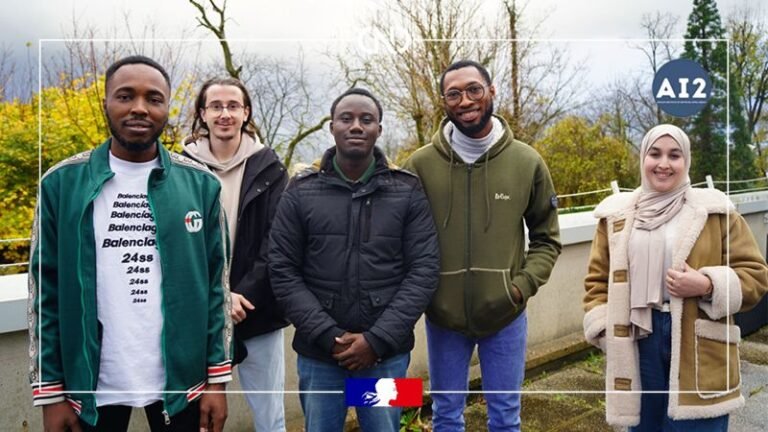
AI2 student team at the CND Hackathon 2025 of the French Ministry of the Armed Forces

In short: the MSc Applied AI & Cybersecurity is an English-taught programme at AI2 in Écouen, 22 minutes from Paris Gare du Nord. It prepares the RNCP39978 Level 7 title (EQF 7, master’s level), recognised by the French State, in 2 years after a three-year Bachelor’s degree or in 18 months after a related four- or five-year degree. Both routes include 1,000 hours of study and a six-month internship. Tuition starts from €10,500 in Year 1 after a conditional scholarship, with intakes in February, May and September 2027. The next intake starts on 15 February 2027. Information verified on 30 October 2026.

QualificationRNCP39978 · Level 7 (EQF 7), cyber specialisation
Language100% English · no French required
CampusÉcouen, Paris region · 22 min from Paris Gare du Nord
IntakesFebruary, May and September 2027
Company experience6-month internship · work-study possible in Year 2

Profiles we admit

Who is the MSc Applied AI & Cybersecurity for?

No cybersecurity diploma is required. The programme is built for graduates in computing, networks or data who want to move into cyber defence and the security of AI systems.

Computing and software graduates

You already code. You learn to design secure architectures, test them in a cyber range and harden the software you build.

Secure architecture · attack simulation

Networks and systems graduates

You know infrastructure. You move from running it to defending it: IT/OT segmentation, identity and access, SOC monitoring and incident response.

Zero trust · SOC · SIEM

Data and AI graduates

You train models. You apply machine learning to intrusion detection and learn to secure AI itself against prompt injection and data poisoning.

AI for detection · LLM security

Am I eligible?

  • 2 years: a relevant three-year Bachelor's degree, particularly in computing or networks
  • 18 months: a related four- or five-year degree, with Python and machine-learning foundations checked at interview
  • English B2: IELTS 6.0, TOEFL iBT 72 or equivalent; no GRE or GMAT
Check my profile and apply

Two routes · one title

Which route fits your degree: 2 years or 18 months?

Your previous degree decides your route. Both lead to the same RNCP39978 Level 7 title and the AI2 MSc diploma, with 1,000 hours of study before a six-month internship.

The two routes at a glance

Route A 2 years
Year 1 · Common core 500 hYear 2 · Cyber 500 hInternship 6 months
Route B 18 months
Year 2 · Cyber, on campus 500 hOnline platform modules 280 hCompany project 220 hInternship 6 months

MSc 2 years, step by step

A shared foundation year in applied AI, a specialisation year in cybersecurity, then six months in a company with a final professional project.

1Year 1 · 500 hours

Shared MSc foundation

Python, SQL, machine learning, deep learning, data engineering, cloud and DevOps, AI regulation and an industrial team project.

2Year 2 · 500 hours

Cybersecurity specialisation

The four official RNCP39978 blocks taught and assessed through cyber cases, plus the AI2 cyber track: cryptography, SOC and incident response, security of AI systems and threat intelligence.

36 months

Internship and final project

A company internship and a professional project defended before a jury.

Direct Year 2 entry · 18 months. For holders of a related four- or five-year degree: a 12-month, 1,000-hour phase (500 h on campus, 280 h of online platform modules and a 220-hour company project) followed by the six-month internship and final defence. Python and machine-learning foundations are checked at interview.

  • Same in both routes
  • RNCP39978 Level 7
  • AI2 MSc diploma
  • 1,000 h of study
  • 6-month internship
  • 100% English
  • Feb · May · Sep 2027

The 11-month Fast-Track February is not available for this specialisation. It is offered only on the MSc Applied AI and Data Science.

February 2027 intake

Key dates for the February 2027 intake

From application to graduation, the full calendar of the next intake. Your admission letter confirms your route and dates.

1 Sept 2026Applications open
30 Nov 2026Priority deadline and visa file
15 Dec 2026Enrolment and deposit
15 Feb 2027Classes start in Écouen
15 Feb 2028Internship starts · 18-month route
14 Aug 2028Programme ends · 18-month route
14 Feb 2029Programme ends · two-year route

May and September 2027 intakes are also planned: contact admissions for their deadlines. Visa decisions are made by the French authorities.

What you will be able to do

Analyse cyber risk

EBIOS Risk Manager, MITRE ATT&CK for ICS, and NIS2, GDPR and IEC 62443 compliance for industrial information systems.

Architect zero trust

IT/OT segmentation and the Purdue model, identity and access management, PKI and secure protocols including TLS 1.3 and mTLS.

Simulate attacks

Cyber range exercises and attacks on an industrial digital twin, with a detection pipeline prototyped along the way.

Detect with AI

Intrusion and anomaly detection with machine learning, AI-assisted incident response and explainable alerts.

Run security operations

SOC monitoring, SIEM rules, playbooks, log analysis, forensics basics and business continuity.

Secure AI systems

Adversarial machine learning, LLM security, prompt injection, model and data poisoning, and AI governance.

Your portfolio

Cybersecurity projects you will build during the MSc

Each competency block and cyber module ends with practical work assessed by the jury. These are the deliverables you can show an employer at the end of Year 2.

Block 1 · 56 h

Cyber-risk file for an industrial site

Map assets, threats and compliance requirements, then rank the risks and the security measures.

EBIOS RMMITRE ATT&CK ICSNIS2IEC 62443
Risk analysis file and oral defence
Block 2 · 56 h

Zero-trust architecture for a plant

Design the security architecture of an industrial information system, from segmentation to identity.

Purdue modelIAMPKITLS 1.3 · mTLS
Target architecture and design choices
Block 3 · 56 h

Attack an industrial digital twin

Run cyber range exercises, simulate incidents on a digital twin and prototype the detection pipeline.

Cyber rangeDigital twinDetection
Working prototype and incident report
Block 4 · 56 h

Machine-learning intrusion detector

Train anomaly-detection models on industrial data and produce alerts an analyst can explain.

PythonMachine learningExplainable AI
Model, metrics and alert dashboard
Cyber track · 42 h

SOC playbook and SIEM rules

Analyse logs, write detection rules and respond to an incident from alert to business continuity.

SIEMLog analysisForensics
Incident response playbook
Cyber track · 42 h

Security audit of an AI application

Test a language-model application against prompt injection, model and data poisoning, then set the governance rules.

LLM securityAdversarial MLAI governance
Audit report and remediation plan

The programme ends with a professional project applying the four blocks to a real cybersecurity problem, defended before the jury after the six-month internship.

Frameworks and tools

EBIOS RMMITRE ATT&CK for ICSIEC 62443NIS2GDPRZero trustPurdue modelIAM · PKITLS 1.3 · mTLSSIEMCyber rangeOSINTPythonMachine learningDocker · CI/CDCloud

Career directions

AI security engineerProtects AI models and data pipelines against attacks and misuse.
Detection and SOC analystMonitors, detects and responds to incidents with AI-assisted tools.
IS and OT security architectDesigns secure architectures for industrial information systems.
NIS2 compliance consultantGuides organisations through NIS2, GDPR and IEC 62443 requirements.

A market that is hiring

299,000cybersecurity professionals missing in the EU in 2024, up 9% on 2023European Commission
76%of EU organisations surveyed find it hard to attract cyber talentENISA, NIS Investments 2025
38%name incident detection and response as a skills need, the most cited areaENISA, NIS Investments 2025
€60,000median annual gross pay of cadres in IT security jobs in France, all experience levelsAPEC, 2025 edition

Roles, AI skills and work rights are detailed in our guide to cybersecurity jobs in France for international students.

Student challenges in cyber defence

CND Hackathon 2025

Five AI2 students took on “Anticipating failures with AI” for the French Ministry of the Armed Forces at the Mont-Valérien fortress. Read the story

Cryptography hackathon · November 2026

AI2’s October 2026 portfolio announces planned student participation in a cryptography hackathon of the Defence Digital Commission. Learn more

After your MSc

Stay and work in France

A 12-month job-search permit, then an employee, Talent or EU Blue Card permit, the 10-year card after 5 years of work, and citizenship possible from 2 years of residence.

See the full path

Student bonus · included

Your digital toolkit, free for every AI2 student

Professional platforms and certification paths offered on top of your programme, to practise and earn extra badges.

€0 for students
Google Workspace with GeminiGmail, Drive, Docs, Meet and Gemini, the AI assistant, for studies and team projects.Included all year
DataCampInteractive courses in Python, R, SQL, AI and data engineering, with tracks and certificates.Free access
IBM SkillsBuildAI, cloud, cybersecurity and data courses with IBM digital credentials.Free badges
Cisco Networking AcademyNetworking, cybersecurity and IoT courses from Cisco NetAcad.Free courses
SAS academic platformSAS analytics software for students, with learning paths in statistics and machine learning.Free for students

Programme awards and certification

The AI2 programme diploma and the French RNCP professional title are distinct awards. The programme prepares for the title below. Award of the professional title requires validation of all required competency blocks and compliance with the certification’s assessment and eligibility rules.

Professional title · same in both routes

Information Systems Architect for Industrial Processes

Official French title: Architecte des systèmes d’information dans les processus industriels

View the official RNCP record
RNCP reference
RNCP39978
Qualification level
Level 7 / EQF 7
Certifying body
DATAKOO

RNCP Level 7 is the master’s level (EQF 7) of the French national register of professional certifications, recognised by the French State. The full RNCP39978 title is awarded once all four blocks are validated, at the end of the programme. The cybersecurity pathway prepares this title: its four official blocks are taught and assessed through cybersecurity case studies, and the AI2 cyber track adds the specialist subjects.

Is AI2 recognised? Legal status, Qualiopi and official records.

Discuss your study plans

Our admissions team helps you identify the entry route that matches your qualifications. contact@ai2-education.com · +33 1 80 87 35 11

Curriculum

1,000 hours of applied AI and cyber defence, then six months in a company

Choose your route: this tab shows the matching curriculum, step by step.

Route A · 2 years · after a three-year Bachelor’s

A shared AI year, a cyber year, then six months in a company

For holders of a three-year Bachelor’s degree. You build the applied AI foundations first, then specialise in cybersecurity, for the RNCP39978 title and the AI2 diploma.

1,000 hbefore the internship
Year 1Year 2
Common core · 500 h
Cyber · 500 h
Internship
500 hYear 1

Applied AI common core

Python, SQL, machine learning, deep learning, data engineering, cloud and DevOps, AI regulation and an industrial team project.

See Year 1 ↓
500 hYear 2

Cybersecurity specialisation

The four official RNCP39978 blocks through cyber cases (224 h), the AI2 cyber track (168 h), business data (84 h) and final examinations (24 h).

See Year 2 ↓
6months

Internship and final project

A six-month company internship and a final professional project, defended before the jury.

See assessment ↓

Route B · 18 months · direct entry into Year 2

1,000 hours in 12 months, then six months in a company

For holders of a related four- or five-year degree. You join the cybersecurity specialisation year directly and complete it with online platform modules and a company project, for the same RNCP39978 title and AI2 diploma as the two-year route.

1,000 hbefore the internship
Months 1 to 6Months 7 to 12Months 13 to 18
On campus · 500 h Year 2
Online platform modules · 280 h Cisco · DataCamp
Company project · 220 h real case
Internship · 6 months
500 hon campus

Cybersecurity specialisation year

The four official RNCP39978 blocks through cyber cases (224 h), the AI2 cyber track (168 h), business data (84 h) and final examinations (24 h).

See the 500 hours ↓
280 honline

Online platform modules

Guided paths assigned by the academic team, included free for every AI2 student: networking and cybersecurity on Cisco Networking Academy, Python, SQL and machine-learning foundations on DataCamp.

  • Cisco Networking Academy
  • DataCamp
220 hcompany project

Company project

An industrial information-system project on a real company case: needs analysis, security architecture, prototype and simulation, covering the 126 hours of Year 1 content of RNCP39978 blocks 1 to 3, defended before a jury.

6months

Internship and final project

A six-month company internship and a final professional project, defended before the jury.

See assessment ↓
Same total as the two-year route: 1,000 hours of study before the internship.Python and machine-learning foundations are checked at interview. Intakes in February, May and September 2027. Tuition for this route.

Route A · step 1

Year 1 · Applied AI common core · 500 hours

One shared first year for the three MSc programmes: programming, data and machine-learning foundations, plus the industrial information-system blocks of RNCP39978. Students choose their Year 2 track in May, after an orientation interview.

Programming, data & ML · 217 hIndustrial IS · 126 hCloud, industry, law · 66.5 hProjects · 45.5 hExams · 45 h
Semester 1 · Foundations · 250 h · 8 modules + exams
CodeModuleWhat students learnBlockHours
Y1.01Python for Data SciencePython, Jupyter, GitPython, NumPy, Pandas, Matplotlib and Seaborn, Git and GitHub; exploratory analysis of a real datasetFoundations28 h
Y1.02SQL & DatabasesPostgreSQL, SQLAlchemyData modelling, PostgreSQL, CTE and window functions, indexes and views, stored procedures, SQLAlchemy pipelinesFoundations35 h
Y1.03Introduction to Machine Learningscikit-learn, XGBoostCross-validation, metrics, Random Forest, XGBoost, SHAP interpretationFoundations28 h
Y1.04Data Visualisation & StorytellingTableauTableau Desktop and Prep, LOD expressions, interactive dashboards, data storytellingFoundations35 h
Y1.05Industrial IS Needs AnalysisBPMN, UML, PlantUMLSensors → PLC → SCADA → MES → ERP; requirements gathering; BPMN and UML models; functional specification; jury defenceRNCP Block 135 h
Y1.06Machine Learning ProjectStreamlit, DockerTeam business case: five or more models compared, SHAP, Streamlit dashboard, jury defenceProject21 h
Y1.07Agile Project ManagementJira, TrelloScrum and Kanban, user stories, Jira, risk register, full sprint simulationTransversal21 h
Y1.08AI for IndustryPython, MQTT, GrafanaPredictive maintenance, visual quality control, production optimisation, digital twins, IoT and edgeIndustry24.5 h
Y1.E1Semester 1 examinationsWritten and practical examinations on every subjectAssessment22.5 h
Semester 2 · Architecture, data engineering & applied AI · 250 h · 8 modules + exams
CodeModuleWhat students learnBlockHours
Y1.09Cloud Computing · AWS & AzureAWS, Azure, DockerIaaS, PaaS and SaaS, virtual machines, managed databases, deploying a Flask or Streamlit API, IAM, cost and sovereigntyFoundations21 h
Y1.10Industrial IS ArchitectureC4, UML, FigmaFunctional, technical, data, network and security architecture, C4 model, DMZ, VPN, VLAN, IAM, ANSSI and NIS, GDPR, test plans, jury defenceRNCP Block 249 h
Y1.11Data Engineering & PipelinesAirflow, Kafka, dbtData lake, warehouse and lakehouse, ETL and ELT, Airflow DAGs, Parquet, Kafka, dbt, monitoring and documentationFoundations28 h
Y1.12NLP & Industrial Text MiningspaCy, Hugging FaceTokenisation, lemmatisation, TF-IDF, embeddings, text classification and clusteringFoundations21 h
Y1.13IS Prototyping & SimulationStreamlit, FastAPI, GrafanaHMI prototypes, simulated sensor data flows, REST components and alerting, mini digital twin, technical file and live demoRNCP Block 342 h
Y1.14Introduction to Deep LearningTensorFlow, KerasNeurons and back-propagation, multilayer networks, overfitting and regularisation, first CNN and transfer learningFoundations21 h
Y1.15AI Law & EthicsAI Fairness 360GDPR, EU AI Act risk classes, algorithmic bias and fairness, intellectual property, data governance, ethics auditTransversal21 h
Y1.16Capstone Synthesis ProjectFull stack of the yearTeam industrial project from raw data to a deployed application: pipeline, model, cloud, dashboard, documentation and jury defenceProject24.5 h
Y1.E2Semester 2 examinationsWritten and practical examinations on every subjectAssessment22.5 h
Projects

Three jury projects

The machine-learning project (Y1.06), the industrial needs-analysis file (Y1.05) and the capstone synthesis project (Y1.16), each defended before a jury.

Assessment

Practice · project · exam

Typically 30 / 40 / 30% per subject; industrial IS subjects on a written file and an oral defence (60 / 40%). Pass mark 10/20 per semester, resit in June.

Next step

Choose the Year 2 track

Data Science, Cybersecurity or IoT, confirmed in May after an orientation interview; all three are open to Year 1 graduates.

Route A · step 2

Route B · your 500 hours on campus

Year 2 · Cybersecurity specialisation · 500 hours

Year 2 combines the four RNCP39978 competency blocks applied to cyber cases, a cyber track, business-data skills and final examinations.

Four RNCP39978 blocks · 224 hAI2 cyber track · 168 hBusiness data · 84 hExams · 24 h

The four official RNCP39978 blocks, taught and assessed through cybersecurity cases

How the cyber pathway fits the title.

Official titlesThe block titles below are the official titles of RNCP39978 “Information Systems Architect for Industrial Processes” (official French title « Architecte des systèmes d’information dans les processus industriels », France Compétences).
Security inside the blocksThese blocks already include security competencies: security and compliance requirements, risk analysis, security architecture, security supervision and the simulation of security incidents.
The AI2 cyber orientationAt AI2, the courses, case studies and jury assessments of every block are built on cybersecurity scenarios, and the 168-hour AI2 cyber track adds the specialist subjects.
56 hBlock 1 · RNCP39978BC01

Systemic needs analysis for industrial information systems

AI2 cyber module: Cyber-risk analysis

Cyber focus: security and compliance requirements and risk identification, worked with EBIOS Risk Manager, MITRE ATT&CK for ICS, NIS2, GDPR and IEC 62443.

56 hBlock 2 · RNCP39978BC02

Architecture design for industrial information systems

AI2 cyber module: Secure architecture

Cyber focus: the security architecture of the system: zero trust, IT/OT segmentation and the Purdue model, IAM, PKI and secure protocols including TLS 1.3 and mTLS.

56 hBlock 3 · RNCP39978BC03

Prototyping and simulation of industrial information systems

AI2 cyber module: Attack simulation

Cyber focus: security supervision and simulated security incidents: cyber range exercises, a detection-pipeline prototype and attacks on an industrial digital twin.

56 hBlock 4 · RNCP39978BC04

Improving industrial information systems through data and AI

AI2 cyber module: AI for detection

Cyber focus: industrial data and machine learning applied to intrusion and anomaly detection, AI-assisted incident response and explainable alerts.

AI2 cyber track (168 h) and transversal skills

42 hCyber track

Applied Cryptography

Symmetric and asymmetric cryptography, key management, and hardware and embedded encryption.

42 hCyber track

SOC, SIEM & Incident Response

Security monitoring, log analysis, SIEM rules, playbooks, forensics basics and business continuity.

42 hCyber track

Security of AI Systems

Adversarial machine learning, LLM security, prompt injection, model and data poisoning, and AI governance.

42 hCyber track

Threat Intelligence

Threat actors and campaigns, OSINT, indicators of compromise and intelligence reporting.

84 hTransversal

Business Data

Data strategy, KPIs and executive communication, shared with the Data Science MSc.

24 hAssessment

Final examinations

Written and practical examinations on the four competency blocks and the cyber track.

Total Year 2: 500 hours · 4 × 56 h competency blocks, 4 × 42 h cyber track, 84 h business data and 24 h of final examinations.

Route A · step 3

Route B · final step

Internship, assessment and professional project

Company internship

A six-month company internship in both routes, with the final professional project defended before the jury.

Block defences

Each competency block is defended before a jury through cybersecurity case studies. The published framework sets a pass mark of 10/20 per block; all required blocks must be validated.

Final examinations

Written and practical examinations on the blocks and the specialist cyber subjects.

Professional project

A final professional project applying the competency blocks to a real cybersecurity problem, defended before the jury.

Company experience. In the full route, specialisation follows the shared Year 1. A work-study alternative may be available from the second year in France, subject to eligibility and an employer contract.

Company experience. Direct Year 2 entry follows a 12-month, 1,000-hour phase (campus, online platform modules and a company project) and a six-month company internship, including the final professional project defence.

Teaching team

Practitioners who teach what they build

Modules are taught by AI2 faculty and practitioners in cybersecurity, connected systems, cloud and applied AI. Instructors are confirmed for each intake by the academic team.

Yacine Aslimi, Founder and academic director at AI2
Founder & academic director

Yacine Aslimi

Data science and applied AI strategy; keynote speaker on the skills Industry 5.0 demands.

Abdelhak Touiti, PhD, Professor at AI2
Professor

Abdelhak Touiti, PhD

Embedded and computational systems, IoT and industrial connected systems, where OT security begins.

Ammar Djebabla, Assistant teacher at AI2
Assistant teacher

Ammar Djebabla

Cloud computing and distributed systems; secure deployment and DevOps labs.

Manel Boumaiza, Professor at AI2
Professor

Manel Boumaiza

Machine learning, NLP and deep learning foundations used in AI-based detection.

Meet the full teaching team

How we teach

Project-based learning

Every module ends with a deliverable presented before a jury: a prototype, an application, a report or a live demo.

Industry inside the classroom

Real company cases, professional data and practitioners who bring industrial experience into each block.

Academic support

An academic adviser, small groups and tutor follow-up throughout the company placement and final project.

Faculty interview

Why concrete projects matter

Abdelhak Touiti explains why AI2 students learn the business impact of every technical choice, build efficient data pipelines and apply cloud and ETL technologies inside real industrial projects, drawing on experience with companies such as Safran and Capgemini.

Tuition 2027 · international portfolio

Transparent tuition, with conditional scholarships

Tuition is charged per academic year. The amounts below are reference figures; the award and its conditions are confirmed individually in your admission letter.

Route A2 years
Year 1 · Applied AI common core€10,500 / year

from, after a conditional AI2 scholarship · standard tuition €12,500

Year 2 · Cybersecurity specialisation€13,000 / year

standard tuition

Route B18 months
Direct entry into Year 2€11,300 single fee

from, after a conditional AI2 scholarship · standard fee €13,000 · covers the 18 months, internship included

For entry in MSc Year 1, the scholarship reference is the Year 1 amount. The Year 2 “from” amount applies when direct Year 2 is the first year of enrolment and a scholarship is awarded.

Scholarship conditions

  • Awards apply to the first year of enrolment.
  • Awards are non-transferable.
  • They cannot be combined with other discounts.
  • Assessment for a scholarship does not guarantee an award.

Funding options

Work-study

Work-study may be available subject to eligibility and a separate employer contract: tuition funded by the employer’s training-fund operator and a salary. Confirm the conditions in writing; admission does not guarantee a host employer. How work-study works

Plan your budget

Before enrolling, request the applicable deposit, payment schedule and any additional costs. Plan separately for accommodation, transport, insurance and living expenses. Tuition and scholarships

Budget checklist

  • Annual tuition and scholarship confirmed in the admission letter
  • Deposit and payment schedule
  • Accommodation in the Paris region
  • Transport and health insurance
  • Visa and Campus France fees for international students
  • Living expenses for the full study period

Questions about tuition or funding?

contact@ai2-education.com · +33 1 80 87 35 11

Admissions

Entry requirements

Academic entry

Route A2 years

A relevant three-year Bachelor’s degree, particularly in computing or networks.

Route B18 months

A related four- or five-year degree; Python and machine-learning foundations are checked at interview.

English

B2 level: IELTS 6.0, TOEFL iBT 72 or equivalent. A medium-of-instruction certificate may support a waiver; admissions confirms the evidence accepted.

French

French is not an admission requirement for the international portfolio.

Selection

Academic file review and an online interview. GRE and GMAT are not required.

Application documents

Items 1 to 4 apply to every applicant. Item 5 is added for the 18-month route.

  1. Passport
  2. Degree certificates and academic transcripts, with certified translations where needed
  3. CV and a one-page statement of purpose
  4. Proof of English level or a medium-of-instruction certificate
  5. For direct Year 2: the course list or syllabus of the previous degree Route B · 18 months only

Application process

Submit your fileChoose your programme and entry route, then submit the complete application.
Academic reviewAI2 reviews your qualifications and confirms the entry level.
Online interviewDiscuss your background, preparation and study plans.
Admission decisionThe letter confirms programme, intake, tuition and any scholarship.
Confirm enrolmentFollow the enrolment and deposit instructions in the offer.
Prepare arrivalCampus France and visa steps, then arrival and welcome.

2027 intakes

February, May and September 2027 intakes are planned in the international portfolio. Programme availability and your entry route are confirmed in the admission letter.

February 2027 intake · application calendar

1 Sept 2026Applications open
30 Nov 2026Priority application deadline
30 Nov 2026Complete visa file
15 Dec 2026Enrolment and deposit
15 Feb 2027Classes start
14 Aug 2028Programme ends · 18-month route
14 Feb 2029Programme ends · two-year route

Contact admissions for the current deadlines of the May and September 2027 intakes. Visa decisions are made by the French authorities; admission does not guarantee visa approval. Visa guidance

Student support

Academic adviser

Personal follow-up from admission to the final defence.

Housing and French

Housing guidance and optional French classes for international students.

Careers

Internship and work-study search preparation, CV and interview coaching.

Ready to apply for 2027?

Start your application or ask admissions any question: contact@ai2-education.com · +33 1 80 87 35 11

MSc Applied AI & Cybersecurity: frequently asked questions

Is the MSc Applied AI & Cybersecurity taught in English?

Yes. It is taught 100% in English on the Écouen campus near Paris, 22 minutes from Paris Gare du Nord. No French is required.

How long is the programme?

Two years, or 18 months through direct entry into Year 2 for graduates of a related four- or five-year degree. Both routes include 1,000 hours of study before the six-month internship.

How much does it cost?

Year 1 costs from €10,500 after a conditional AI2 scholarship (standard tuition €12,500) and Year 2 is €13,000. Direct entry is charged as a single fee of €13,000, from €11,300 after the scholarship.

What qualification do I get?

A French State qualification registered as RNCP39978 at level 7 (EQF 7), with a cybersecurity specialisation.

When are the intakes?

February, May and September 2027. The February intake starts on 15 February 2027.

When does the MSc end for the February 2027 intake?

Classes start on 15 February 2027. The 18-month route (12 months of study, then the six-month internship from 15 February 2028) ends on 14 August 2028. The two-year route, internship included, ends on 14 February 2029.

Do I need the GRE or GMAT?

No. GRE and GMAT are not required: admission is based on your application file and an online interview.

What are the entry requirements?

For the two-year MSc, a relevant three-year bachelor’s degree, particularly in computing or networks, and English at B2 level. For the 18-month direct entry, a related four- or five-year degree, with Python and machine-learning foundations checked at interview.

Is there company experience?

Yes: a 6-month internship, and work-study is possible in Year 2.

What jobs can I target after the MSc Applied AI & Cybersecurity?

The programme prepares four career directions: AI security engineer, detection and SOC analyst, IS and OT security architect, and NIS2 compliance consultant. See the guide to cybersecurity jobs in France.

Do I need a cybersecurity background to apply?

No specific cyber diploma is required. The two-year MSc asks for a relevant three-year Bachelor’s degree, particularly in computing or networks. Direct entry into Year 2 asks for a related four- or five-year degree, with Python and machine-learning foundations checked at interview.

Does the programme cover NIS 2 and the security of AI systems?

Yes. The frameworks studied include NIS2, GDPR, IEC 62443, EBIOS RM and MITRE ATT&CK for ICS, and the 42-hour Security of AI Systems module covers adversarial machine learning, LLM security, prompt injection, model and data poisoning, and AI governance. Read our NIS 2 and AI Act guide.

Is this a master’s degree in cybersecurity?

It is an English-taught MSc with a cybersecurity specialisation. It prepares the RNCP39978 Level 7 title (master’s level, EQF 7), Information Systems Architect for Industrial Processes, whose four official blocks are taught and assessed through cybersecurity cases. A 168-hour AI2 cyber track adds the specialist subjects, and you also receive the AI2 MSc diploma.

How many hours of study does the MSc include?

1,000 hours before the six-month internship in both routes. The two-year MSc has 500 hours in each year. The 18-month direct entry combines the 500-hour Year 2 on campus, 280 hours of online platform modules and a 220-hour company project.

Is there demand for cybersecurity graduates in Europe?

Yes. The European Commission estimates that the EU lacked 299,000 cybersecurity professionals in 2024, and 76% of organisations surveyed by ENISA in its NIS Investments 2025 report find it hard to attract cyber talent.

What is the difference between the 2-year MSc and the 18-month route?

Both lead to the same RNCP39978 Level 7 title and AI2 MSc diploma, with 1,000 hours of study before a six-month internship. The 2-year route is for holders of a three-year Bachelor’s degree and starts with the Year 1 common core. The 18-month route is for holders of a related four- or five-year degree: it combines the 500-hour Year 2 on campus, 280 hours of online platform modules and a 220-hour company project.

Can I do a cybersecurity MSc in France in 18 months?

Yes, through direct entry into Year 2 if you hold a related four- or five-year degree. Python and machine-learning foundations are checked at interview. Intakes are in February, May and September 2027, and the programme is taught 100% in English.

What English level do I need?

B2 level: IELTS 6.0, TOEFL iBT 72 or equivalent. A medium-of-instruction certificate may support a waiver; admissions confirms the evidence accepted.

Is the 11-month Fast-Track available in cybersecurity?

No. The Fast-Track February is offered only on the MSc Applied AI and Data Science. For cybersecurity, choose the two-year MSc or direct entry into Year 2 (18 months).

Can I stay and work in France after the MSc?

Yes. Graduates can apply for a 12-month job-search permit, then an employee, Talent or EU Blue Card permit. Details in working in France after graduation.

More answers: FAQ · masters without GRE · scholarships