
Looking for a data job in France? Which roles exist, how much demand there really is, what you may do as a student and graduate, and how a placement becomes a first contract.
Which data science jobs can international students apply for in France?
Five job titles cover most data offers in France. They overlap, but each one is hired on a different proof of skill.
French adverts usually keep the English titles. The European Commission’s ESCO classification describes the data scientist (ISCO 2511.3) as someone who finds and interprets rich data sources, merges large datasets, builds mathematical models and presents findings, including to non-experts. The data analyst (ISCO 2511.2) cleans, transforms and interprets data against the company’s business goals, often through dashboards.
| Role | What the work looks like | Typical way in for a graduate | What recruiters check first |
|---|---|---|---|
| Data analyst / BI analyst | Query and clean data, build dashboards and KPIs, answer business questions | Often the first job after a master’s, frequently after an internship | SQL, Power BI or Tableau, clear charts, business sense |
| Data scientist | Build predictive models, test hypotheses, explain results to decision makers | Graduate roles exist, most often after an internship or a work-study year | Python, statistics, machine learning, end-to-end projects |
| Data engineer | Build the pipelines, warehouses and quality checks that feed analytics and models | Open to graduates with solid software habits | SQL, Python, orchestration such as Airflow, cloud |
| Machine-learning engineer | Put models into production, automate retraining, monitor drift | Often a second job after data science or software development | Docker, CI/CD, cloud, MLOps |
| Generative-AI engineer | Build applications on language models: retrieval, agents, evaluation | Emerging role with varied titles | Python, LLM APIs, RAG, guardrails |
Pay depends on role, city and experience; our guide to data scientist salaries in France compares the published sources. For orientation only, the AI2 programme page gives indicative gross ranges of €40,000 to €47,000 a year for a data analyst or BI role and €47,000 to €52,000 for a data scientist. If you prefer production work to analysis, read our machine-learning engineer career guide.
Is there real demand for data scientists in France?
Yes, with two sides to it: AI and data adoption is growing quickly, while hiring of young graduates slowed in 2024 and 2025.
Eurostat’s enterprise survey shows French companies adopting AI fast: 18.2% of enterprises with 10 or more employees used at least one AI technology in 2025, against 9.9% in 2024 and 5.9% in 2023. The European Commission’s State of the Digital Decade report (17 June 2026) adds that ICT specialists made up just 5% of EU employment in 2025, half of the 2030 target of 10%, with soaring demand in cloud security, cybersecurity, data management and software development.
| Indicator | France | EU | Source |
|---|---|---|---|
| Enterprises (10+ employees) using at least one AI technology, 2025 | 18.2% | 20.0% | Eurostat, isoc_eb_ai (updated 15 June 2026) |
| Large enterprises (250+ employees) using AI, 2025 | 58.0% | 55.0% | Eurostat, isoc_eb_ai |
| ICT specialists in total employment, 2025 | 4.9% (about 1.43 million people) | 5.0% (about 10.45 million) | Eurostat, isoc_sks_itspt (updated 17 April 2026) |
| Enterprises (10+) that recruited or tried to recruit ICT specialists, 2024 | 7.7% | 9.6% | Eurostat, isoc_ske_itrcrn2 |
The other side comes from APEC, the French association for executive employment. In its November 2025 study, 72% of 2023 Bac+5 (master’s level) graduates held a salaried job in France 12 months later; computing graduates did better at 75%, though four points down. APEC expected hiring of beginner managers to fall by 16% in 2025 after 19% in 2024, mainly in IT services, engineering and consulting. Its first-quarter 2026 barometer reported 70% for the 2024 cohort and signs of a possible improvement in 2026.
A degree alone is no longer enough: company experience and demonstrable projects make the difference. See also our guide to AI jobs in France for international students.
Which sectors and employers hire data profiles?
Data jobs are not limited to tech companies.
APEC’s study shows where young Bac+5 graduates found work: 45% in high value-added services (IT, engineering and R&D, consulting, banking and insurance, media, legal and accounting), 32% in other services, 12% in industry, 8% in retail and wholesale and 3% in construction; 55% joined organisations of 250 employees or more. Data roles follow a similar map.
Digital services and consulting
Banking, insurance and retail
Industry, energy and transport
Can you work in France while you study?
Yes, within limits. Three forms of work follow different rules.
| Option | Main rule | Value for a data career |
|---|---|---|
| Student job | Up to 964 hours a year (60% of the legal annual working time) with a student residence permit, no separate work authorisation; the employer declares you to the prefecture (Service-Public F2713) | Income and French workplace habits; rarely data work |
| Internship (stage) | Agreement signed by your school and the company; a gratification is compulsory above two consecutive months or from the 309th hour, at least €4.50 per hour in 2026 (Service-Public F32131) | The main door into data teams; many first contracts start here |
| Work-study (alternance) | Apprenticeship contract; the one-year-in-France condition is waived for courses leading to a master’s diploma; once the contract is validated by the training fund operator, you may work beyond 964 hours within the course (Service-Public F2713) | A salary, tuition funded by the employer’s training fund, a full year of experience |
At the legal minimum, a full-time internship month of 147 hours pays about €661.50. Six months is long enough to deliver a real project to talk about at interview. Practical steps are in our internship guide for international students, and the conditions for alternance on our work-study programme page.
How can you stay and work in France after graduation?
A master’s-level diploma obtained in France opens a one-year job search, then several work permits depending on salary.
The key route is the job-search or business creation permit (carte de séjour recherche d’emploi/création d’entreprise). According to Service-Public, it is open to student permit holders who obtained a diploma at least equivalent to a master’s within the last 12 months. During that year you may take a job related to your studies paying more than €2,800.53 gross a month without the employer requesting a work authorisation.
| Residence permit | Main condition (2026) | What it allows |
|---|---|---|
| Job-search or business creation | Diploma at least equivalent to a master’s obtained in France in the last 12 months; request at the prefecture in the two months before your student permit expires; €150 in tax stamps | One year, not renewable, to find a job or create a company related to your studies |
| Employee (salarié) | Job related to your studies paid at least €2,800.53 gross a month; the labour-market test does not apply to you | Temporary residence card to work for that employer |
| Talent: qualified employee | Diploma at least equivalent to a master’s obtained in France and a contract of more than three months paying at least €39,582 gross a year | Multi-year talent card, up to four years |
| Talent: EU Blue Card | Pay of at least €59,373 gross a year, 1.5 times the reference average salary | Multi-year talent card, up to four years |
The full sequence, from final semester to first contract, is in our guide to working in France after graduation.
Do you need to speak French to get a data job in France?
Code, libraries and documentation are in English, and some international teams work in English daily, but meetings with business users, French client projects and public-sector work run in French. You can learn data science in an English-taught programme; every level of French you add widens the offers you can answer.
How to land a data science job in France: six steps
- 1Pick one target roleEach role is hired on different evidence; a CV aimed at all four convinces for none.
- 2Build three end-to-end projectsAn analysis with a dashboard, an evaluated predictive model and a deployed application or pipeline, each with public code and a short write-up.
- 3Choose a programme with a long placementMaster’s level (it matters for the job-search permit), real data content and a placement of several months. Our guide to data science master’s in Paris taught in English compares the options.
- 4Start the internship search earlyPrepare a one-page CV in the French format. Offers appear on company career pages, France Travail and APEC. Apply three to five months ahead.
- 5Turn the placement into an offerDeliver a project the team uses and ask about openings two months before the end.
- 6Prepare the permit switchRequest the job-search permit in the two months before your student permit expires, or move straight to an employee or talent card with an offer above the thresholds. The full roadmap is in how to become a data scientist in France.
How does AI2’s MSc Applied AI and Data Science lead to a job in France?
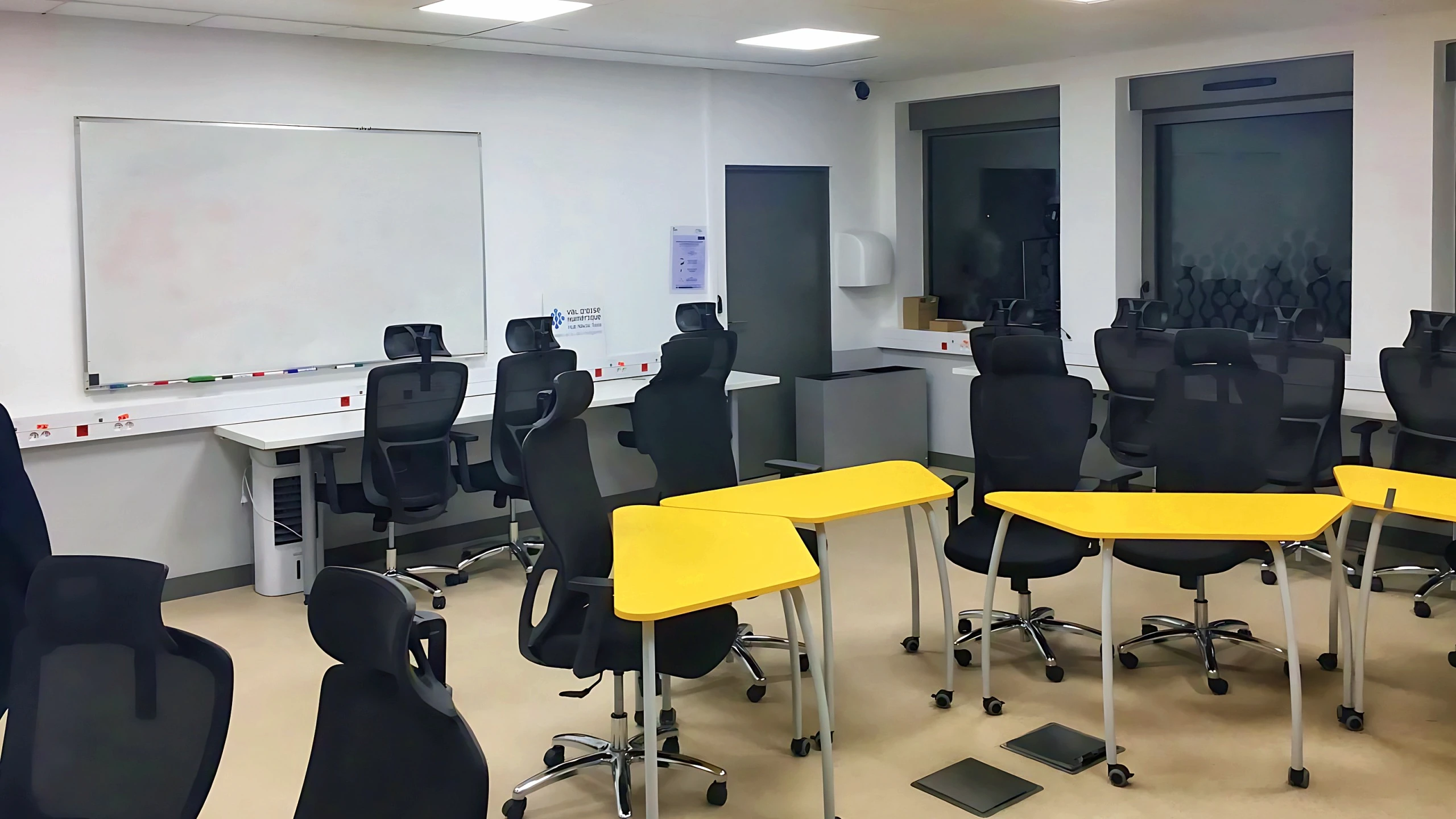
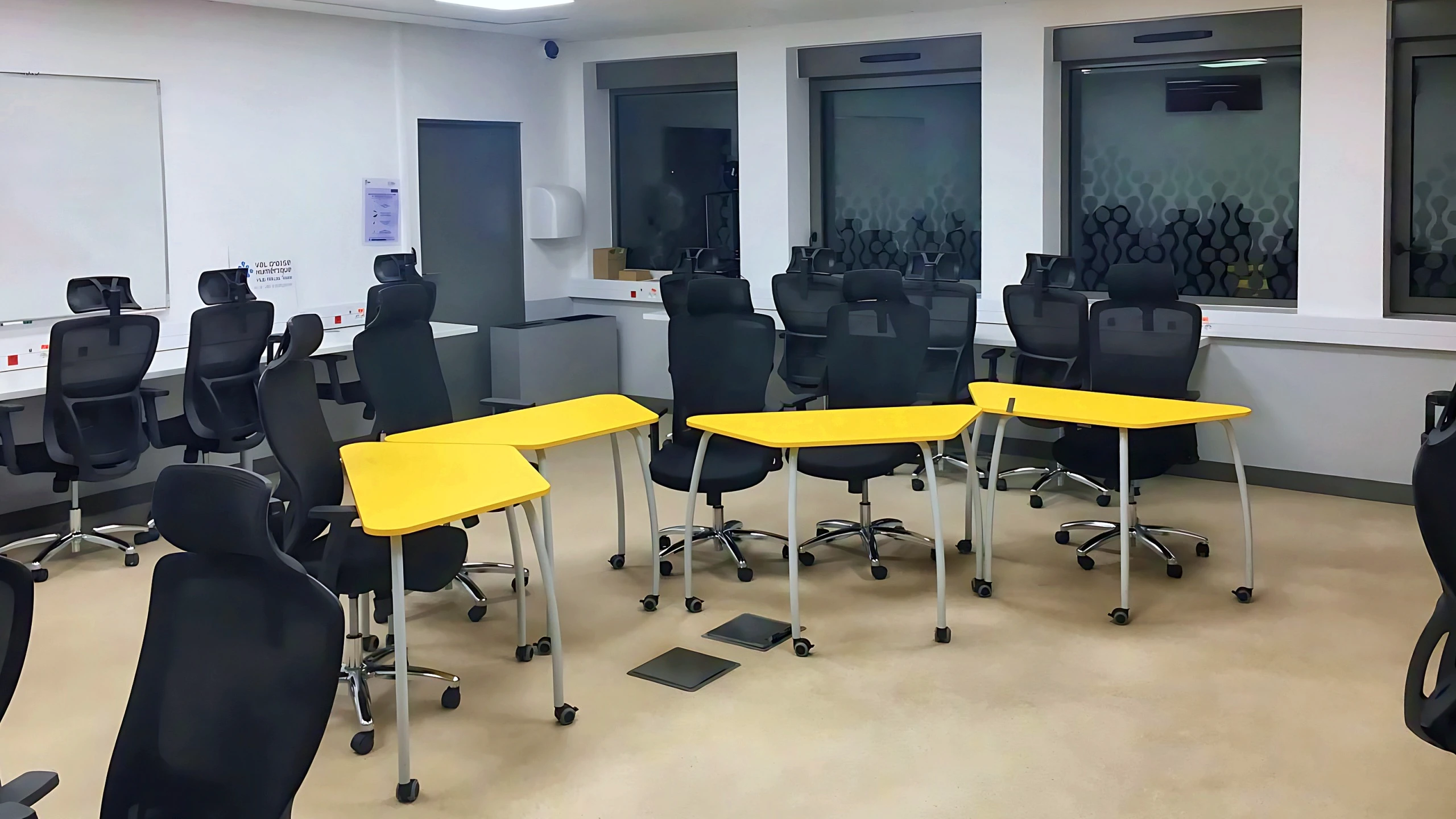
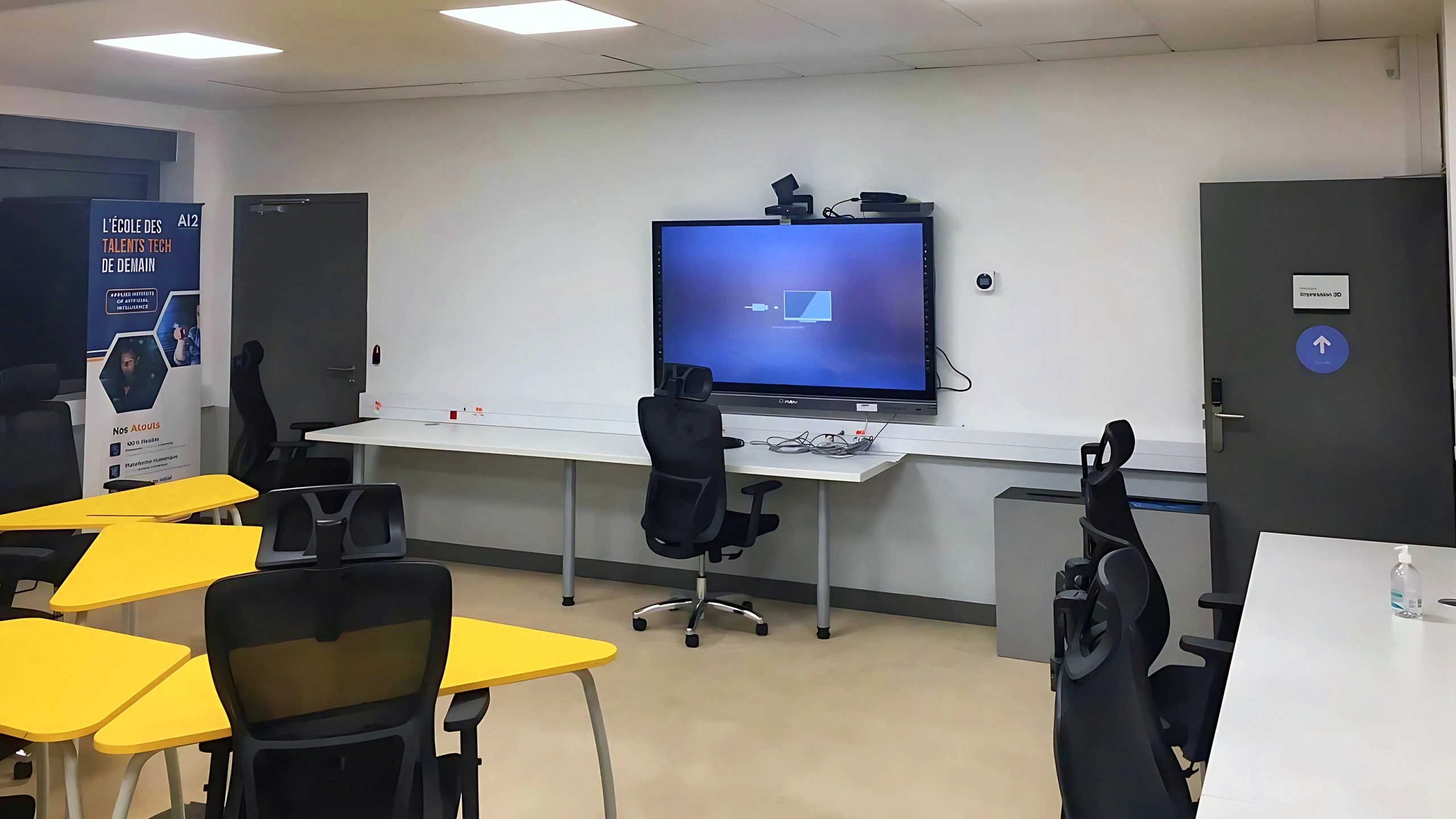
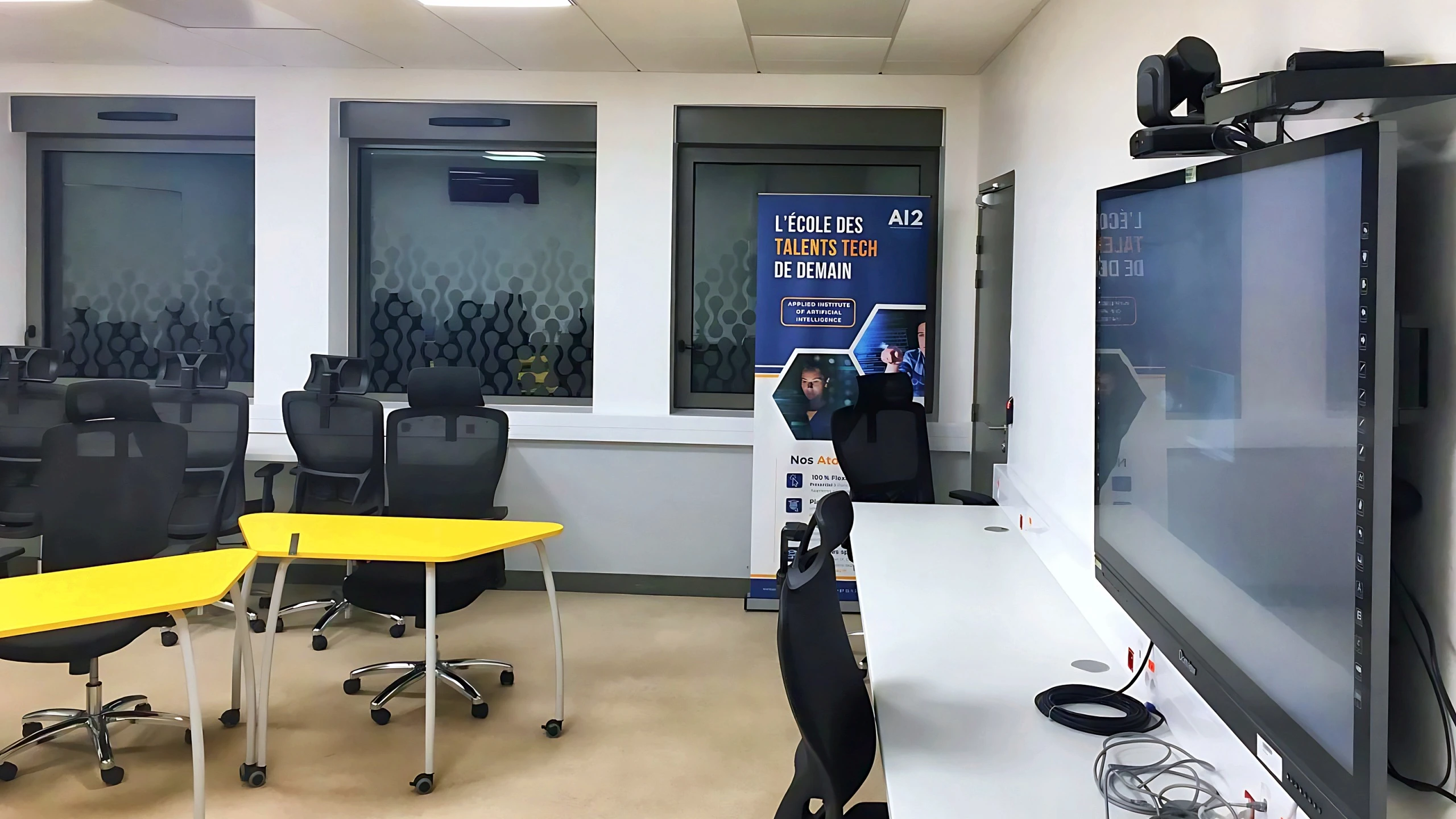
AI2, the Applied Institute of Artificial Intelligence, teaches its MSc Applied AI and Data Science 100% in English (B2 level, for example IELTS 6.0 or TOEFL iBT 72; no French, no GRE or GMAT) on its campus at the Hub Nikola Tesla in Écouen, 22 minutes from Paris Gare du Nord by Transilien line H. It combines what the steps above require: projects defended before a jury, six months in a French company and a level 7 qualification.
| Format | For whom | Structure | Tuition 2027 |
|---|---|---|---|
| MSc, 2 years | Three-year bachelor’s in computing, mathematics, engineering or science | Year 1 applied AI foundation (500 h), Year 2 data science (500 h), then a 6-month internship; work-study possible in Year 2 | Year 1 €12,500, from €10,500 after scholarship; Year 2 €13,000 |
| Direct entry, 18 months | Related four- or five-year degree | 12 months on campus (Year 2), then a 6-month internship | €13,000, from €11,300 after scholarship |
| Fast-Track, 11 months | Four-year accredited B.Tech or BE (Washington Accord) or a master’s; Python, statistics and SQL checked at interview | 5 months on campus (February to June 2027, 500 h, 70% hands-on), then 6 months in a company (July to December) | €12,500, or €11,000 for applications before 15 November 2026 |
Every format awards the AI2 MSc diploma and prepares the professional certification RNCP39978 « Architecte des systèmes d’information dans les processus industriels » (certifier DATAKOO, AI2’s parent company), registered at level 7 and recognised by the French State at master’s level (EQF 7). RNCP level 7 titles appear on the official list of diplomas at least equivalent to a master’s used for residence purposes, the condition for the job-search permit above.
AI2 coaches the internship search: CV and LinkedIn in the French format from February, offers from its network and interview coaching from March to May, the internship agreement, then monthly follow-up in the company while you deliver the professional project. Landing the offer remains your achievement; the support makes it come sooner.
For engineers and master’s holders in a hurry, the 11-month Fast-Track curriculum puts the data science core into five months and sends you into a French company in July 2027, with the jury at the end of December 2027. The other formats start in February, May and September 2027. For February, the priority deadline and complete visa file are due on 30 November 2026. Plan visa resources of at least €877.50 a month on top of tuition (Service-Public F2231).
📘 Related guide: Bachelor in data science in France in English: what you study and where it leads.
Frequently asked questions
Can international students get data science jobs in France?
Yes. Non-EU graduates usually enter data roles after an internship or work-study year during a master’s-level programme. A diploma at least equivalent to a master’s obtained in France gives access to a one-year job-search permit.
Which data job is the easiest first job in France?
Data analyst and business intelligence roles are often the most accessible first step. Data scientist and data engineer roles are also open to graduates, most often after an internship or work-study year in the same company.
How many hours can I work while studying in France?
A student residence permit allows up to 964 hours of paid work a year, which is 60% of the legal annual working time, without a separate work authorisation.
How long can I stay in France to look for a job after graduation?
Graduates with a diploma at least equivalent to a master’s obtained in France can request a job-search or business creation permit valid for one year. It cannot be renewed. Apply at the prefecture during the two months before your student permit expires.
What salary do I need for a work permit after my studies?
According to Service-Public in 2026, a job related to your studies must pay more than €2,800.53 gross a month for the employee card route. The talent card for qualified employees requires at least €39,582 gross a year, and the EU Blue Card at least €59,373 gross a year.
Do I need to speak French to work in data science in France?
Not always. Code and tools are in English and some teams work in English, but business meetings and client-facing roles often use French. Basic French widens your options.
Which AI2 programme prepares for data science jobs?
The MSc Applied AI and Data Science, taught in English at Écouen near Paris, as a two-year MSc, an 18-month direct entry or an 11-month Fast-Track starting in February 2027. Every format includes a six-month internship in a French company.
Sources consulted on 29 October 2026: Eurostat: AI by size class of enterprise, isoc_eb_ai (updated 15 June 2026) · Eurostat: employed ICT specialists, isoc_sks_itspt (updated 17 April 2026) · Eurostat: enterprises recruiting ICT specialists, isoc_ske_itrcrn2 · European Commission: 2026 State of the Digital Decade (17 June 2026) · APEC: Jeunes diplômé.es d’un Bac +5 (November 2025, PDF) · APEC: Baromètre T1 2026 (PDF) · ESCO: data scientist · ESCO: data analyst · Service-Public F2713 (verified 7 October 2025) · Service-Public F32131 (verified 1 January 2026) · Service-Public F17319 (verified 1 June 2026) · Service-Public F16922 (verified 1 June 2026) · Service-Public F2231 (verified 1 August 2026) · AI2: MSc Applied AI and Data Science · AI2: tuition fees 2027
Apply online: AI2’s admissions team reviews your transcripts, holds an online interview and confirms your format, tuition and any scholarship in your admission letter. Fast-Track scholarship until 15 November 2026, priority deadline 30 November 2026.