
Planning a data scientist career in France? What the job really involves, the skills Europe’s occupation classification lists, which studies open the door for international students, how long each route takes and what it costs.
What does a data scientist do in France?
ESCO, the European Commission’s multilingual classification of skills and occupations, gives the most neutral definition available. A data scientist finds and interprets rich data sources, manages large amounts of data, merges data sources and ensures the consistency of datasets, creates visualisations, builds mathematical models from data, and presents findings to the team and, when needed, to a non-expert audience, recommending ways to apply the data. ESCO places the job under systems analysts (ISCO 2511.3) and lists alternative titles such as research data scientist and data expert.
In practice: framing a business question with the people who own it, building and testing models, and explaining the result so that someone acts on it. Beginners underestimate the last part.
| Data analyst | Data scientist | Machine-learning engineer | |
|---|---|---|---|
| Main question | What happened, and why? | What will happen, and what should we do? | How do we run this model reliably at scale? |
| Typical output | Dashboards, KPIs, ad hoc analyses | Predictive models, experiments, recommendations | Deployed services, pipelines, monitoring |
| Core tools | SQL, Excel, Power BI or Tableau | Python, scikit-learn, PyTorch, statistics | Docker, CI/CD, cloud, MLOps tools |
| Usual first step | Common first job after a master’s | Often after an internship or work-study year | Often after data science or software roles |
If you are still choosing between data and AI, our comparison of data science and artificial intelligence explains where the two overlap.
Which skills does a data scientist need?
ESCO lists the essential skills of the data scientist. Grouped by theme, here they are with a way to build each one.
| ESCO essential skills | What it means at work | How to practise it |
|---|---|---|
| Statistics; execute analytical mathematical calculations | Choose the right test or model, quantify uncertainty, avoid false conclusions | Probability and inference course, then re-analyse a public study and check its claims |
| Query languages; design database scheme; data models | Get the right data out of company databases yourself | Model a small PostgreSQL database, write joins, window functions and views |
| Perform data cleansing; implement data quality processes; normalise data | Most project time goes into fixing missing, duplicated or inconsistent data | Take a messy open dataset and publish your cleaning steps as a reproducible notebook |
| Data mining; information extraction; build recommender systems | Find patterns, extract signals from text, rank items for users | Build a classifier, a clustering study and a small recommender, each with a clear evaluation |
| Visual presentation techniques; deliver visual presentation of data; report analysis results | Turn results into a decision someone can take | One dashboard and one five-minute presentation for every project |
| Establish data processes; develop data processing applications; manage data collection systems | Make your work repeatable instead of a one-off notebook | Schedule a small pipeline, package your code, put it on Git with tests |
ESCO describes skills, not tools. The toolkit most data teams use today is Python (pandas, scikit-learn, PyTorch or TensorFlow), SQL, Git and a cloud platform, and recent curricula add language models, retrieval-augmented generation and MLOps. Two legal frameworks are worth knowing in Europe: the GDPR for any personal data, and the EU AI Act for systems that fall into its risk classes.
Which studies lead to a data scientist job in France?
There is no mandatory diploma, but in practice the master’s level is the entry ticket, and for international students it is also the key to staying after graduation.
French employers recruiting data scientists usually expect a master’s-level degree (Bac+5) in data science, statistics, applied mathematics, computer science or engineering. For an international student the degree matters twice: it is what the student visa is issued for, and a diploma at least equivalent to a master’s obtained in France is the condition for the one-year job-search permit after graduation (Service-Public F17319).
| Route | Cost signal | Strength for a data career | Watch out for |
|---|---|---|---|
| Public university master’s (statistics, computer science, applied mathematics) | €3,950 a year for non-EU students in 2026-27 (Campus France) | Low fees, national master’s degree, strong theory | Selective entry; many programmes are taught in French; check placement length |
| Engineering school with a data specialisation | Varies by school and status; check each one | Strong maths and computing base | Competitive admission, usually several years long |
| Private institution, master’s-level programme registered at RNCP level 7 | About €6,000 to €18,000 or more a year (Campus France) | Often taught in English, several intakes, long company placements | Check the RNCP level and the real data content of the modules |
| Short intensive course without a level 7 qualification | Varies | Quick upskilling for people who already hold a master’s | Does not by itself give the diploma required for the job-search permit |
A programme registered in the RNCP at level 7 is recognised by the French State at master’s level (EQF 7); our explainer on RNCP level 7 qualifications shows how to check a certification on the official register. For a side-by-side view of programmes, see our guide to data science master’s in Paris taught in English, or our page on master’s in machine learning in France if you want a more model-focused course.
How to become a data scientist in France: an eight-step roadmap
A route that works for most international students, from your current degree to your first contract.
- 1Check your starting pointYour previous degree decides the route. A three-year bachelor’s usually leads to a two-year master’s; a four- or five-year degree can lead to a direct second year; an engineering degree or a master’s opens intensive formats. Our guide to one-year master’s options in France explains what a short format means for the visa.
- 2Fix the maths and programming foundationsLinear algebra, probability, statistics, Python and SQL. Fix any weak area before you apply.
- 3Build three end-to-end projectsAn analysis with a dashboard, a predictive model with a proper evaluation, and one deployed application or pipeline. Publish the code and a short write-up for each.
- 4Choose a master’s-level programme with a long placementCheck the teaching language, the RNCP level, the data and machine-learning hours, the internship length and whether intake dates fit your visa timeline.
- 5Prepare the visa earlyApply through the Campus France procedure if your country uses it, and show resources of at least €877.50 a month for a long-stay student visa (Service-Public F2231). The steps are detailed in our visa guidance.
- 6Get inside a data team through an internshipAbove two months, an internship must pay at least €4.50 an hour in 2026, about €661.50 for a full-time month of 147 hours (Service-Public F32131). Aim for a project the team keeps using.
- 7Consider work-study in your final yearFor courses leading to a master’s diploma, the one-year-in-France condition for an apprenticeship contract is waived, and once the contract is validated you may work beyond the 964-hour student limit (Service-Public F2713).
- 8Graduate and switch permitsRequest the one-year job-search permit in the two months before your student permit expires, or move straight to an employee card if you hold a related job paid at least €2,800.53 gross a month. Where the jobs are is covered in data science jobs in France for international students.
How long does it take, and what does it cost?
The route depends mostly on the degree you already hold. Here are the common cases.
| Your current degree | Typical route | Time to the job market | Main cost items |
|---|---|---|---|
| Three-year bachelor’s (BSc, BCA, BA) in a quantitative field | Two-year master’s-level programme with a six-month internship | About 2 years of study, then the job search | Two years of tuition, living costs, visa resources |
| Four- or five-year degree in a related field | Direct entry into the second year of a master’s-level programme | About 12 to 18 months | One year of tuition plus the internship period |
| Engineering degree (four-year accredited) or a master’s | Intensive format condensing the final year | About 11 months | One fee for the whole programme |
| Already a master’s and work experience in data | Direct job search or short upskilling | Depends on your permit situation | Check that your diploma meets residence rules |
Living costs come on top of tuition. For the visa, Service-Public requires resources of at least €877.50 a month, which is €10,530 for twelve months. An internship stipend does not replace that proof at the visa stage, because you do not yet have the internship. On the other side of the ledger, a six-month internship at the legal minimum brings in about €661.50 a month, and a work-study contract pays a salary while the employer’s training fund pays the tuition for the period covered.
Salaries by experience and city are compared in our data scientist salary guide; published surveys disagree, so treat any single figure with caution.
Where does AI2’s MSc fit in this roadmap?
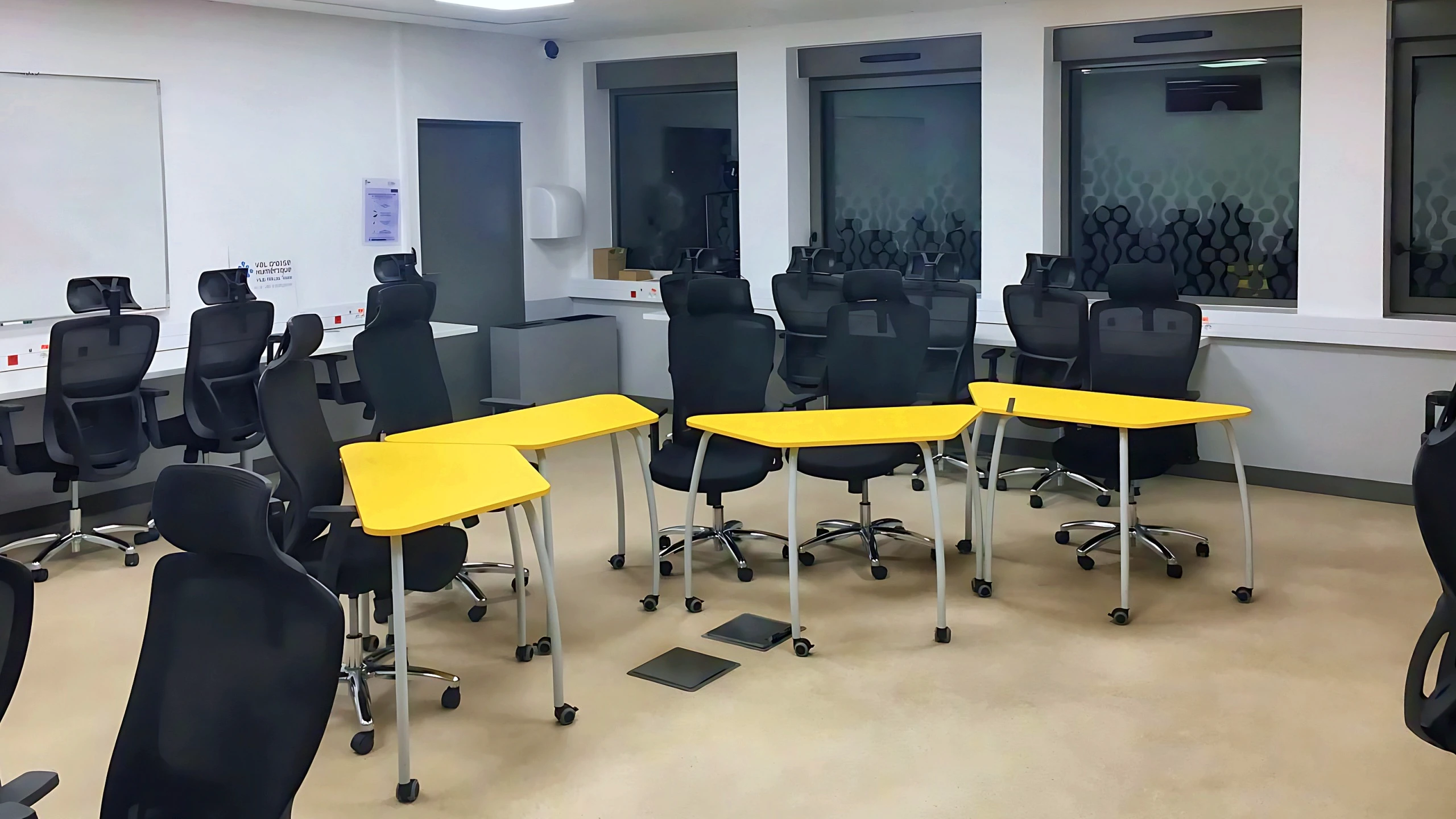
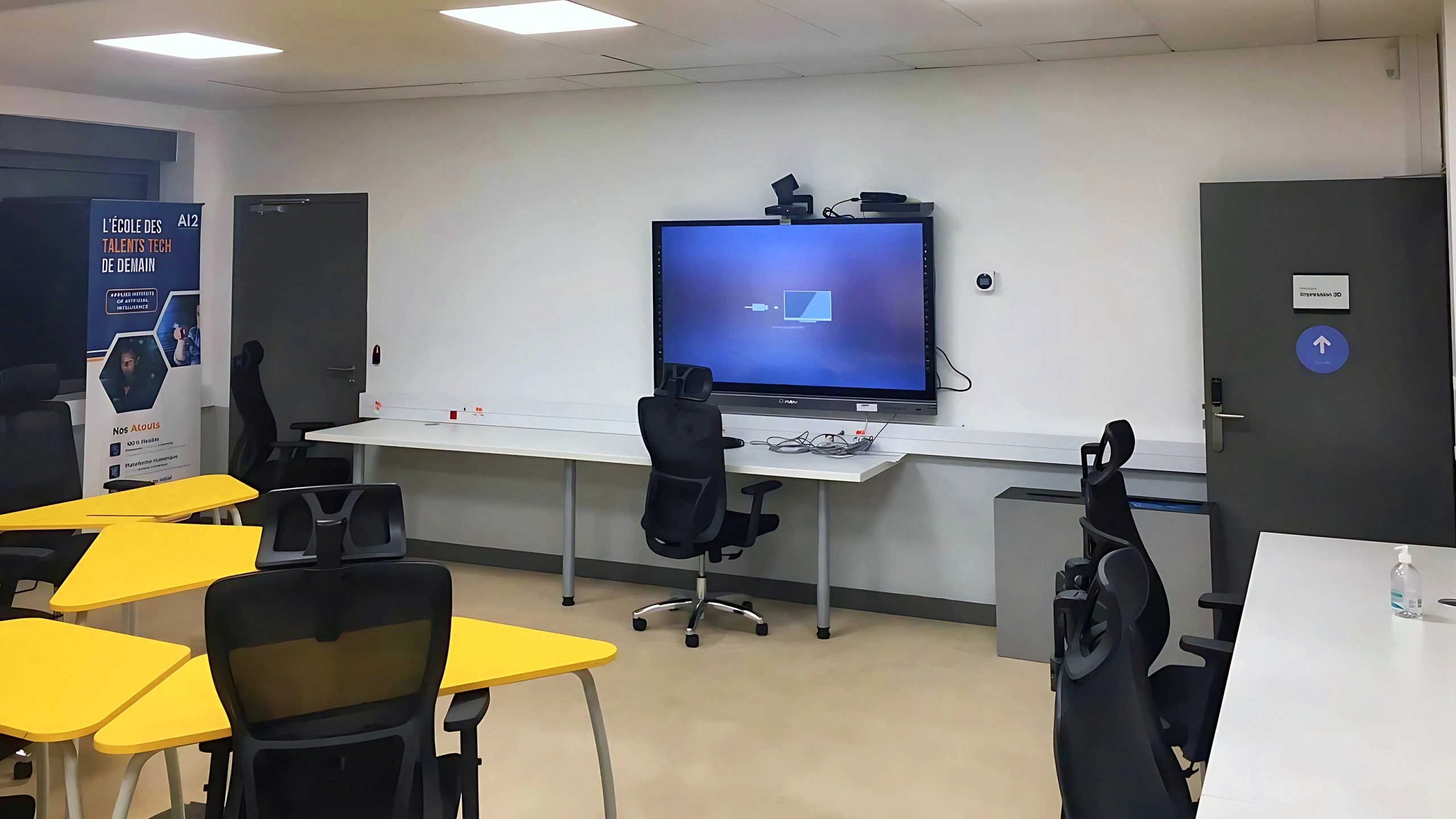
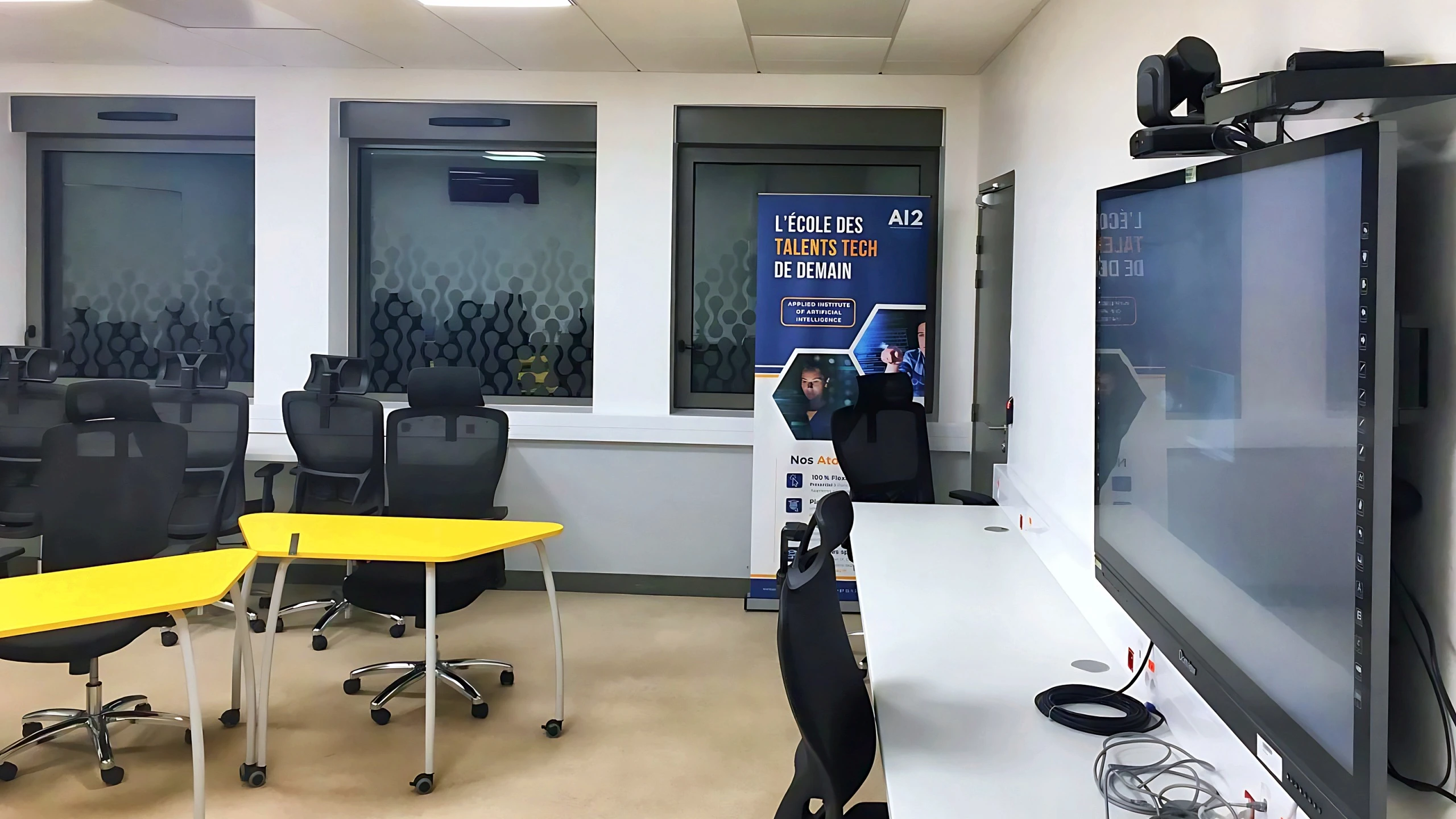
AI2, the Applied Institute of Artificial Intelligence, teaches its MSc Applied AI and Data Science 100% in English (B2 level, for example IELTS 6.0 or TOEFL iBT 72; no French, no GRE or GMAT) on its campus at the Hub Nikola Tesla in Écouen, 22 minutes from Paris Gare du Nord by Transilien line H. Its curriculum maps onto the ESCO skills above.
| What the job asks for (ESCO) | Where it is taught at AI2 | Volume |
|---|---|---|
| Statistics, data cleaning, query languages | Python for Data Science (Python, NumPy, Pandas, Git) and SQL & Databases (PostgreSQL, window functions, SQLAlchemy) | 28 h + 35 h (Year 1) |
| Data mining, models | Introduction to Machine Learning (cross-validation, Random Forest, XGBoost, SHAP) and Introduction to Deep Learning | 28 h + 21 h (Year 1) |
| Visual presentation, reporting results | Data Visualisation & Storytelling (Tableau) in Year 1; Business Data (KPIs, storytelling for executives) in Year 2 | 35 h + 84 h |
| Data processes and applications | Data Engineering & Pipelines (Airflow, Kafka, dbt) and MLOps (model lifecycle, deployment, drift, CI/CD) | 28 h + 42 h |
| Information extraction | NLP & Transformers and Generative AI & Agents (LLMs, RAG, agents, evaluation, guardrails) | 42 h + 42 h (Year 2) |
Every format awards the AI2 MSc diploma and prepares the professional certification RNCP39978 « Architecte des systèmes d’information dans les processus industriels » (certifier DATAKOO, AI2’s parent company), registered at level 7 and recognised by the French State at master’s level (EQF 7). Its four competency blocks are each defended before a jury, and a six-month internship in a French company closes the programme with a professional project.
| Format | Entry level | Duration | Tuition 2027 |
|---|---|---|---|
| MSc, 2 years | Three-year bachelor’s in computing, mathematics, engineering or science | Year 1 (500 h) + Year 2 (500 h) + 6-month internship; work-study possible in Year 2 | Year 1 €12,500, from €10,500 after scholarship; Year 2 €13,000 |
| Direct entry | Related four- or five-year degree | 18 months: 12 on campus, then a 6-month internship | €13,000, from €11,300 after scholarship |
| Fast-Track | Four-year accredited B.Tech or BE (Washington Accord) or a master’s; Python, statistics and SQL checked at interview | 11 months: February to June 2027 on campus (500 h, 70% hands-on), July to December in a company | €12,500, or €11,000 for applications before 15 November 2026 |
The Fast-Track curriculum is the shortest of the three: it keeps the full 224 hours of certification blocks and adds a 276-hour data science core, from Python and machine learning to generative AI and MLOps, with the jury and title at the end of December 2027. The other formats start in February, May and September 2027; for February, the priority deadline and complete visa file are due on 30 November 2026. Fees and payment details are on the AI2 tuition fees page.
📘 Related guide: Bachelor in data science in France in English: what you study and where it leads.
Frequently asked questions
What qualifications do you need to become a data scientist in France?
No single diploma is mandatory, but employers usually expect a master’s-level degree in data science, statistics, computer science or engineering, plus projects and an internship. For international students, it also opens the one-year job-search permit after graduation.
Can I become a data scientist in France without a master’s degree?
It is possible in principle if you can prove strong skills, but it is harder for an international student. The job-search permit after studies requires a diploma at least equivalent to a master’s obtained in France, so a master’s-level programme is the practical route.
How long does it take to become a data scientist in France?
From a three-year bachelor’s, count about two years for a master’s-level programme including a six-month internship, then the job search. With a four-year engineering degree or a master’s, intensive formats of 11 to 18 months exist.
Which skills matter most for a data scientist?
Statistics, SQL, data cleaning, machine learning and clear communication of results. ESCO, the European classification of occupations, lists data mining, statistics, query languages, data cleansing, visual presentation of data and reporting analysis results among the essential skills.
How much does a data science master’s cost in France?
According to Campus France, a master’s at a public university costs €3,950 a year for non-EU students in 2026-27, and private institutions generally charge about €6,000 to €18,000 or more a year. Living costs and visa resources of at least €877.50 a month come on top.
Do I need French to become a data scientist in France?
Not to study, if you choose an English-taught programme. At work, code and tools are in English, but many meetings are in French, so basic French widens your options.
Is there an 11-month data science programme at AI2?
Yes. The Fast-Track of the MSc Applied AI and Data Science starts in February 2027: five months on campus at Écouen, then a six-month internship in a French company. It costs €12,500, or €11,000 for applications submitted before 15 November 2026, and is open to holders of a four-year accredited B.Tech or BE or a master’s.
Sources consulted on 29 October 2026: ESCO, European Commission: data scientist (ISCO 2511.3), description and essential skills · ESCO, European Commission: data analyst (ISCO 2511.2) · Campus France: tuition fees in France 2026-27 (updated 25 June 2026) · APEC: Jeunes diplômé.es d’un Bac +5, une insertion plus difficile (November 2025, PDF) · Service-Public: student visa and residence permit, F2231 (verified 1 August 2026) · Service-Public: work for foreign students, F2713 (verified 7 October 2025) · Service-Public: internship gratification, F32131 (verified 1 January 2026) · Service-Public: job-search or business creation permit, F17319 (verified 1 June 2026) · AI2: MSc Applied AI and Data Science · AI2: tuition fees 2027
Apply online: AI2’s admissions team reviews your transcripts, holds an online interview and confirms your format, tuition and any scholarship in your admission letter. Fast-Track scholarship until 15 November 2026, priority deadline 30 November 2026.