

An internship in France is part of a course, never a stand-alone job. That single rule explains everything else: the three-party agreement, the legal minimum stipend, the six-month ceiling and the residence status you need. This guide sets out the official rules from Service-Public and Service Public Entreprendre, then shows how to land a placement.
Internship, student job or work-study: three different things
International students often use “internship” for any work in a company. French law does not. Service-Public describes three separate set-ups, each with its own document, pay rule and limit. Mixing them up can cause real trouble with employers and préfectures.
| Criterion | Internship (stage) | Student job | Work-study (alternance) |
|---|---|---|---|
| Legal status | Intern (stagiaire), not an employee | Employee on a part-time contract | Employee on an apprenticeship or professionalisation contract |
| Paperwork | Convention de stage signed by you, the host and your school | Employment contract; the employer declares you to the préfecture | Contract registered with the employer’s training fund (OPCO) |
| Money | Gratification: at least €4.50 an hour once the internship passes two months | Salary, at least the minimum wage | Salary set as a share of the minimum wage; tuition paid through the employer |
| Limit for non-EU students | Six months per host and per academic year | 964 hours a year without a work authorisation | Beyond 964 hours once the OPCO validates the apprenticeship |
| Linked to your course? | Always: internships outside a curriculum are forbidden | No | Yes, it is the course rhythm |
The rest of this guide covers the first column. For part-time jobs and the 964-hour rule, see working while studying in France; for salaried work-study, see the last section.
The convention de stage: the document that makes it legal
Service-Public is direct: the intern must sign an internship agreement, and the internship must take place within that agreement. It is signed by five parties: you, the host organisation, your school or university, a teacher who acts as your academic referee and a tutor inside the host. Without it, the host is not running an internship at all.
The agreement has compulsory content. Among the items listed by Service Public Entreprendre:
- the full title of your programme and its teaching hours per year or semester;
- the skills you are expected to develop and the activities entrusted to you;
- the start and end dates, the maximum weekly hours of presence and your actual weekly hours;
- the hourly rate of the stipend and how it is paid;
- leave and absence rules, benefits such as meals or transport, and your social protection in case of a work accident;
- how the agreement can be suspended or ended, and how the internship is validated if it is interrupted.
Two conditions sit behind the agreement. First, internships outside a curriculum are forbidden: the internship must belong to a course of at least 200 teaching hours per academic year, of which at least 50 hours are taught in person, and the internship itself does not count towards those hours. Second, the tasks must match the teaching project. A host may not use an intern to replace an absent employee, fill a permanent post, absorb a temporary peak of activity or cover a seasonal job, and may not give an intern dangerous tasks.
Is an internship in France paid?
Yes, once it passes a duration threshold. Figures from Service Public Entreprendre, page verified on 1 January 2026.
More than two months
€4.50 per hour of presence
Monthly, from day one
| Month of 2026, full time at 7 hours a day | Hours of presence | Minimum stipend (actual hours) |
|---|---|---|
| January (21 days) | 147 hours | €661.50 |
| February (20 days) | 140 hours | €630.00 |
| March (22 days) | 154 hours | €693.00 |
| Total for the three months | 441 hours | €1,984.50, or €661.50 a month if spread evenly |
Scaled up, a full six-month internship at the maximum of 924 hours of presence carries a legal minimum of €4,158 at the 2026 rate. The ceiling used for the calculation changes every 1 January, so an internship that runs across the new year needs a clause in the agreement to update the rate.
On tax and contributions, Service Public Entreprendre states that a stipend of up to €4.50 an hour is free of social contributions, CSG and CRDS included, and that the stipend is exempt from income tax up to the annual amount of the minimum wage. On top of the stipend, you have access to the staff canteen or meal vouchers on the same terms as employees, and the host reimburses part of your public transport costs as it does for its staff. These reimbursements are paid in addition, not counted inside the stipend.
How long can it last, and how many hours?
The legal ceiling is six months per host organisation and per academic year. Service-Public counts it in presence: 7 hours make one day, 22 days make one month, and the six months are reached at 924 hours of actual presence in the same academic year. A host that takes interns on the same post must wait one third of the previous internship’s length before the next one starts, so two months after a six-month internship.
Interns are not employees, but on working time they have the same rights as the host’s staff: maximum daily and weekly hours, daily and weekly rest, public holidays and night work rules. Your agreement states your maximum weekly presence. For internships longer than two months, the agreement must allow leave and authorised absences; paying that leave is optional. At the end, the host must give you an internship certificate stating the total length and, where relevant, the total stipend paid. If the host hires you within three months, the internship is deducted from your probation period.
Hosts face their own limits, which explain why some companies refuse interns in certain periods:
- under 20 employees: no more than 3 interns at the same time;
- 20 employees or more: interns may not exceed 15% of the headcount in a given calendar week;
- each tutor follows no more than 3 interns over the same period;
- breaking these rules exposes the host to an administrative fine of up to €2,000 per intern, or €4,000 for a repeat within a year.
Which visa or residence status do you need?
Service-Public states that a foreign student may do an internship whatever their nationality, provided they are lawfully resident in France. In practice there are two routes, depending on where you are enrolled.
Student visa (VLS-TS étudiant)
Trainee visa (VLS-TS stagiaire)
Keep the internship and the 964-hour rule apart. Service-Public sets the 964-hour annual limit for salaried work by non-EU students and describes the intern as someone who is not an employee. If you also hold a part-time job during your studies, that job is what the hour count tracks, and your employer must declare you to the préfecture at least two working days before you start.
How do you find an internship in France?
There is no central application system. You apply to hosts directly, usually through your school’s network, company career pages and job boards, and Service-Public points students to the national internship listings run by the CIDJ (Infostages). What makes the difference is preparation and timing:
- 1Start from your course calendarYour programme fixes when the internship can start and how long it must last. Search three to five months ahead, since the host must also fit the agreement into its own planning, and further ahead if a visa step is involved.
- 2Build a French-format CV and a project portfolioOne page, a short profile line and skills grouped by tool. For technical roles, a public repository with two or three documented projects says more than a list of courses.
- 3Target hosts that can legally take youSmall companies are limited to three interns at a time, so a startup that already hosts three cannot add you, however much it likes your profile.
- 4Read the offer like a contractA serious offer states the dates, the weekly hours, the stipend and the missions. Be wary of anything described as an internship without an agreement, unpaid beyond two months or plainly covering a permanent job.
- 5Get the agreement signed before day oneThe host, your school, your academic referee, your tutor and you all sign before you start. Check that the hourly rate is written in and, for a year-end start, that it updates on 1 January.
French helps, even in international teams: a basic level makes interviews and daily life easier. AI2, for example, offers optional French classes alongside its English-taught programmes.
After the internship: from intern to employee
An internship can turn into a job offer, and the residence rules support that path for master’s graduates. Service-Public describes a one-year, non-renewable job-search or business-creation permit for non-EU graduates holding a master’s or an equivalent diploma obtained in France within the last 12 months. During that year, a job linked to your studies and paid more than €2,800.53 gross a month needs no work authorisation, and the 964-hour cap no longer applies.
With a qualifying job you can then move to a salaried residence permit, or to a multi-year talent card from €39,582 gross a year. Graduates who have left France can still request the job-search permit within four years of their diploma. Details are in working in France after graduation.
Where AI2 fits: master’s formats with the company months built in
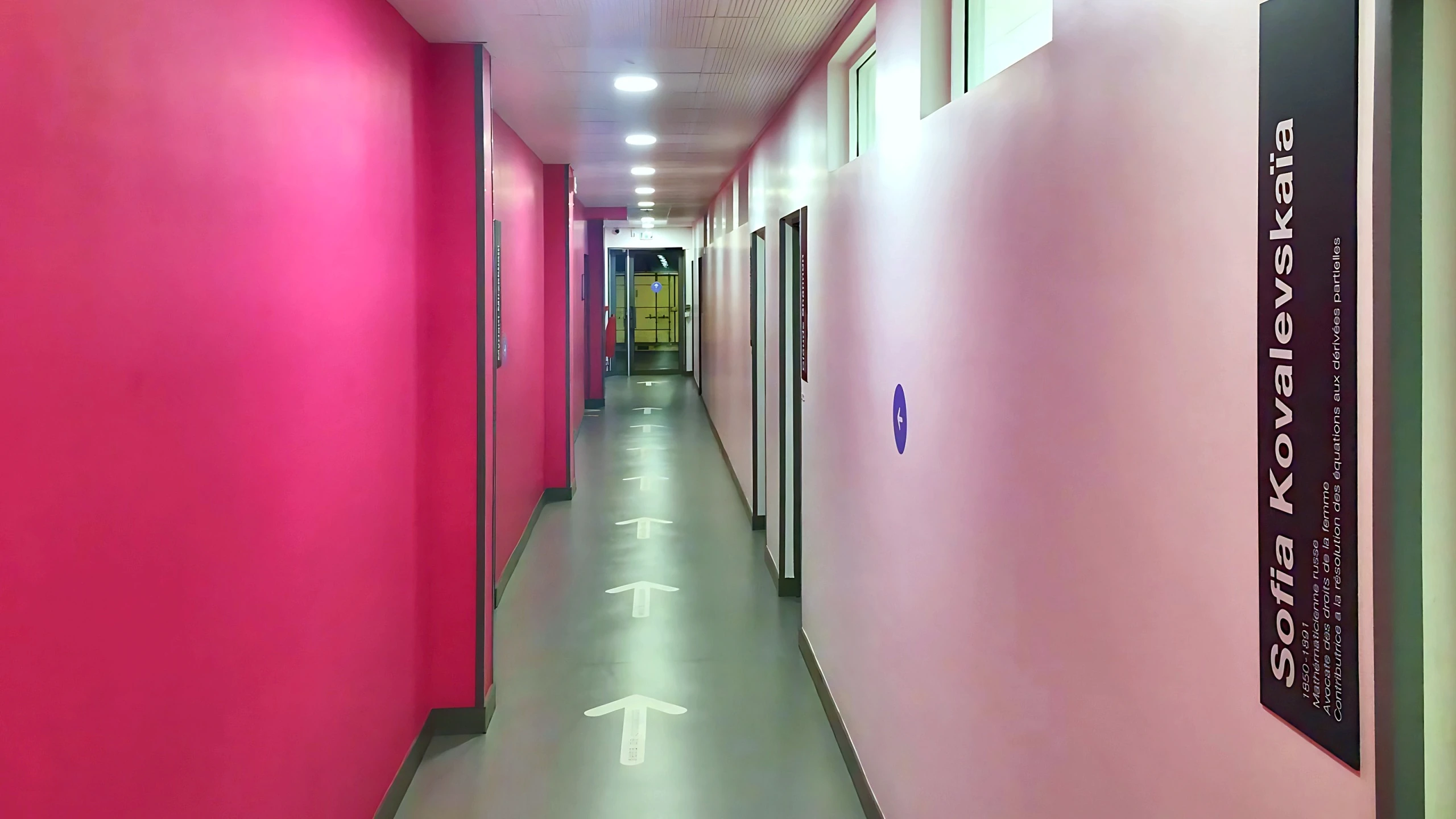
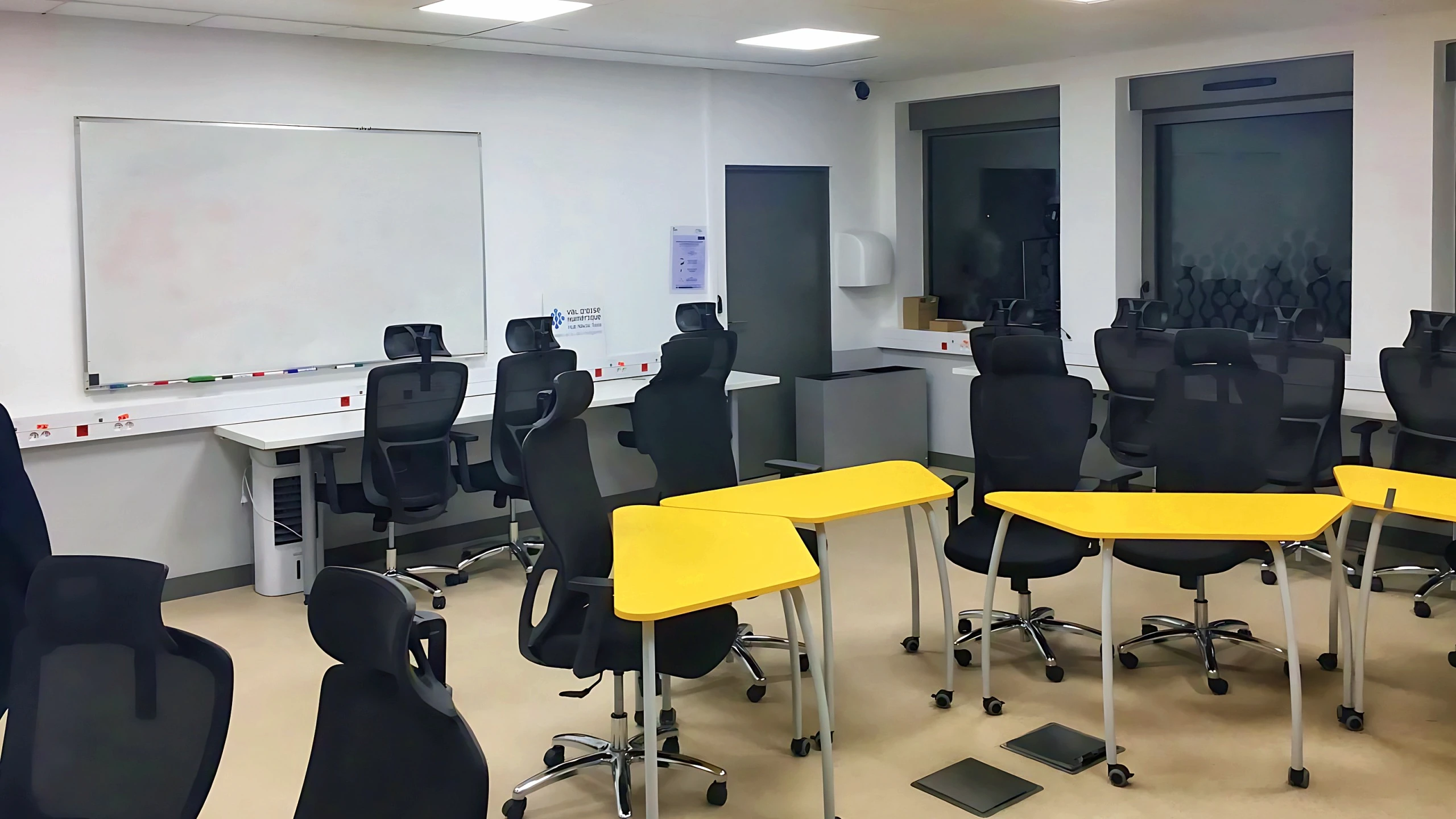
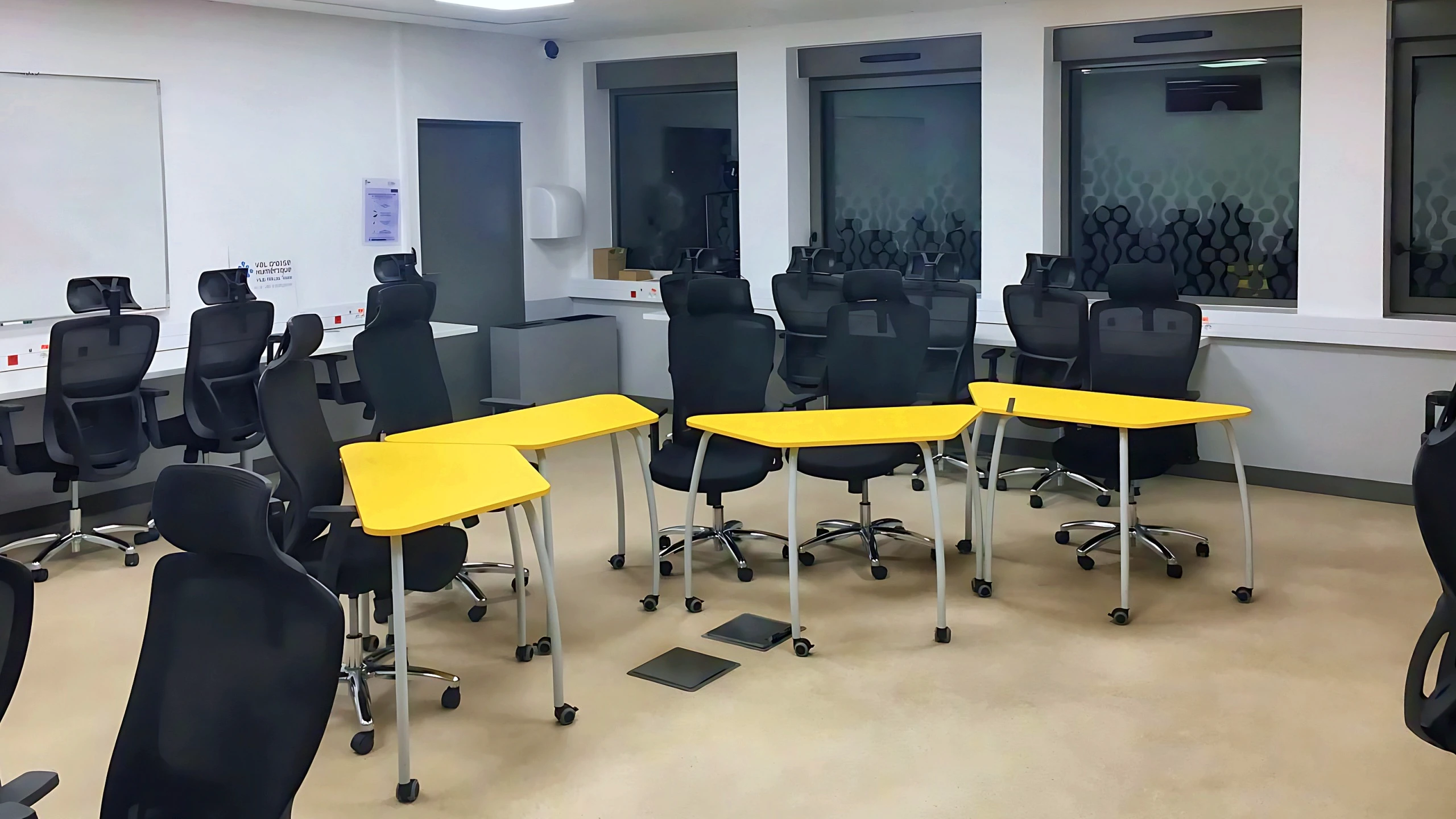
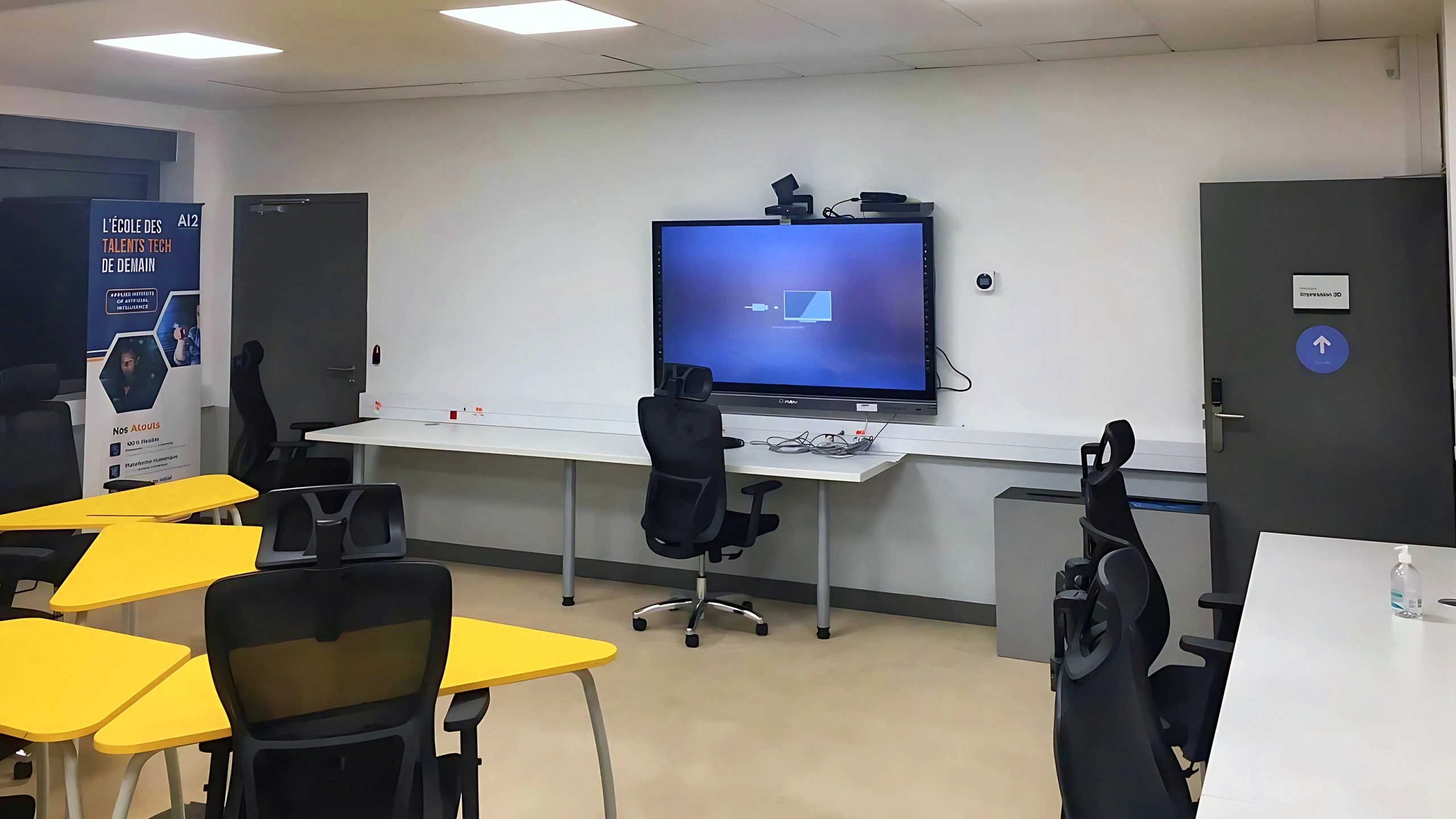
AI2, the Applied Institute of Artificial Intelligence, teaches its programmes entirely in English on the Hub Nikola Tesla campus in Écouen, 22 minutes from Paris Gare du Nord. Every MSc format ends with time in a company, and AI2 signs the internship agreement as your school, so no separate trainee-visa validation is needed. See also AI courses in Paris.
- Fast-Track MSc, 11 months, February 2027 only. Five months on campus from February to June (500 hours of applied AI and data science), then six months in a company in France from July to December. For holders of a four-year accredited engineering degree or a master’s. €11,000 for applications submitted before 15 November 2026, then €12,500.
- MSc, 2 years, or direct entry in 18 months. Both routes end with a six-month internship and a professional project defended before a jury. Intakes in February, May and September 2027.
- Work-study from MSc Year 2. The internship can be replaced by a salaried apprenticeship contract: the employer’s training fund pays tuition to AI2 and you earn a salary. It depends on signing a contract with an employer.
For the Fast-Track, AI2 sets out the internship search month by month: CV and LinkedIn in the French format from February, offers from the AI2 network and interview coaching from March to May, then monthly follow-up during the placement. Across programmes, the careers team prepares internship and work-study searches with CV and interview coaching. Each final year awards the AI2 diploma and prepares a professional certification recognised by the French State and registered in the RNCP at level 7, the master’s level (EQF 7).
Details: MSc Applied AI and Data Science, including the Fast-Track and work-study at AI2. The priority deadline for February 2027 is 30 November 2026.
📘 Related guide: How to become a SOC analyst in France: skills, tools and first job.
📘 Related guide: How to become an IoT engineer in France: roles, skills and tools.
Frequently asked questions
Can international students do an internship in France?
Yes. Service-Public states that a foreign student can do an internship whatever their nationality, as long as they are lawfully resident in France and the internship is part of their course, under a signed internship agreement.
Are internships in France paid?
They must be paid when they last more than two consecutive months in the same academic year, or from the 309th hour if split. The legal minimum in 2026 is €4.50 per hour of presence, paid monthly from the first day.
How much does an intern earn per month in France in 2026?
At the legal minimum, it depends on the hours in the month: Service-Public’s 2026 example gives €630 for 140 hours, €661.50 for 147 hours and €693 for 154 hours. Some sector agreements set a higher hourly rate.
What is a convention de stage?
It is the compulsory internship agreement signed by the intern, the host, the school, an academic referee and a tutor in the host. It sets the dates, weekly hours, missions, the hourly stipend and the rules on leave and social protection.
How long can an internship in France last?
At most six months per host and per academic year, which Service-Public counts as 924 hours of actual presence. A host must then wait one third of that length before taking a new intern on the same post.
Do I need a special visa for an internship in France?
Not if you are enrolled in a French programme: your student visa or residence card covers an internship within your course. Students enrolled abroad need a trainee visa, with an agreement validated by the administration at least two months before the start.
Can I find an internship in France without speaking French?
Yes, it is possible, particularly in teams that work in English, but basic French widens the choice of hosts. A programme that signs the agreement for you and helps with the search, such as AI2’s English-taught MSc, makes the process simpler.
Sources consulted on 27 October 2026: Service-Public: student internship in a professional setting (F16734) · Service Public Entreprendre: internships, employer obligations (F20559) · Service Public Entreprendre: minimum internship stipend (F32131) · Service-Public: foreign trainee visa and residence card (F17312) · Service-Public: student visa and resources (F2231) · Service-Public: work for non-EU students (F2713) · Service-Public: job-search permit (F17319)
Apply to AI2’s English-taught MSc near Paris: admissions reviews your file, holds an online interview and confirms your format, intake and tuition in writing.