Ireland offers an English-speaking job market and up to two years on Stamp 1G after a master’s. France offers lower public tuition, free social security registration for students and room for a company placement. Both ask for roughly €10,000 a year of living funds. This guide sets the official rules of Immigration Service Delivery, Service-Public and Campus France side by side.
France vs Ireland at a glance
Every figure below was checked on 27 October 2026 against the official pages cited at the foot of this guide.
| Criterion | France | Ireland |
|---|---|---|
| Programme must be | Offered by a higher education institution where you are enrolled or pre-enrolled | Full-time and listed on the Interim List of Eligible Programmes (ILEP) or the TrustEd Ireland list |
| Usual master’s structure | Two years (120 ECTS) for the national master’s; shorter formats exist at some institutions | A level 9 award on Ireland’s qualifications framework; length set by each programme |
| Tuition for non-EU students | Public institutions: €3,950 a year for a master’s (2026 to 2027). Private: roughly €6,000 to €18,000 a year or more | Set by each provider, which must list all costs in advance and cannot take cash |
| Living funds to prove | €877.50 a month minimum, so roughly €10,530 a year | At least €10,000 for each year of study, on top of fees |
| Health cover | Free registration with French social security | Private medical insurance required |
| Formality after arrival | Validate the student visa online within three months: €100 | Register your permission (stays over 90 days): €300 |
| Work during studies | Up to 964 hours a year, no work authorisation needed | Up to 20 hours weekly in term; 40 hours in June to September and 15 December to 15 January |
| After graduation | Twelve months to find a job or start a company after a master’s or equivalent; no renewal | Stamp 1G: 12 months, renewable once for 12 more after a level 9 award |
| Partner and children | Each family member applies for a visa of their own | Students are typically not permitted to bring family members |
Choosing a course: the ILEP in Ireland, the LMD system in France
Ireland controls student immigration through a list. To get student permission you must enrol on a full-time, daytime programme that appears on the Interim List of Eligible Programmes or the TrustEd Ireland list of eligible programmes; part-time and distance courses do not qualify. Immigration Service Delivery (ISD) adds several protections: providers on the list must offer learner protection if a course closes, publish a refund policy with refunds within two months, and process a refund within 20 working days if your visa is refused. Changing programme in the first year is allowed only in very exceptional cases, and a student cannot move from a master’s down to a degree course.
France ties the student visa to your enrolment rather than to a published list of courses. Service-Public requires enrolment, or pre-enrolment, in a public or private higher education institution or a higher professional training body. Nationals of 72 countries, Service-Public notes, file their visa request through the Études en France platform during online pre-enrolment; everyone else uses France-Visas. Degrees follow the LMD system, in which the master’s adds 120 ECTS, two years, to the bachelor’s.
For length, check each Irish programme on the ILEP and with the provider. In France, a two-year national master’s is the default, while some institutions offer shorter formats to students who already hold a four-year degree.
Proof of funds: €10,000 a year or €877.50 a month
The two countries land on almost the same annual figure, but they test it differently.
€10,000 per year, plus fees
Fees paid before you travel
€877.50 a month
Health insurance: private cover or social security
Here the two systems differ most. In Ireland, ISD requires every non-EEA student to hold private medical insurance covering accident, disease and hospitalisation. A college group scheme counts, as does an individual policy bought in Ireland. For newly arrived first-year students, travel insurance may be accepted if it covers the whole year with at least €25,000 for accident and €25,000 for disease, but from the second registration onwards only private medical insurance is accepted, and cancelling it after registration breaches your immigration conditions.
In France, Campus France states that registration with French social security is free and mandatory for students, French or international. You register online at etudiant-etranger.ameli.fr as soon as you are enrolled, and your cover is backdated to the date of your academic registration. The cover reimburses part of your health expenses, as Campus France puts it, so plan for the remainder.
Working while you study
20 hours a week, 40 in holidays
An annual cap of 964 hours
Apprenticeship as a master’s student
Ireland’s rule is weekly and predictable, with full-time holiday periods. France sets a yearly total, close to 18.5 hours a week if spread evenly, that you can concentrate in quieter months, plus internships and work-study as part of the degree. More on working while studying in France.
After graduation: Stamp 1G or the French job-search permit
Up to 24 months for level 9
Conditions to plan for
Twelve months, no renewal
Then a work permit of several years
Ireland gives more time on paper, with a renewal check after the first year. France gives one year, not renewable, but a direct route into multi-year permits once you are hired. If you do not secure an employment permit or another permission before Stamp 1G ends, ISD expects you to leave Ireland. See working in France after graduation for the full list of French options.
Language and daily life
Ireland’s obvious advantage is English everywhere: lectures, landlords, doctors and job interviews. In France, an English-taught programme covers the degree itself and some international teams work in English, but French helps with housing, administration and a wider range of employers. Plan a few hours of French a week from your first semester; you will feel the difference by the time you look for an internship.
So, should you study in France or Ireland?
| If this sounds like you | Lean towards | Why |
|---|---|---|
| You want to live, study and job hunt entirely in English | Ireland | English is the working language everywhere, not only in your programme |
| You want the longest post-study search window | Ireland | Up to 24 months on Stamp 1G after a level 9 award, subject to the renewal check |
| You want low tuition at a public institution | France | Non-EU master’s students pay a regulated €3,950 a year in 2026 to 2027 |
| You want to avoid paying for private medical insurance | France | Student registration with social security is free |
| You want a long internship or salaried work-study in the degree | France | Internships of up to six months per host fit into the degree, and master’s students can sign apprenticeship contracts |
| You are ready to start before next autumn | France | Spring intakes exist; AI2, for one, starts programmes in February and May 2027 as well as September |
| Your partner or children must come with you | Neither by default | Irish rules typically exclude family for students; in France each relative needs a visa of their own |
Weighing more than two countries? Read our comparisons of France and the UK, France and Germany for a master’s in AI and France and Canada.
An English-taught option in France: AI2
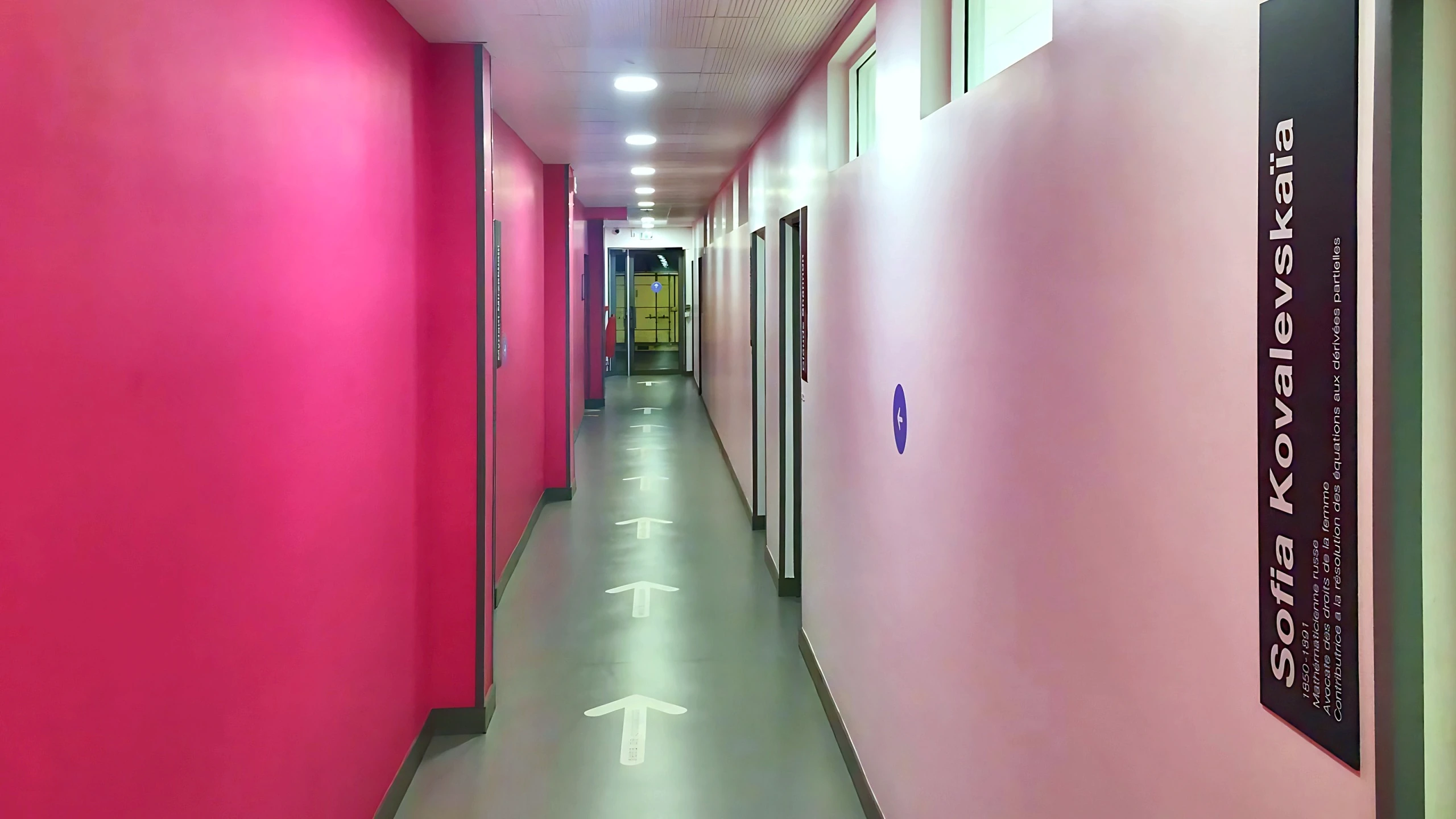
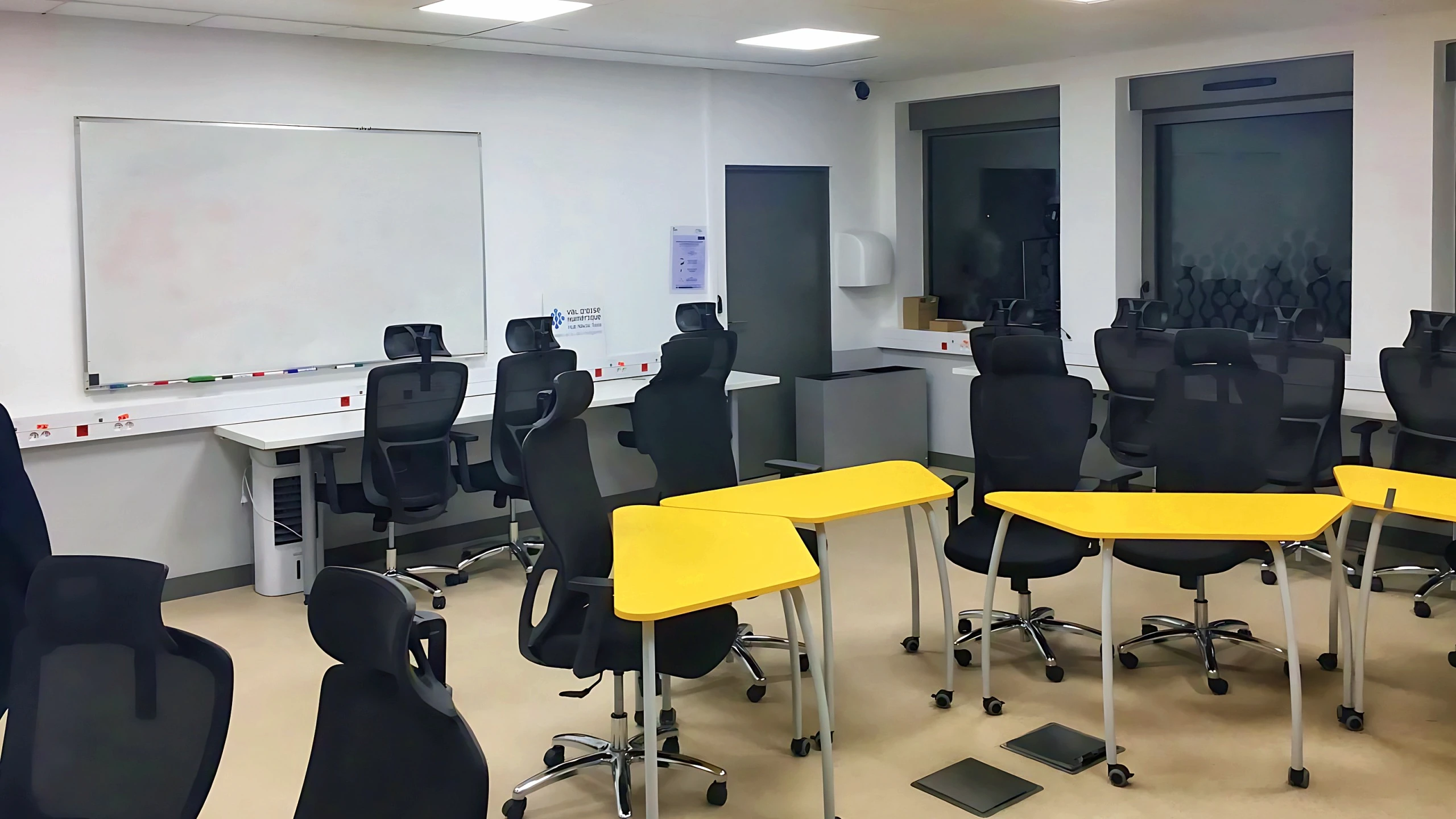
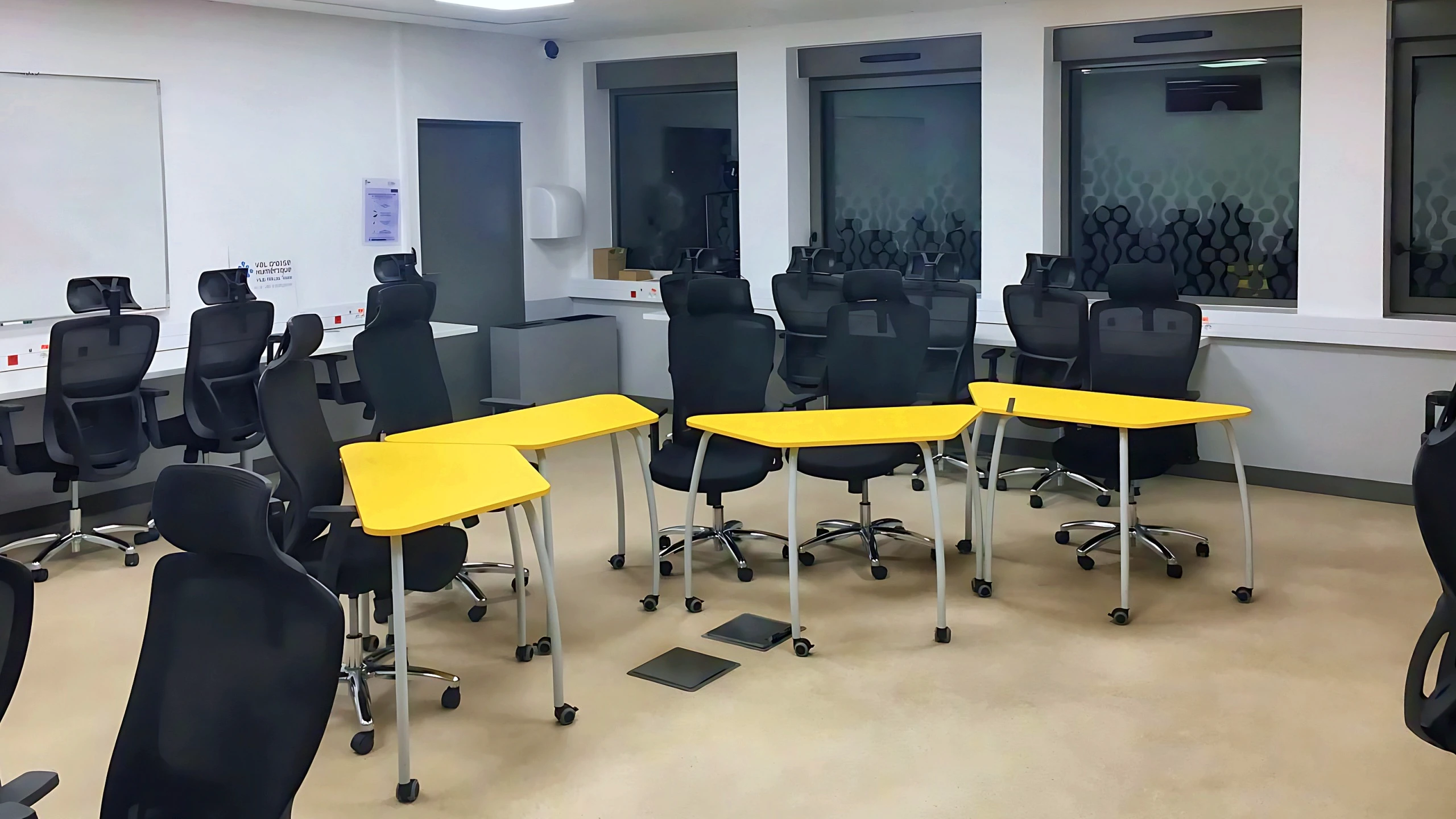
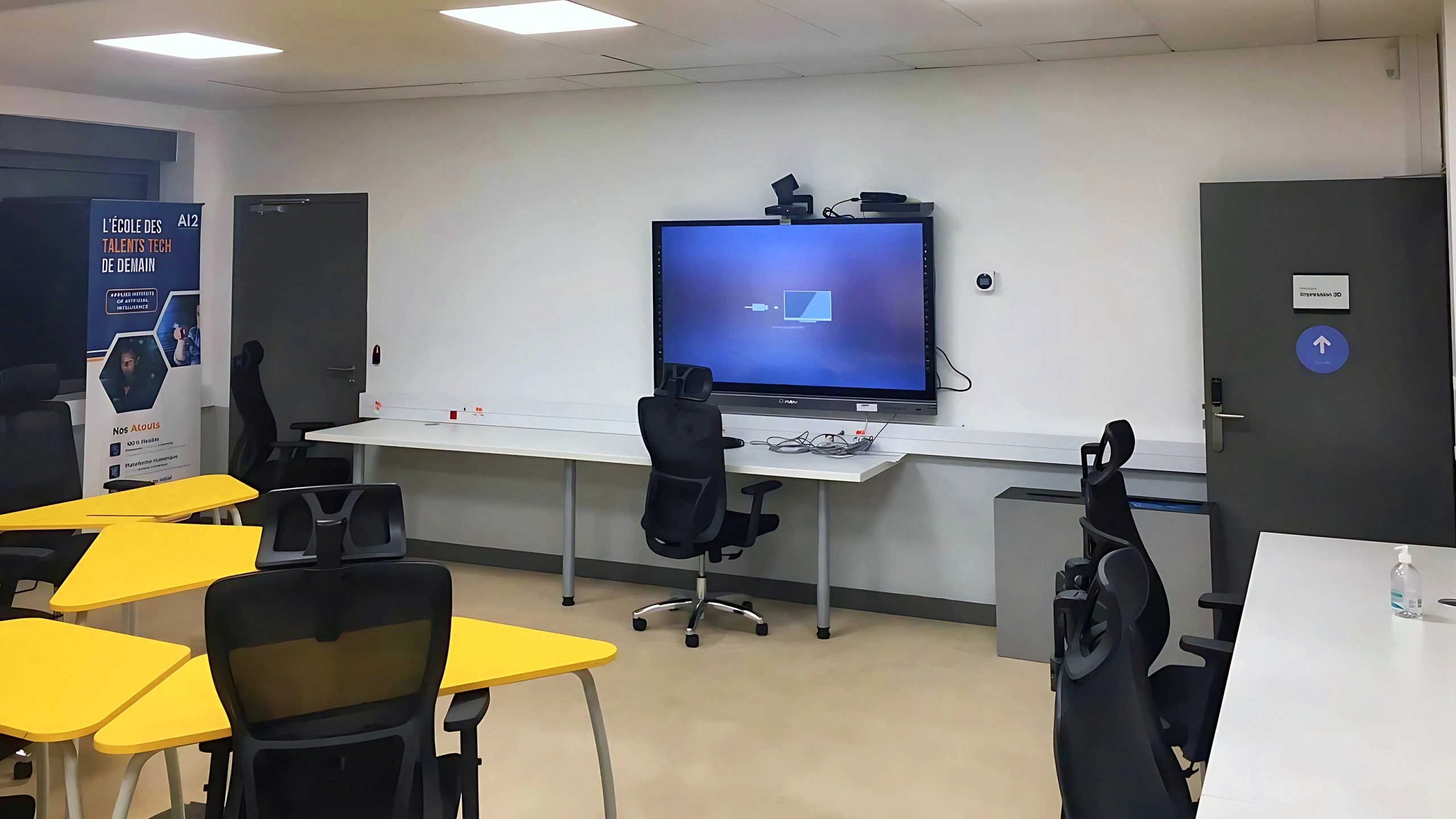
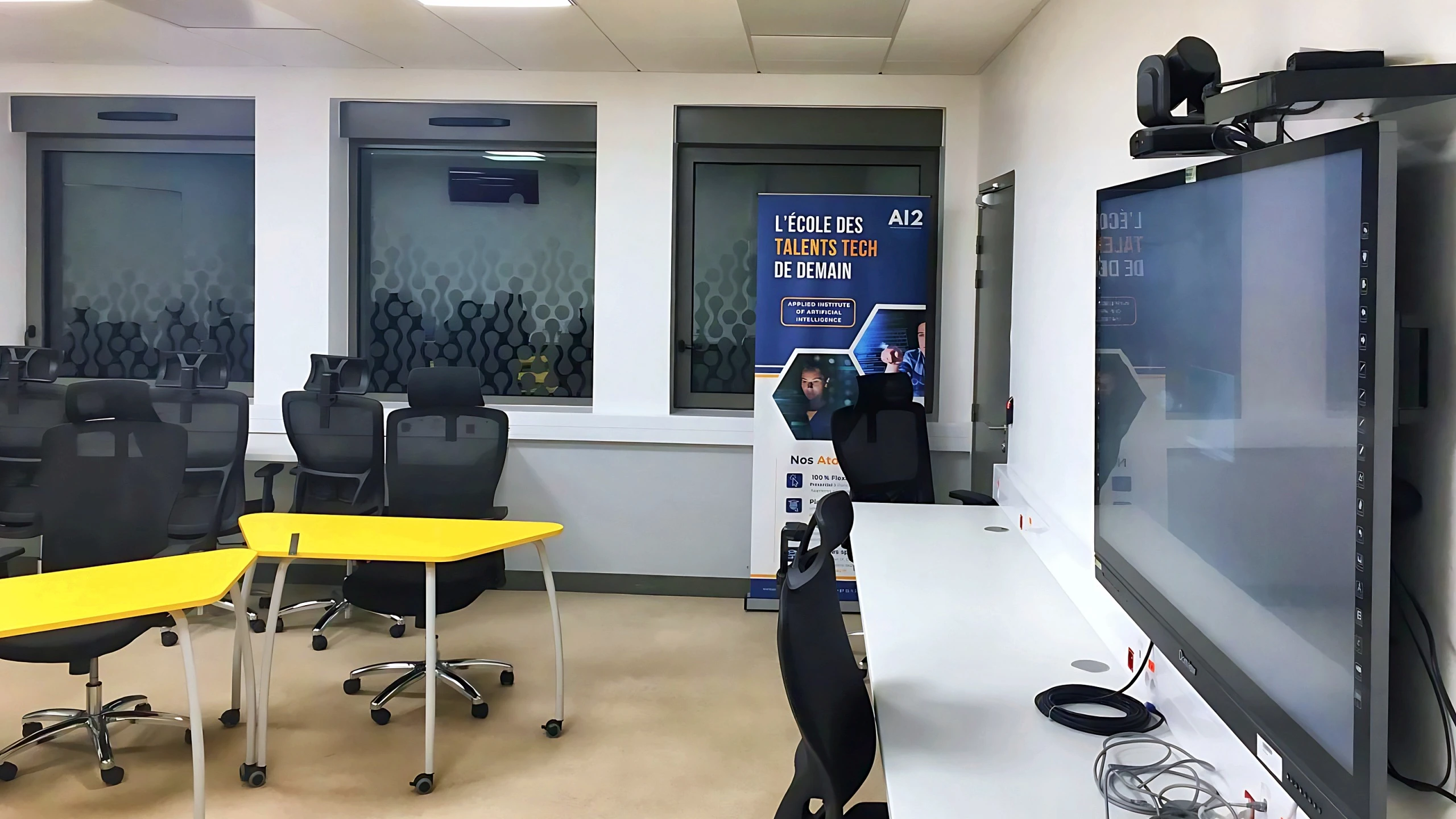
Many students drawn to Ireland are really after two things: a degree taught in English and a fast start in a company. AI2, the Applied Institute of Artificial Intelligence, offers both inside the French system. Its campus is the Hub Nikola Tesla in Écouen, a 22-minute Transilien ride from Paris Gare du Nord, and teaching, assessment and final juries all run in English. Applicants need English at B2, shown by IELTS 6.0, TOEFL iBT 72 or an equivalent; no French is needed and no GRE or GMAT either, since selection rests on your file and an online interview. See also AI courses in Paris.
| Format | Who it suits | Length and company time | Tuition |
|---|---|---|---|
| MSc | Three-year bachelor’s graduates | Two years: an applied-AI foundation year, a Data Science, Cybersecurity or IoT year, then six months in a company | Year 1 €12,500, or from €10,500 with the conditional AI2 scholarship |
| Direct entry | Graduates of a related four- or five-year degree | 18 months: a year of specialisation on campus, then a six-month internship | €13,000, or from €11,300 with a scholarship (IoT from €11,800) |
| Fast-Track | Engineers and master’s holders aiming at data science | 11 months from February 2027: five months of courses, then six months in a French company | €12,500, or €11,000 if you apply before 15 November 2026 |
AI2 plans intakes in February, May and September 2027; for February, the priority deadline is 30 November 2026. The final year leads to the AI2 diploma and prepares a French State-recognised professional title registered in the RNCP at level 7, equivalent to master’s level (EQF 7). According to AI2’s programme pages, RNCP level 7 titles are on the official list of diplomas treated as at least equivalent to a master’s for residence purposes, the condition behind the French job-search permit. In MSc Year 2, a work-study contract can replace the internship: the employer’s training fund covers tuition and you are paid a salary, once a company signs you.
Frequently asked questions
Which is better for a master’s, France or Ireland?
Ireland is the stronger pick if you want an English-speaking country and up to 24 months on Stamp 1G after a level 9 master’s. France is the stronger pick for regulated public tuition, free registration with French social security, a 964-hour yearly work allowance and degrees that include company time, with English-taught options.
How much money do I need to show for a student visa in Ireland and France?
Ireland asks for immediate access to at least €10,000 for each year of study, on top of tuition fees. France asks for resources of at least €877.50 a month, about €10,530 for twelve months.
Do I need private health insurance to study in Ireland?
Yes. Every non-EEA student needs private medical insurance covering accident, disease and hospitalisation. Travel insurance with at least €25,000 for accident and €25,000 for disease may be accepted in the first year only.
How many hours can students work in Ireland and France?
Ireland allows 20 hours a week in term time and 40 hours a week from June to September and from 15 December to 15 January. France allows up to 964 hours a year with no work authorisation, which you can spread unevenly across the year.
How long can I stay in Ireland after a master’s?
A level 9 graduate on the Third Level Graduate Programme gets 12 months on Stamp 1G, renewable for 12 more months, so up to 24 months, within an overall limit of eight years on student permissions.
Can I stay in France after a master’s?
Yes. A French master’s or equivalent diploma gives access to a twelve-month residence card for job seeking or business creation, which cannot be renewed. During it, a degree-related job paying over €2,800.53 gross monthly requires no work authorisation.
Can I study a master’s in France in English?
Yes. English-taught master’s programmes exist in France, and French is not required to follow them. At AI2, for instance, lectures, assessments and juries are all in English, and the entry requirement is English at B2.
Sources consulted on 27 October 2026: ISD: frequently asked questions for students · ISD: Third Level Graduate Programme (Stamp 1G) · ISD: information on student finances · ISD: private medical insurance for non-EEA students · ISD: eligible programmes (ILEP) · ISD: study in Ireland travel path · Campus France: tuition fees · Campus France: LMD system · Campus France: registering to social security · Campus France USA: students with families · Service-Public: student visa and resources (F2231) · Service-Public: work for non-EU students (F2713) · Service-Public: job-search permit (F17319)
Send your application to AI2 for an English-taught MSc 22 minutes from Paris. After a file review and an online interview, your entry route, intake and tuition are confirmed in writing.