Sensors on a production line, meters on a power grid, trackers in a lorry: someone has to make them talk to each other, and keep them safe. What the job involves in France, where the jobs are, what pay data says, the EU rules changing the work, and a route from student to first contract.
What does an IoT engineer do in France?
An IoT (Internet of Things) engineer builds systems in which objects measure something, send data over a network and trigger an action. The job spans four layers; most engineers are strong in one or two and understand all four.
| Layer | What the engineer works on | Typical tools and standards |
|---|---|---|
| Device | Choosing sensors and actuators, writing firmware, managing power and memory limits | Microcontrollers such as ESP32, C or MicroPython, Raspberry Pi gateways |
| Connectivity | Picking the right radio and protocol for range, battery life and data rate | BLE, Zigbee, LoRaWAN, NB-IoT, LTE-M, Wi-Fi; MQTT, OPC UA |
| Platform | Registering devices, pushing updates, storing and exposing data | AWS IoT or Azure IoT, REST APIs, Docker, Kubernetes, time-series databases |
| Data and AI | Dashboards, alerts, anomaly detection, predictive maintenance, models running on the device | Python, Grafana, Airflow, scikit-learn, TensorFlow Lite |
France has an official description of the senior version of this job: the RNCP register entry for « Architecte Internet des objets (IoT) », RNCP40554, published by France Compétences. It describes planning, developing, managing and supervising connected systems while ensuring their interoperability, security and performance, from user needs and budgets to device updates and data governance.
The record lists the jobs it leads to. French job boards use these titles, alongside “ingénieur systèmes embarqués” for firmware-heavy roles:
| Job title (RNCP40554 record) | Focus | Usual entry point |
|---|---|---|
| Ingénieur IoT (IoT engineer) | Develops IoT solutions that integrate connected objects and data systems | Graduate role, often after an internship or work-study |
| Ingénieur d’intégration IoT (integration engineer) | Integrates IoT solutions into existing systems | Graduate role, common at integrators |
| Expert en sécurité IoT (IoT security expert) | Protects IoT infrastructure and data against cyber threats | After a security specialisation or experience |
| Consultant IoT | Advises companies on adopting IoT technologies | Graduate role at consulting firms |
| Responsable de projet IoT (project manager) | Coordinates teams, deadlines and budgets of IoT deployments | After a few years of delivery |
| Architecte IoT, responsable technique, responsable de l’innovation IoT | Designs architectures, chooses technologies, leads teams or innovation | Senior roles |
The record links these jobs to the France Travail ROME codes M1805, M1806, M1802 and H1206 (software development, IS consulting, IS support, industrial R&D). Search job boards with them and with the French titles.
Where do IoT engineers work in France?
The RNCP40554 record names ten sectors. Here they are, grouped by the kind of work involved.
Industry 4.0
Energy and utilities
Transport and logistics
Vendors, telecoms, health, cities
How mature is the market? Eurostat’s latest survey on business IoT use, for 2021, puts France behind the EU average:
| Indicator (2021) | France | EU 27 |
|---|---|---|
| Enterprises with 10+ staff using IoT | 22.0% | 28.7% |
| Manufacturing enterprises using IoT | 21.1% | 29.6% |
| Manufacturers using IoT for production or logistics | 6.0% | 12.0% |
| Manufacturers using IoT for condition-based maintenance | 4.0% | 8.3% |
Read this as a direction, not a jobs forecast: use in production and maintenance, the heart of industrial IoT, was still in single digits in France, so many projects are still ahead.
Which EU rules are changing IoT engineering jobs?
Connected products are now regulated for security and data across their whole life, and engineers apply these texts in daily design choices.
| Rule | Key dates | What it means for an IoT engineer |
|---|---|---|
| Cyber Resilience Act, Regulation (EU) 2024/2847 | In force 10 December 2024; reporting from 11 September 2026; main obligations from 11 December 2027 | Security by design for hardware and software with digital elements, vulnerability handling during a declared support period, CE marking |
| Data Act, Regulation (EU) 2023/2854 | Applies since 12 September 2025 | Connected devices must be designed so users can access and share the data they generate |
| Radio Equipment Directive, cybersecurity delegated act (EU) 2022/30 | Applied from August 2025; repeal effective 11 December 2027, when the CRA takes over | Certain categories of wireless products already need cybersecurity, privacy and anti-fraud features |
| NIS 2 Directive (EU) 2022/2555 | Transposition deadline 17 October 2024 | Covers 18 sectors, including energy, transport, health and critical product manufacturing, where many IoT systems run |
Under the CRA, a manufacturer aware of an actively exploited vulnerability or a severe incident must send an early warning within 24 hours, a notification within 72 hours and then a final report, through a platform run by ENISA (Commission summary). Reporting also covers products already on the market, so firmware updates and vulnerability tracking become daily engineering work.
Which skills do employers expect from an IoT engineer?
Use the competencies of the RNCP40554 record as a checklist. For each one, here is a way to prove it before you apply.
| Competency (RNCP40554) | In practice | How to prove it |
|---|---|---|
| Select and integrate heterogeneous connected objects | Make sensors from different makers work through gateways and standard protocols | A multi-sensor project: ESP32 nodes, a Raspberry Pi gateway, MQTT broker, documented wiring |
| Deploy a platform in the cloud, on-premise or hybrid | Device registry, data ingestion, APIs, containers | Send data from a board to AWS IoT Core or Azure IoT Hub and expose it through a REST API |
| Manage devices: provisioning, monitoring, updates | Onboard devices securely and update firmware over the air | An OTA update demo with a rollback plan |
| Analyse data and govern it | Clean sensor data, detect anomalies, define who can access what | An anomaly detection notebook plus a one-page data governance policy |
| Apply security at every level | Objects, network and platform | TLS between device and broker, unique credentials per device, a short threat model |
The record also stresses clear technical writing, communication with clients and users, and project budgeting. Practise explaining one project from sensor to dashboard in five minutes.
How much does an IoT engineer earn in France?
We found no official French source publishing a salary for the exact title “IoT engineer”. The closest primary data is APEC’s study of pay for cadres (professional and managerial staff) by job family.
| APEC job family (2025 edition) | Median, gross per year (fixed + variable) | 80% of cadres earn between |
|---|---|---|
| Industrial and technical IT (includes embedded software engineer, industrial IT engineer, industrial IT project manager) | €51,000 | €39,000 and €71,000 |
| IT networks and telecoms | €51,000 | €38,000 and €76,000 |
| R&D engineering | €46,000 | €36,000 and €63,000 |
| R&D project management | €53,000 | €41,000 and €79,000 |
| All cadres, for comparison | €55,000 | €38,000 and €95,000 |
Caution: these are pay levels of cadres already in post, of all ages, not starting salaries, and APEC shows them varying with region, company size and sector.
Before the first job comes the placement. An internship of more than two months must be paid at least €4.50 an hour in 2026; Service-Public’s example gives €1,984.50 for three full-time months, about €661.50 a month. See our internship guide for international students.
How to become an IoT engineer in France: a step-by-step roadmap
A route many international students follow, whatever their first degree.
- 1Fill the gaps in your first degreeElectronics graduates usually need networks, cloud and Python; computer science graduates need microcontrollers, sensors and radio basics.
- 2Build one end-to-end projectSensor, board, radio link, broker, cloud, dashboard, alert. One complete chain beats five half-finished demos.
- 3Add security and data from the startUnique device credentials, encrypted links, an update mechanism, then simple anomaly detection on your data.
- 4Choose a master’s with real hardware and a long placementCheck the lab kit, the protocols covered, the cloud platform, the RNCP level and the intake dates. Our guide to IoT master’s programmes in France taught in English gives a full checklist.
- 5Get inside an IoT team during your studiesA long internship is a common bridge to a first contract, because the team already knows your work. Learn basic French alongside: it is widely used on industrial sites.
- 6Turn the placement into a job and the right permitAfter a master’s-level diploma obtained in France, Service-Public describes a one-year permit to look for a job or create a company. Our guide to working in France after graduation explains the next permits.
What changes for international students?
Working while you study
Proof of funds
Staying after graduation
Comparing routes? Campus France puts 2026-27 public master’s fees at €3,950 a year for non-EU students and private institutions at about €6,000 to €18,000 or more; teaching language, hardware and placement length matter as much. Indian students can read master’s in IoT in France for Indian students for costs in rupees and the visa steps.
Where does AI2’s MSc fit for a future IoT engineer?
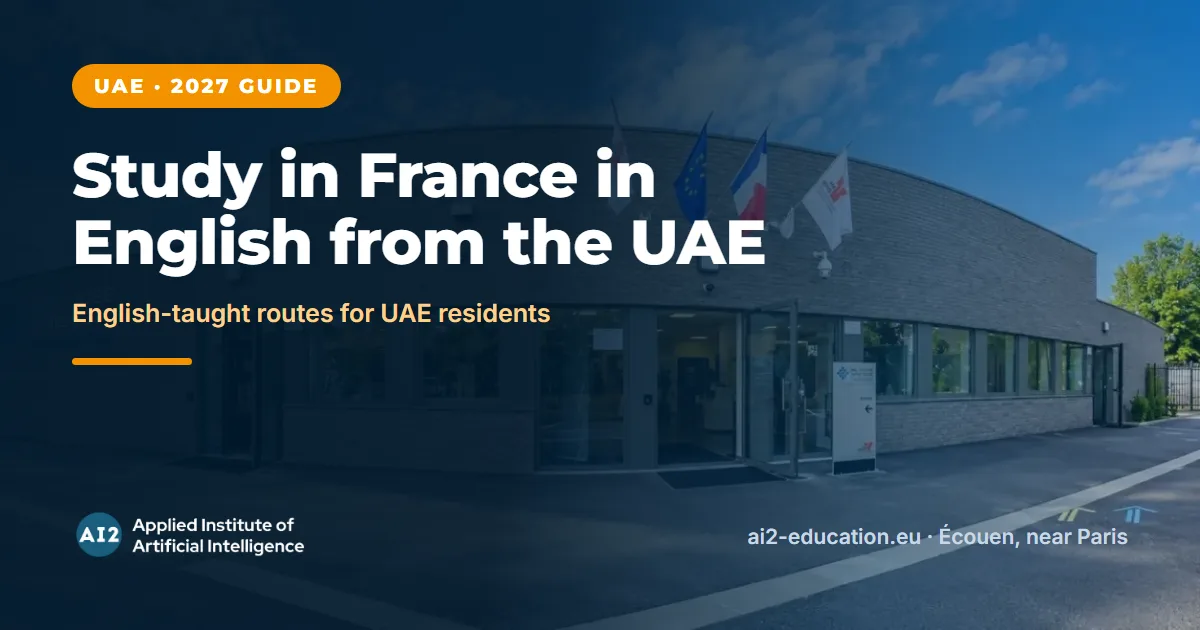
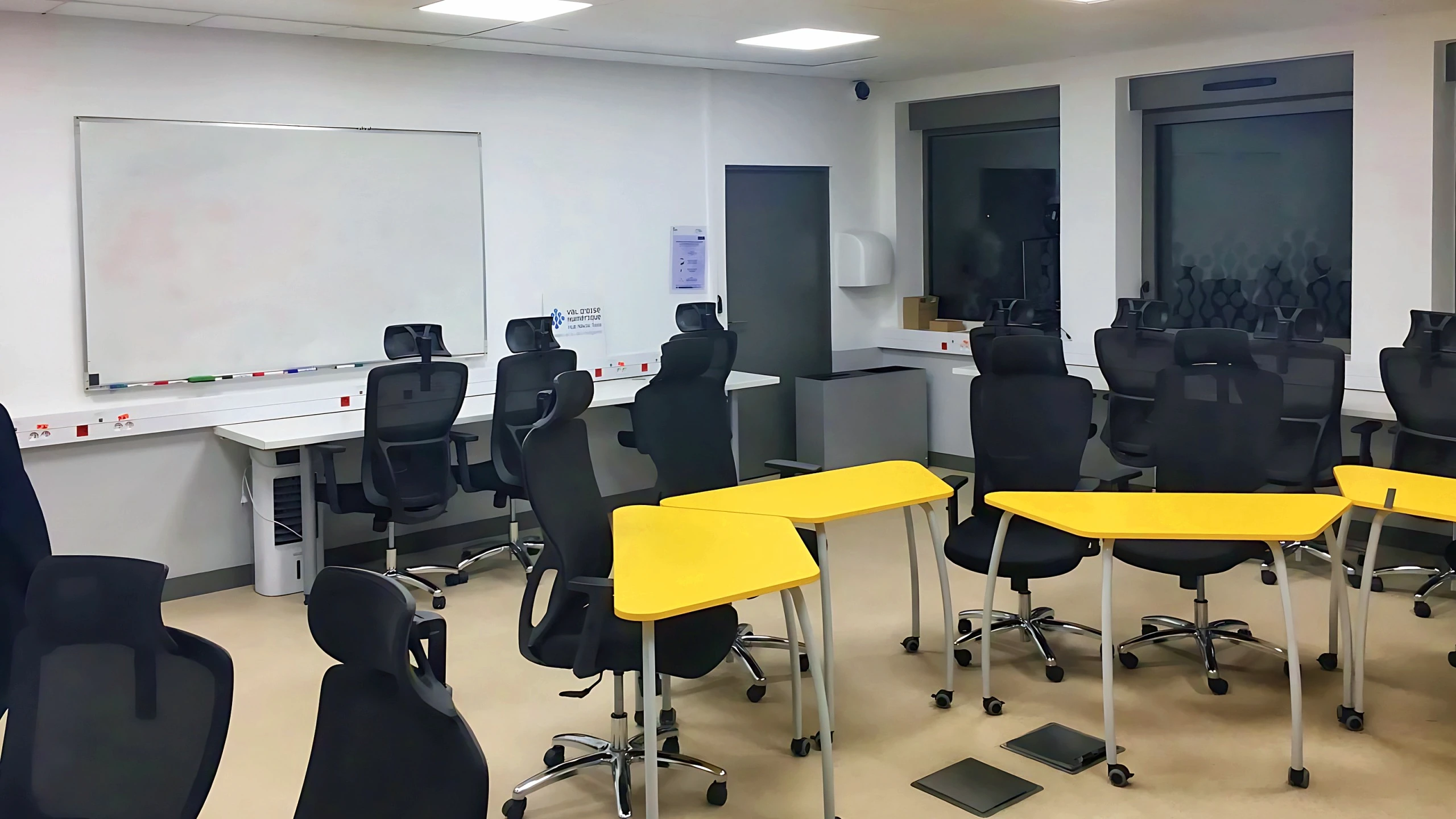
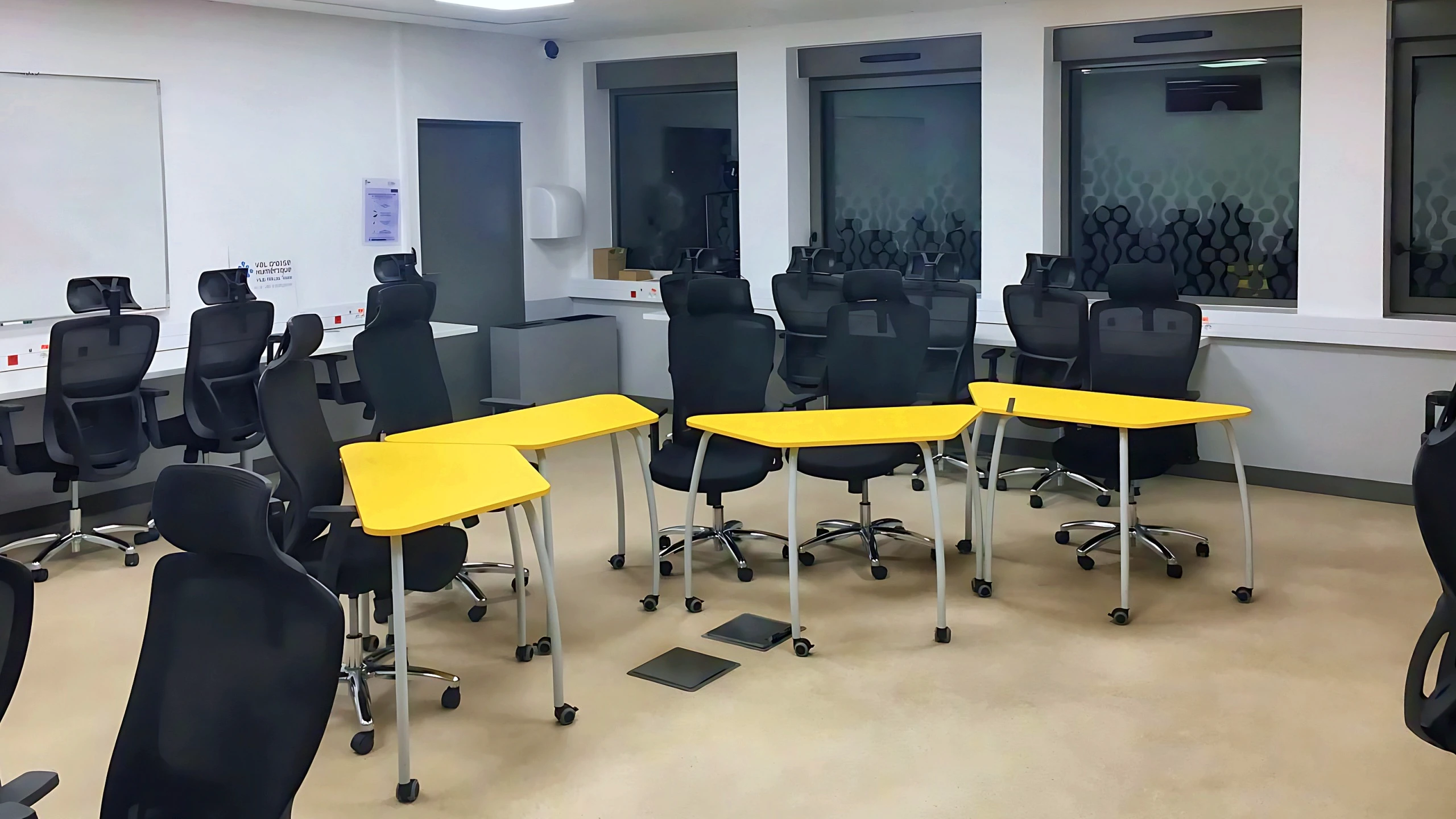
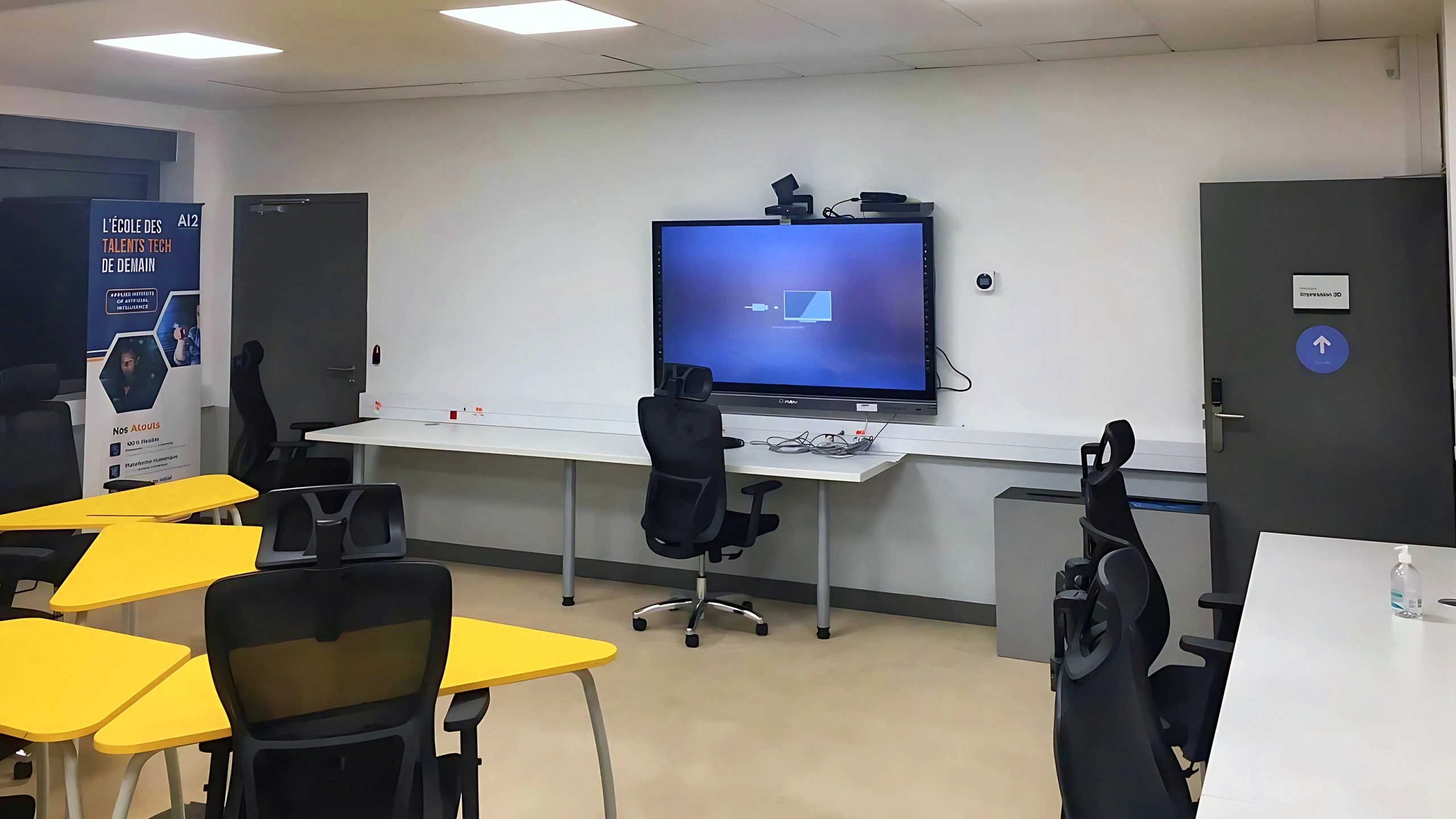
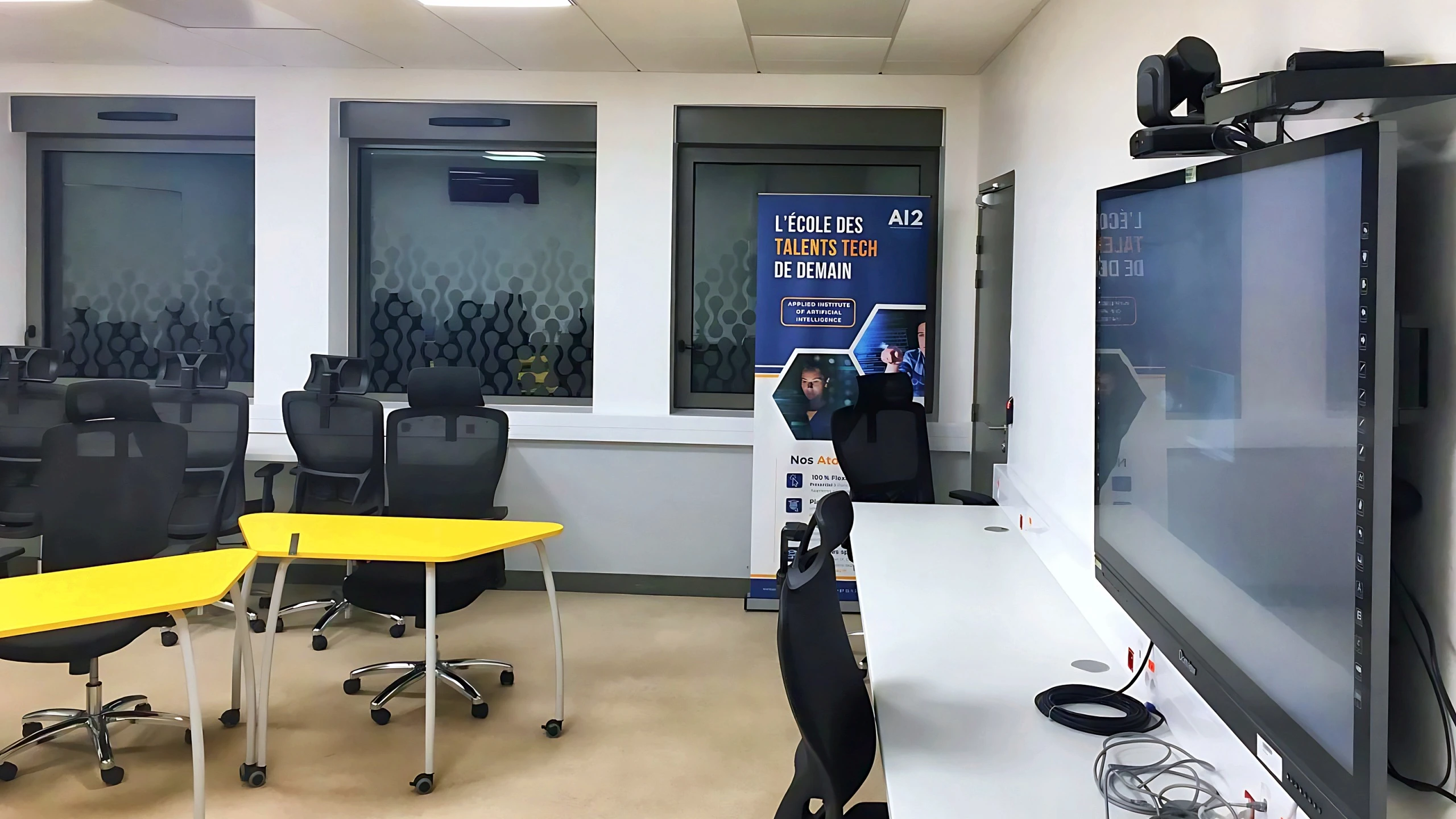
AI2, the Applied Institute of Artificial Intelligence, teaches its MSc Applied AI & IoT 100% in English (B2 level, for example IELTS 6.0 or TOEFL iBT 72; no French, GRE or GMAT required) on its campus at the Hub Nikola Tesla, 16 bis avenue du Maréchal Foch, Écouen, 22 minutes from Paris Gare du Nord by Transilien line H. Its career directions include IoT architect, IoT and edge-AI engineer, digital-twin engineer and IoT security specialist.
| What the job asks for | Where it is taught in the AI2 MSc (Year 2) | Hours |
|---|---|---|
| Needs, budget, risk and regulation | Block 1: needs analysis, OWASP IoT Top 10, CAPEX and OPEX, GDPR, NIS2, Radio Equipment Directive | 70 h |
| Devices, radio and protocols | Block 2: sensors, gateways, BLE 5, LoRaWAN, NB-IoT, MQTT and OPC UA | 84 h |
| Secure, scalable platform | Block 3: FastAPI, AWS IoT Core, Azure IoT Hub, Kubernetes, OTA updates, IoT databases | 98 h |
| Supervision and optimisation | Block 4: Prometheus, Grafana, ELK, disaster recovery | 84 h |
| Data and edge AI | Block 5: Airflow, predictive maintenance, anomaly detection, TensorFlow Lite at the edge, data governance | 84 h |
Year 1 is a shared 500-hour applied AI foundation, and Year 2 is the 420-hour IoT specialisation built on the five competency blocks of RNCP40554 « Architecte Internet des objets (IoT) », certified by DATAKOO, AI2’s parent company, at level 7. The final year awards the AI2 diploma and prepares this professional certification recognised by the French State at master’s level (EQF 7); RNCP level 7 explained shows how to read the register. A six-month internship and a professional thesis on an innovative IoT solution close the programme, and work-study may be possible from Year 2 with an employer contract.
| Format | Entry level | Tuition 2027 |
|---|---|---|
| 2-year MSc (Year 1 applied AI core, Year 2 IoT, then 6-month internship) | Relevant three-year bachelor’s in computing, electronics, networks or engineering | Year 1 €12,500, from €10,500 after scholarship; Year 2 €13,000 |
| 18-month direct entry into Year 2 (12 months on campus, 6-month internship) | Related four- or five-year degree, subject to academic review | €13,000, from €11,800 after scholarship |
Intakes are planned in February, May and September 2027. For February, the priority application deadline and the complete visa file are due on 30 November 2026, and enrolment with deposit on 15 December 2026. Fee rules are detailed on AI2 tuition fees 2027, and the full module list is on the MSc Applied AI & IoT programme page.
Frequently asked questions
What does an IoT engineer do?
An IoT engineer designs and builds connected systems: sensors and boards, radio links and protocols such as LoRaWAN or MQTT, a cloud platform, and the dashboards, alerts or predictions built on device data, with security at every level.
What qualifications do you need to become an IoT engineer in France?
Employers usually expect a master’s-level degree in computing, electronics, networks or engineering, plus hands-on projects. International students usually get in through a specialised master’s with real hardware and a long company placement.
How much does an IoT engineer earn in France?
We found no official figure for the exact title. APEC’s 2025 study gives a median of €51,000 gross a year for cadres in industrial and technical IT, all ages, with 80% between €39,000 and €71,000.
Can I work as an IoT engineer in France without speaking French?
Some teams work in English, but French is common on industrial sites, so basic French helps. AI2’s MSc Applied AI and IoT is taught entirely in English, with optional French classes.
How does the Cyber Resilience Act affect IoT jobs?
The CRA makes security by design, vulnerability handling and updates mandatory for connected products. Reporting has applied since 11 September 2026 and the main obligations apply from 11 December 2027, so secure update pipelines become core engineering work.
How long does AI2’s MSc Applied AI and IoT take and how much does it cost?
It takes two years, or 18 months through direct entry into Year 2. Year 1 is €12,500, from €10,500 after scholarship; Year 2 and direct entry are €13,000, from €11,800. Intakes are February, May and September 2027.
Sources consulted on 29 October 2026: France Compétences: RNCP40554, Architecte Internet des objets (IoT) · Eurostat: Internet of Things by size class of enterprise (isoc_eb_iot, updated 17 July 2025) · Eurostat: Internet of Things by NACE Rev. 2 activity (isoc_eb_iotn2, updated 11 December 2025) · APEC: Les rémunérations des cadres dans 111 familles de métiers, 2025 edition · European Commission: Cyber Resilience Act · European Commission: CRA summary of main provisions · European Commission: Data Act · European Commission: Radio Equipment Directive · European Commission: NIS2 Directive · Campus France: tuition fees 2026-27 (updated 25 June 2026) · Service-Public F2231: student visa resources (verified 1 August 2026) · Service-Public F2713: work for foreign students (verified 7 October 2025) · Service-Public F32131: internship gratification (verified 1 January 2026) · Service-Public F17319: job-search permit (verified 1 June 2026) · AI2: MSc Applied AI & IoT · AI2: tuition fees 2027
Apply online: AI2’s admissions team reviews your transcripts, holds an online interview and confirms your entry route, tuition and any scholarship in your admission letter. Priority deadline for February 2027: 30 November 2026.