Graduated in ECE, EEE, instrumentation or computer science and want to build connected products in Europe? An IoT master’s in France mixes hardware, radio protocols, cloud platforms and EU product law. Here is which Indian branches fit, what the programme should contain, what it costs in rupees and when each payment falls, and when to apply.
Why study IoT in France rather than at home?
IoT hiring in Europe is pulled by two forces: firms connecting machines and buildings, and a run of EU laws that make every connected product a regulated product.
Eurostat’s last enterprise survey on the topic found that 29% of EU firms employing at least ten people used IoT devices or systems in 2021. Large firms used them almost twice as often as small ones (48% against 26%), and 44% of large IoT users relied on sensors for condition-based maintenance of machines or vehicles. In manufacturing, 32% of IoT users applied it to production processes. Those are the projects a graduate joins: sensors on equipment, gateways, a data platform and a model that flags faults.
| EU rule | Key dates | What it changes for IoT engineers |
|---|---|---|
| Data Act, Regulation (EU) 2023/2854 | In force 11 January 2024; applies from 12 September 2025 | Connected devices must be designed so users can access and share the data they generate |
| Radio Equipment Directive, Delegated Regulation (EU) 2022/30 | Cybersecurity requirements applied from August 2025; repeal effective 11 December 2027 | Certain categories of wireless products had to meet cybersecurity, personal-data and privacy requirements |
| Cyber Resilience Act, Regulation (EU) 2024/2847 | In force 10 December 2024; reporting from 11 September 2026; main obligations from 11 December 2027 | Security by design, vulnerability handling over the product’s life and CE marking for products with digital elements |
| AI Act, high-risk AI in regulated products | Rules apply from 2 August 2028 | High-risk AI built into regulated products such as lifts or toys faces strict obligations before sale |
For a student, the point is practical. Wiring an ESP32 to a sensor is the starting point. These rules ask product teams for more: knowing how a firmware update is secured, how vulnerabilities are reported and how device data is shared with the user. Choose a master’s that teaches both sides rather than one that stops at the prototype. The industrial side of this shift is developed in our article on industrial IoT and Industry 4.0 skills.
Which Indian degrees fit an IoT master’s?
IoT sits between electronics and software, so almost every Indian engineering branch brings half of what is needed. The useful question is which half you will have to build.
| Your branch | What you already bring | What to strengthen before you arrive |
|---|---|---|
| ECE or ETC | Embedded C, microcontrollers, signals, wireless basics | Python, SQL, cloud services and Linux |
| EEE | Sensors, power, control systems | Networking protocols such as MQTT, and Python for data |
| Instrumentation (E&I, ICE) | Industrial sensors, PLC and SCADA exposure | Cloud platforms, containers and security basics |
| Mechatronics or mechanical with automation | Actuators, machines, industrial processes | Programming, networking and a small hardware project |
| CSE or IT | Software, databases, cloud | Electronics, radio protocols and hands-on hardware |
| BSc Electronics, BSc CS or BCA (3 years) | A solid base in one of the two halves | Plan for the full two-year route |
A four-year B.Tech or BE in a related branch can lead to a shortened entry at some institutions, often by joining the second year. Bring the complete syllabus of your degree: admissions teams compare your courses with their first-year content. Our step-by-step guide to studying in France from India covers documents, Campus France and arrival for Indian students.
What should an IoT master’s in France actually teach?
Programme names vary, so judge the content. A complete IoT master’s covers five layers, and you should be able to find each one in the module list with hours attached.
Devices
Connectivity
Platform
Data and edge AI
Security and regulation
Two questions separate strong programmes from weak ones: how many hours are spent on real hardware, and whether the final project is assessed as a working system rather than a report. A wider checklist for comparing public, engineering-school and private options is in our guide to English-taught IoT master’s in France.
How much does an IoT master’s in France cost in rupees?
Money leaves your account at different moments: some in India before the visa, some on arrival, and some spread over the course. Planning by moment avoids a shortfall at the VFS stage.
| When you pay | Item | Amount | In rupees |
|---|---|---|---|
| In India, during Études en France | EEF procedure fee | ₹20,000 | ₹20,000 |
| In India, before the visa | Proof of living funds for 12 months at €877.50 | €10,530 | ₹11.18 lakh |
| In India, before the visa | Public university tuition for the first year (non-EU rate, 2026-27) | €3,950 | ₹4.20 lakh |
| On arrival | Long-stay visa validation tax | €100 | ₹10,621 |
| On enrolment, each year | CVEC student contribution, where your institution requires it | €105 | ₹11,153 |
| During the internship | Income, not a cost: at least €4.50 an hour, about €660 a month full time | +€660 a month | +₹70,261 a month |
Over a full two-year public master’s, tuition comes to €7,900 (about ₹8.39 lakh) and living costs at the visa minimum to €21,060 (about ₹22.37 lakh). The monthly minimum is a legal floor, not a lifestyle budget near Paris. Private institutions set their own fees, so ask each one for the full schedule, year by year, before you compare. Rent, insurance and education loans are covered in our cost guide for Indian students in France.
Can work-study pay for the second year?
In France, an apprenticeship contract makes the employer’s training-fund operator pay your tuition while you earn a salary. Service-Public F2713 sets one condition that matters for Indian students: to sign an apprenticeship or professionalisation contract, a foreign student must usually have been in France for more than a year. On a two-year route, you meet it naturally by Year 2. Once the contract is validated, you may work beyond the 964-hour annual limit within your course. Conditions at AI2 are on the work-study programme page.
Which intake should you target from India?
Most French master’s start in September, but some institutions also run February or May intakes. Pick the one your visa calendar can support, not only the earliest.
| Intake | Latest sensible visa application | Suits you if |
|---|---|---|
| February 2027 | November 2026 | You already hold your degree certificate and transcripts |
| May 2027 | February 2027 | You need a few more months to finish tests or savings |
| September 2027 | June 2027 | You graduate in 2027 or want the classic academic calendar |
The sequence from India is the same for every intake: Études en France file and ₹20,000 fee, the Campus France academic interview, the France-Visas application, biometrics in person at a VFS centre, then validation of the visa online within three months of arriving in France. Eiffel and Charpak Excellence scholars are exempt from the EEF and visa fees but still pay the VFS service fee, according to Campus France India.
What happens after an IoT master’s in France?
After the degree, the route is the one every non-EU graduate in France follows: internship, then job search, then a work permit.
Job titles to aim for
Staying to look for work
Part-time work while studying
What each IoT role involves day to day, and the skills employers list, is explained in our guide to becoming an IoT engineer in France.
Where does AI2’s IoT MSc fit?
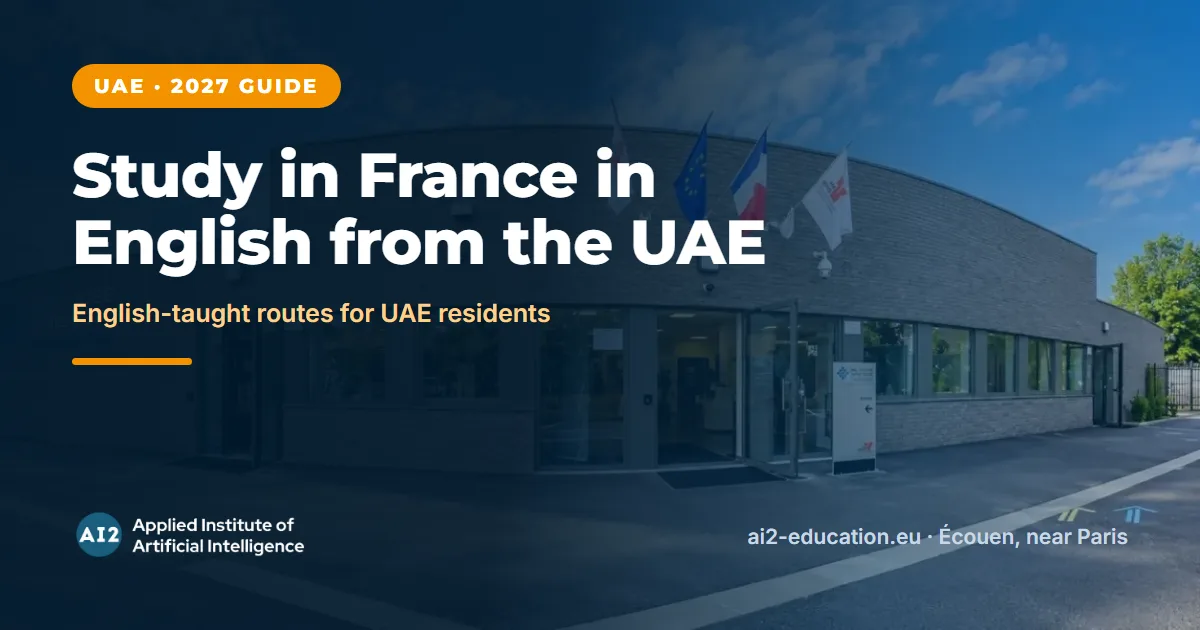
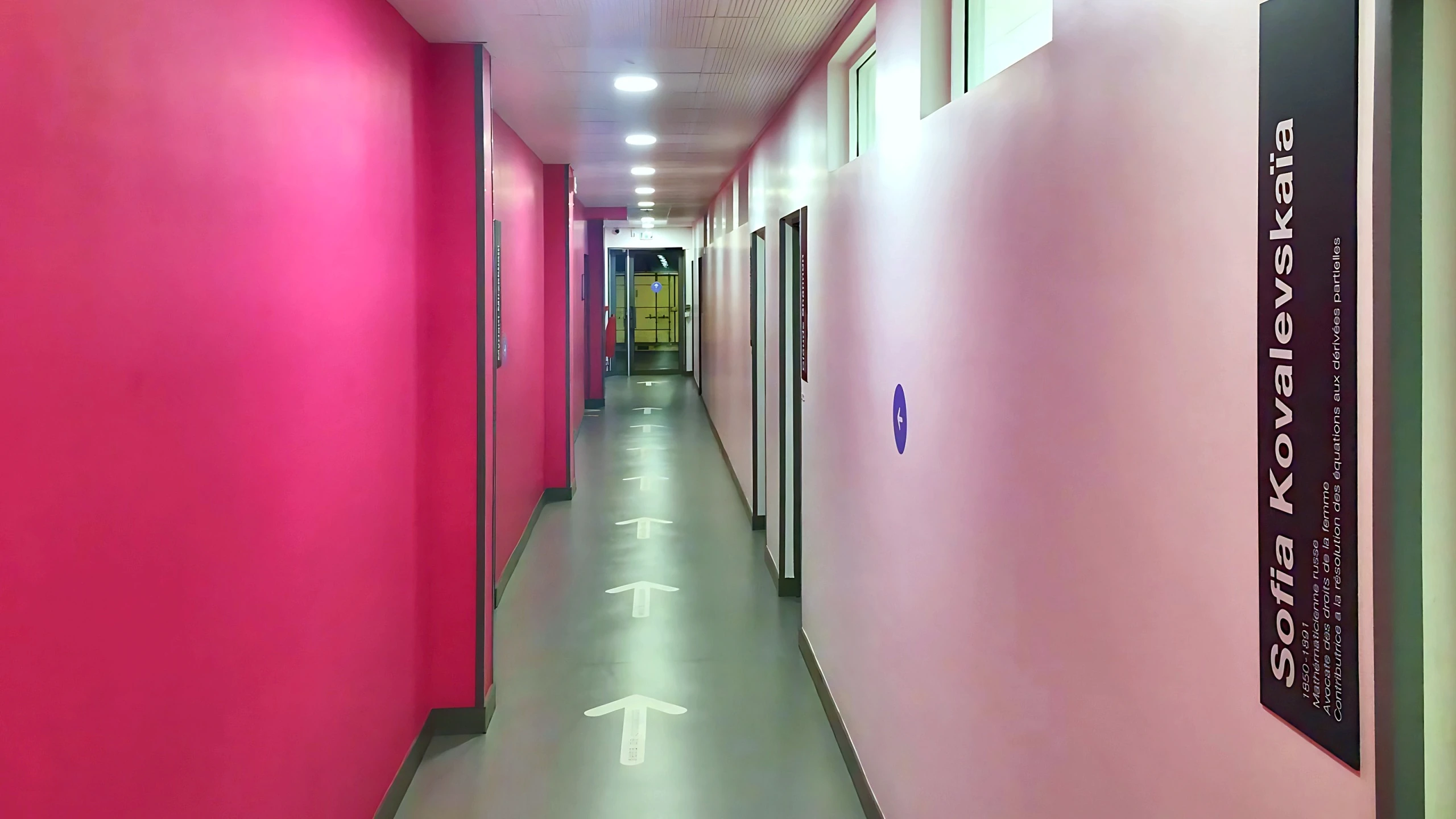
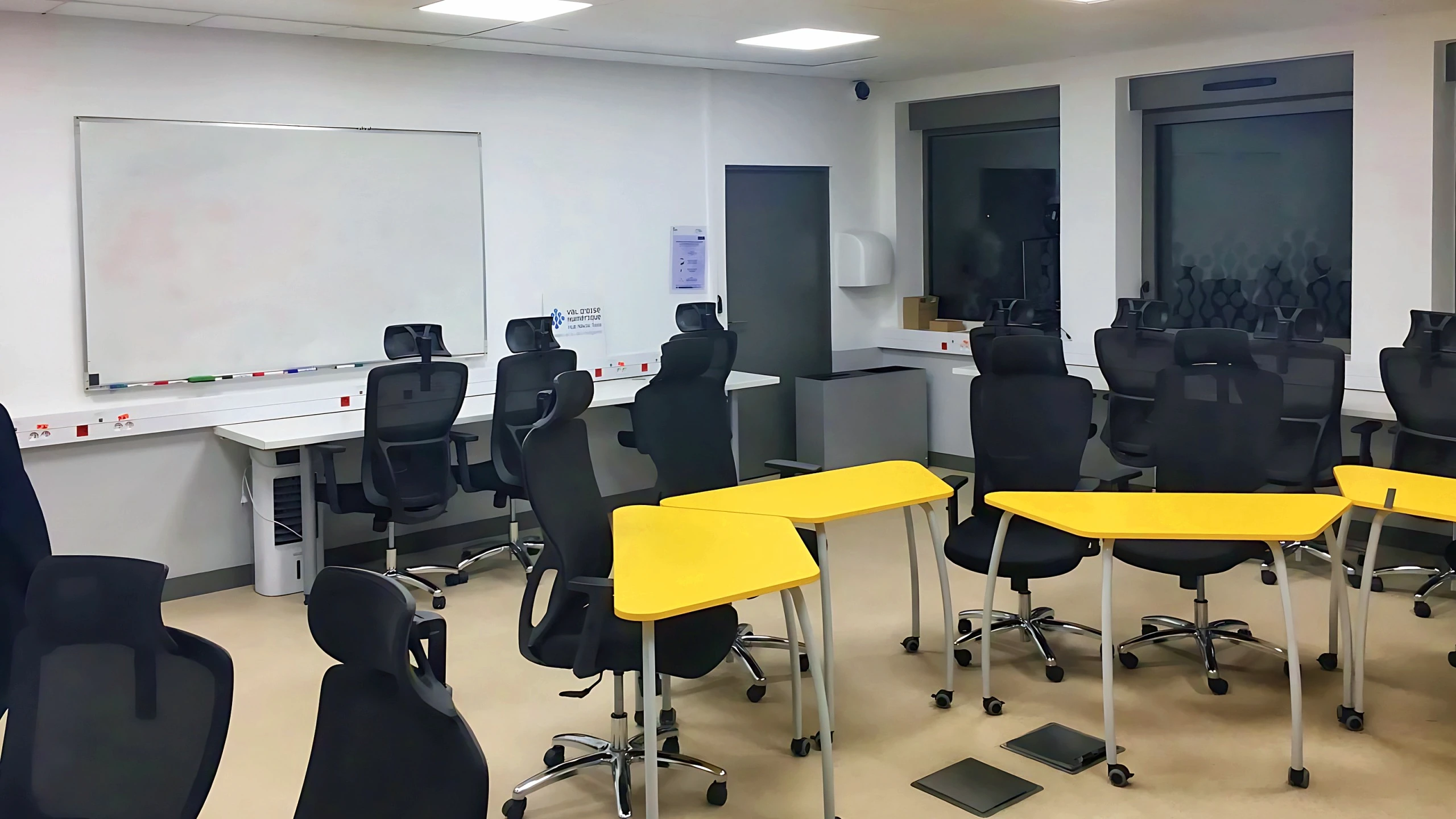
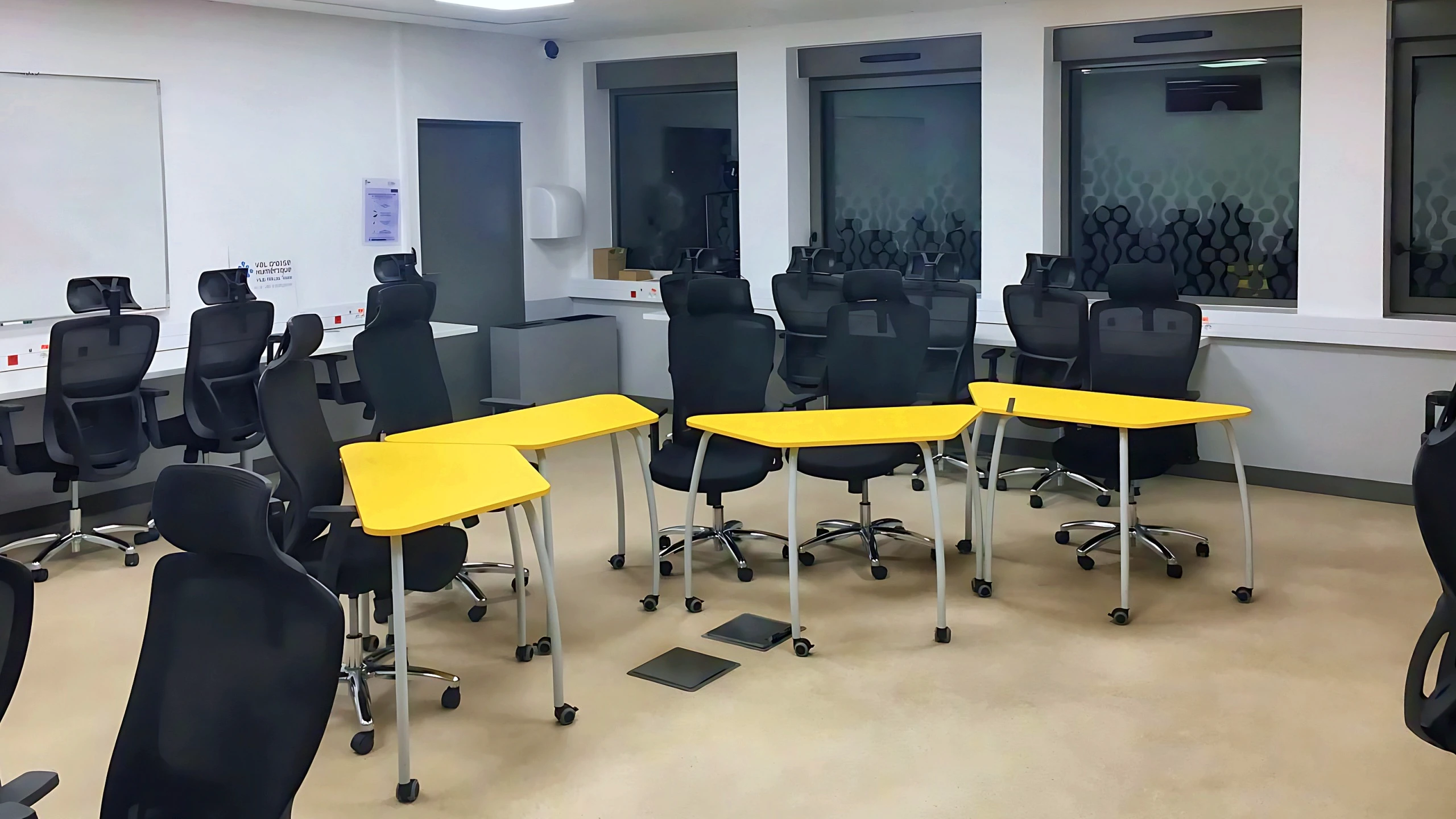
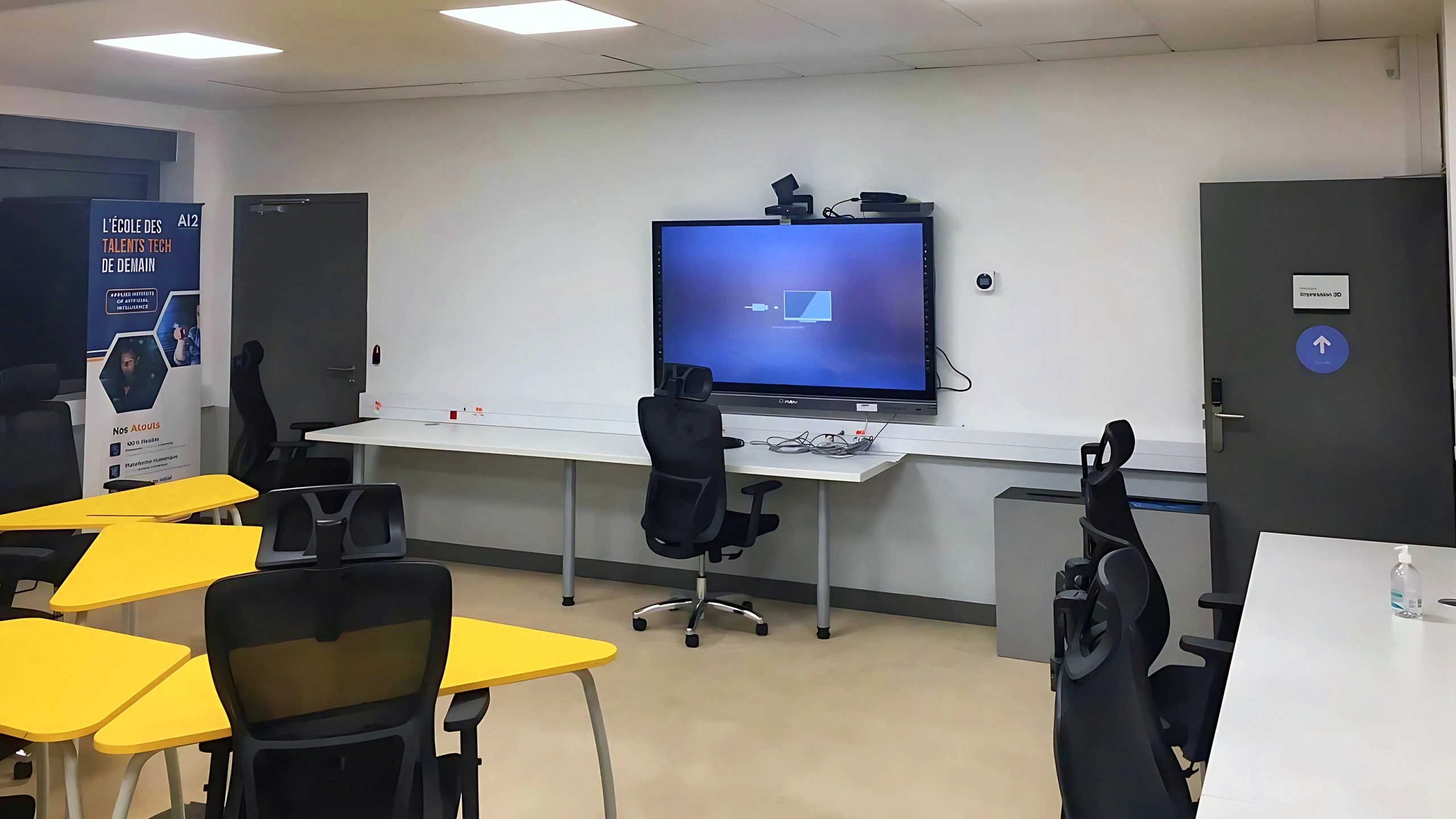
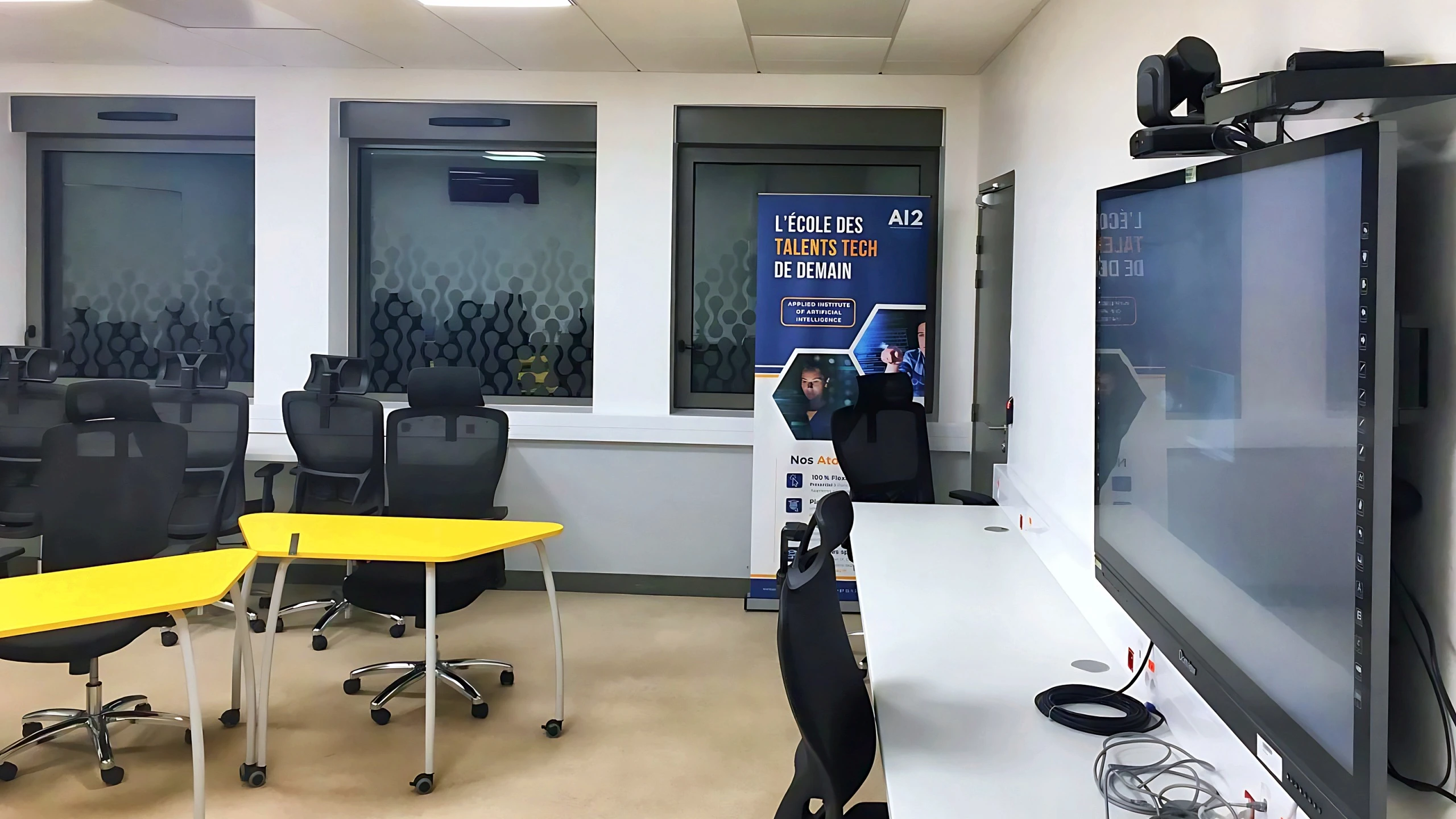
The Applied Institute of Artificial Intelligence (AI2) teaches its MSc Applied AI & IoT in English in Écouen, north of Paris, at the Hub Nikola Tesla; Paris Gare du Nord is 22 minutes away on Transilien line H. Graduates receive the AI2 MSc diploma, and the programme prepares RNCP40554 « Architecte Internet des objets (IoT) », a level 7 professional title recognised by the French State and certified by DATAKOO, AI2’s parent company; our RNCP level 7 explainer shows how to read such a title.
| AI2 IoT route | Entry profile | Tuition 2027 | In rupees |
|---|---|---|---|
| MSc, 2 years | Three-year bachelor’s in computing, electronics, networks or engineering | Year 1 €12,500, from €10,500 after scholarship; Year 2 €13,000 | ₹13.28 lakh, from ₹11.15 lakh; then ₹13.81 lakh |
| Direct entry into Year 2, 18 months | Related four- or five-year degree, such as a B.Tech in ECE, EEE or CSE, after academic review | €13,000, from €11,800 after scholarship | ₹13.81 lakh, from ₹12.53 lakh |
Year 2 is built on the five competency blocks of RNCP40554, 420 hours in 21 modules: defining an IoT project (needs, OWASP IoT risk analysis, CAPEX and TCO, GDPR, NIS 2 and the Radio Equipment Directive); designing a multi-protocol ecosystem (BLE 5, Zigbee 3.0, LoRaWAN, NB-IoT, LTE-M, MQTT, OPC UA); building a secure platform on AWS IoT Core and Azure IoT Hub with FastAPI, Docker, Kubernetes, Ansible and Terraform; supervising it with Prometheus, Grafana and the ELK stack; and turning IoT data into predictive maintenance and anomaly detection deployed at the edge with TensorFlow Lite. Each block ends with a defence before a jury, and the final professional project is an IoT solution documented in a thesis.
To get in, you send your file and then take an online interview. The English bar is B2 (IELTS 6.0, TOEFL iBT 72 or equivalent), and a medium-of-instruction certificate can support a waiver request; French, GRE and GMAT are not asked. Direct-entry candidates add the course list of their degree. Three 2027 start dates are planned: February, May and September. For February, 30 November 2026 is both the priority application deadline and the date AI2 expects your complete visa file, and the deposit that secures your place follows by 15 December 2026. Labs, modules and teaching staff are listed on the AI2 IoT master’s programme page.
Frequently asked questions
Is an IoT master’s in France open to ECE and EEE graduates?
Yes. Electronics and electrical graduates are a natural fit, as are instrumentation, mechatronics and computer science graduates. At AI2, a four- or five-year degree in a related branch may give direct entry into Year 2 (18 months in total); three-year degrees start with the two-year MSc.
How much does an IoT master’s in France cost in rupees?
At a public university, the 2026-27 non-EU fee is €3,950 a year, roughly ₹4.20 lakh. The 18-month AI2 IoT direct entry is priced at €13,000, or from €11,800 after scholarship (about ₹12.53 lakh). The visa also requires €877.50 a month of living funds.
Is there a one-year IoT master’s in France?
Shortened formats exist at some institutions for holders of four-year degrees. AI2 does not offer its 11-month Fast-Track in IoT; the shortest AI2 IoT route is the 18-month direct entry, with 12 months of taught Year 2 and a six-month internship.
Is French or a GRE score required for IoT programmes in France?
Not for English-taught programmes in most cases. AI2’s IoT MSc is taught and examined in English, with B2 English as the bar (IELTS 6.0 or TOEFL iBT 72, for example); French, the GRE and the GMAT are not part of admission.
Why does the Cyber Resilience Act matter for IoT students?
The Cyber Resilience Act entered into force on 10 December 2024. Its reporting obligations apply from 11 September 2026 and its main obligations from 11 December 2027, requiring security by design and vulnerability handling for connected products. IoT programmes now teach it for that reason.
Can I do work-study during an IoT master’s in France?
It is possible in some programmes, usually in the second year. Service-Public states that a foreign student generally needs more than one year in France to sign an apprenticeship contract. AI2 lists work-study as a possibility from Year 2 once you have signed a contract with an employer.
What jobs can I get after an IoT master’s in France?
Common directions are IoT architect, IoT and edge-AI engineer, digital-twin engineer, IoT security specialist and IoT project manager. After graduating, a one-year permit lets you stay in France to search for a job.
What is RNCP40554?
RNCP40554 is the professional title « Architecte Internet des objets (IoT) », certified by DATAKOO at level 7, the master’s level (EQF 7) of the French national register. AI2’s MSc Applied AI & IoT prepares it.
Sources consulted on 29 October 2026: Reserve Bank of India: FBIL reference rate, ₹106.2145 per euro at 1.00 pm, 29 October 2026 · Eurostat: use of Internet of Things in enterprises (2021 data) · European Commission: Data Act · European Commission: Cyber Resilience Act · European Commission: Radio Equipment Directive · European Commission: AI Act · Campus France: tuition fees 2026-27 (updated 25 June 2026) · Campus France India: increase in Études en France fees · Campus France India: €877.50 resources announcement (24 July 2026) · Campus France India: application procedure and exemptions · Campus France India: visa application · Service-Public: student visa, F2231 (verified 1 August 2026) · Service-Public: tuition and CVEC, F2865 (verified 20 August 2026) · Service-Public: work for foreign students and apprenticeship, F2713 · Service-Public: internship gratification, F32131 · Service-Public: job-search permit, F17319 (verified 1 June 2026) · AI2: MSc Applied AI & IoT · AI2: tuition fees 2027
Apply online with your Indian degree and syllabus. AI2 admissions reviews them, holds an online interview and confirms in your admission letter whether you join the two-year MSc or the 18-month direct entry, with your intake, tuition and any scholarship.