
The question hides three different ones. Do you need French to be admitted? To live in France? To work there during and after your studies? The answers are no, a little, and it depends. Admission is decided by the language of your programme. Daily life runs in French, but you can manage with basic phrases and grow from there. Work is where French starts to pay, and later residence permits set formal levels. Here is what each stage actually requires, with official sources, and the cheapest ways to get there.
Can you study in France entirely in English?
Yes. Campus France, the national agency for international students, runs a “Taught in English” catalogue that lists more than 1,600 programmes taught wholly or partially in English in French higher education, mostly at postgraduate level according to Campus France Nigeria. Campus France’s own advice page puts it plainly: you do not have to learn French to complete your studies in France and obtain a degree.
Read each listing carefully. “Partially taught in English” can mean that some courses, or a whole semester, are in French. Check three things on the programme page: the language of every course, the language of exams and of the final defence, and whether French classes are offered on the side.
What French level do Campus France and schools ask for?
There is no single national rule: the school sets the language requirement, and Campus France checks your file against it.
| Your programme | French certificate needed? | What to show |
|---|---|---|
| Programme 100% in English | No, unless the school asks for it | English proof: IELTS, TOEFL or the school’s own accepted evidence |
| Programme partly in English | Often a basic level, depending on the school | Check which courses are in French |
| French-taught bachelor’s or master’s | Yes, B2 usually recommended | TCF DAP (400 points recommended in Campus France Egypt’s FAQ), DELF B2 or DALF C1 |
| Any programme, with a DELF B2 | Requirement met | Campus France Nigeria notes a DELF B2 lets you apply to any programme |
Campus France Egypt sums up the rule for English-taught studies: if the programme is 100% in English and the university does not require French, a French certificate is not compulsory. The same logic applies through the Études en France procedure in other countries, where your language file shows the evidence your school asked for. For most English-taught programmes, that means English proof, not French: see studying in France without IELTS for the alternatives schools accept.
Which French tests count?
| Test or diploma | Who issues it | Validity |
|---|---|---|
| TCF | Ministry of National Education, designed by France Education International | Valid 2 years |
| TEF | Paris Île-de-France Chamber of Commerce, scale 0 to 7 | Can be retaken as often as you like |
| DELF and DALF | Ministry of National Education diplomas, six levels | Valid for life |
| DUEF | University French-language diplomas (Campus FLE network) | Certifies the level reached at the end of the course |
If you take a test only for daily life, you do not need any of these. They matter when a French-taught programme, an employer or, later, a préfecture asks for proof of level. A DELF or DALF is the safer investment if you plan to stay, because it does not expire.
How much French do you need for daily life?
The levels below follow the Council of Europe’s Common European Framework of Reference (CEFR); the right-hand column is AI2’s reading of what each level lets you do in France.
| Level | What you can do | Where it helps in France |
|---|---|---|
| A1 | Greet people, shop, ask for directions with simple phrases | Your first weeks: supermarket, transport, café |
| A2 | Handle routine exchanges on familiar topics | Bank, pharmacy, phone contract, a neighbour |
| B1 | Deal with most situations you meet while living in the country | Doctor, landlord, administrative appointments, a team lunch |
| B2 | Discuss complex topics fluently with native speakers | Meetings, client calls, a French-taught course |
On campus and in many tech teams you can get by in English. But the forms, letters and phone calls that structure a student’s life, from housing aid to health insurance, are mostly in French. Campus France makes the same point: even if your courses are in English, speaking some French helps you integrate and enjoy your stay. Our life in France page lists the steps after you land.
Which French level helps for internships, jobs and permits?
| Situation | Level required | Source or note |
|---|---|---|
| Student job or internship | No legal level | Depends on the employer; English-speaking tech teams exist |
| Work-study contract (alternance) | No legal level | AI2 recommends B1: most work-study employers work in French |
| First multi-year residence card, several categories | A2 | Service-Public, verified 1 May 2026 |
| First 10-year resident card | B1 | Service-Public, verified 1 July 2026 |
| French nationality | B2, written and oral | Service-Public, verified 1 January 2026 |
As a student you can work up to 964 hours a year, France-Visas confirms, and no law sets a French level for that. Employers do. Many data and AI teams in start-ups and international companies use English day to day, yet the company search is wider when you can follow a French interview. That is why AI2’s work-study programme advises aiming for B1 before the Year 2 search.
Later, if you stay, French becomes a formal condition: Service-Public lists A2 for a first multi-year card in several categories, B1 for a first 10-year resident card and B2 for naturalisation. If you plan to build a career in France, start learning during your studies rather than after them.
Free and low-cost ways to learn French
Campus France points to several public and non-profit resources.
- 1TV5MONDE ApprendreThe international French-language channel’s learning platform, with interactive exercises for every level. Start here before you arrive.
- 2RFI SavoirsRadio France Internationale’s site, with exercises, short news formats and shows for learners.
- 3An online MOOC for beginnersCampus France mentions the French-as-a-foreign-language MOOC of the AFPA, the French adult training association, aimed at the basics.
- 4French institutes and Alliances FrançaisesPresent in many countries and linked to the French embassy; courses are usually paid, and many Alliances also teach online.
- 5University language centres in FranceThe Campus FLE network of university centres, and centres holding the “Qualité FLE” label, which Campus France recommends as a quality guarantee.
- 6Your school’s own classesAt AI2, optional French classes are offered every year, from Bachelor Year 1 to the MSc.
A realistic French plan for an English-taught degree
- Before you leave: learn the survival basics, greetings, numbers, dates and the words on a lease or a bank form, with a free platform for a few minutes a day.
- First semester: join your school’s French classes and use French for one real task each week, a phone call, a pharmacy visit, a form you fill in yourself.
- Before your internship or work-study search: aim for an intermediate level you can prove, and prepare a short self-presentation in French for interviews.
- If you plan to stay: keep the residence permit levels in mind and choose a certificate that does not expire, such as the DELF.
Studying at AI2 without speaking French
| AI2, Applied Institute of Artificial Intelligence | |
|---|---|
| Language of teaching | 100% English: courses, exams and jury defences |
| English requirement | B2: IELTS 6.0, TOEFL iBT 72 or equivalent; a medium-of-instruction certificate may support a waiver |
| French requirement | None for admission |
| French support | Optional French classes every year |
| Programmes | Bachelor in Applied AI, two BSc final years, three MSc programmes |
| Intakes | February, May and September 2027 |
| Campus | Écouen, 22 minutes from Paris Gare du Nord by Transilien line H |
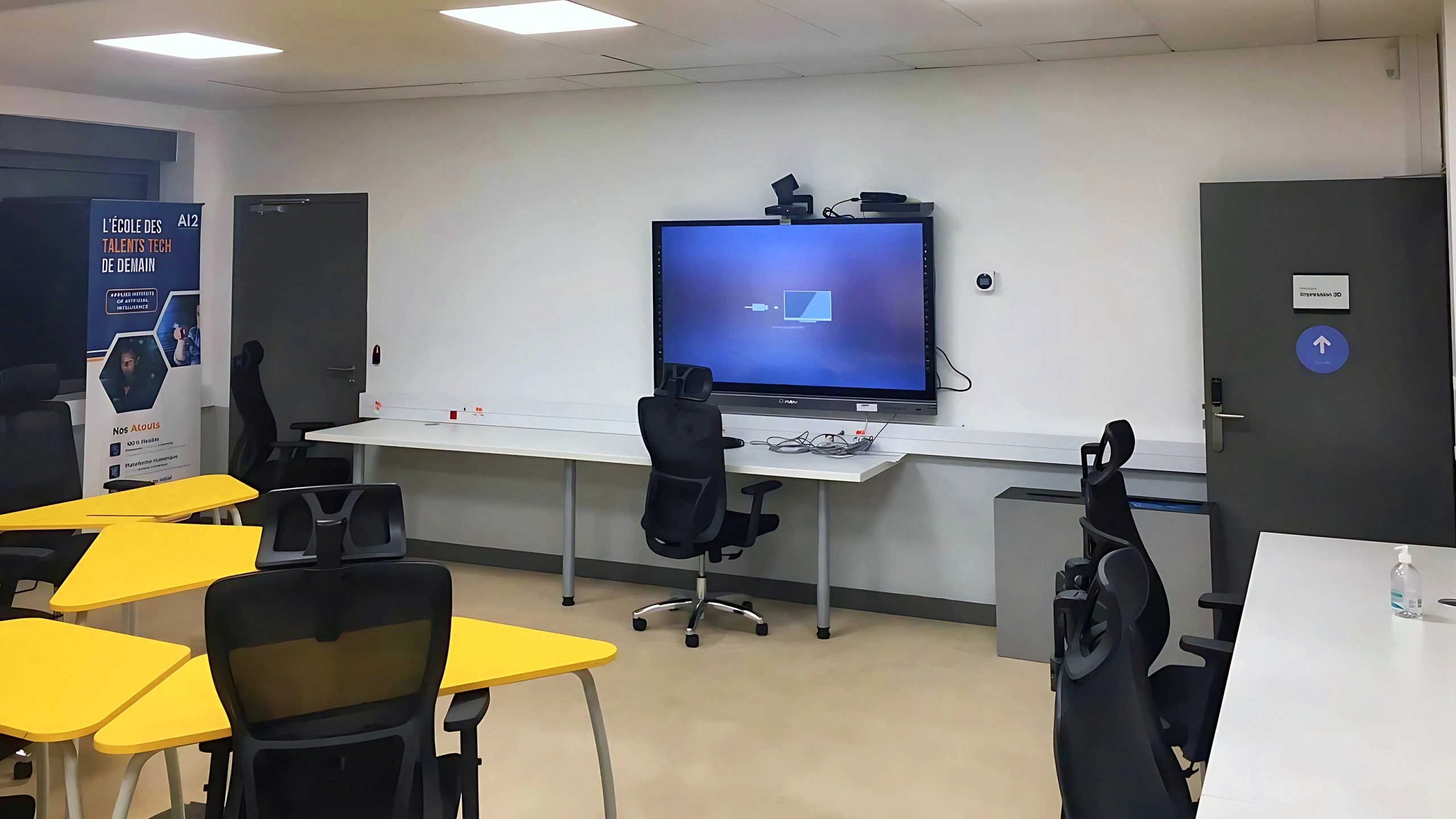
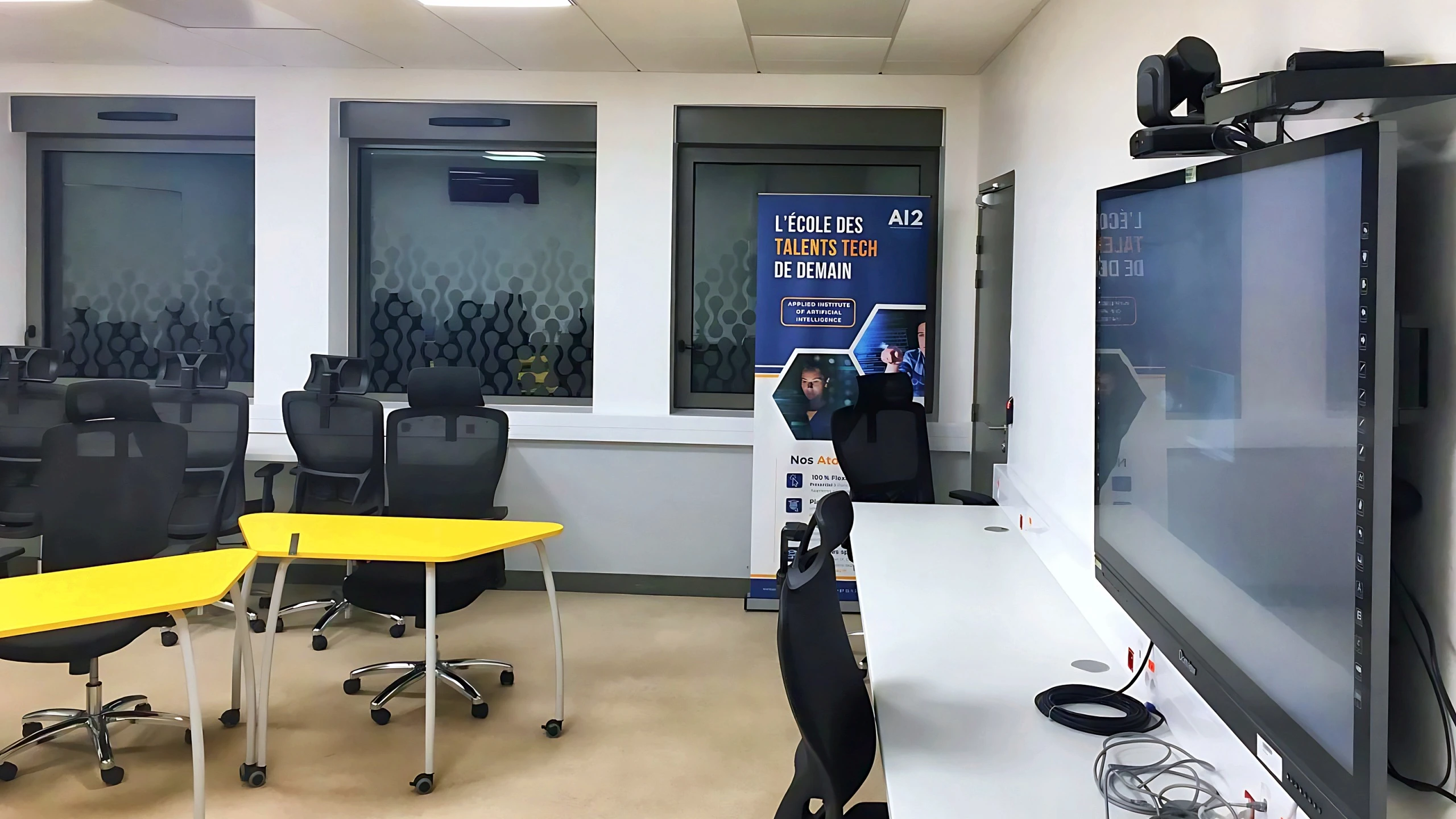
AI2’s international programmes are designed for students who want to study AI and data in English near Paris. You can arrive with no French at all: admission looks at your degree, your English and an online interview with the academic team. The optional French classes then prepare you for what comes after class, from the préfecture to the internship interview. The full curriculum of the MSc is in our guide to the master’s in artificial intelligence in France in English, and the pay you can expect afterwards is in our guide to the data scientist salary in France.
📘 Related guide: Bachelor in France in English: entry rules, fees, visa and options.
Frequently asked questions
Do I need to speak French to study in France?
No, if your programme is taught in English. Campus France lists more than 1,600 programmes taught wholly or partly in English, and a fully English programme does not require a French certificate unless the school asks for one.
What French level do French universities require?
For programmes taught in French, B2 is the usual benchmark. Campus France Egypt recommends a TCF DAP score of 400 points, a DELF B2 or a DALF C1, and advises checking the level required by each university.
Do I need French for a French student visa?
Not as such. Your file must show the language evidence your programme requires. For an English-taught programme, that is usually proof of English, not French.
Can I live in France without speaking French?
Yes, especially at first, but most administrative letters, calls and forms are in French. Basic French makes housing, health insurance and banking much easier, which is why Campus France encourages learning some.
Which French level do I need for an internship or work-study in France?
No law sets one, but employers decide. AI2 recommends reaching B1 before a work-study search, because most work-study employers in France work in French.
Do I need French to stay in France after my studies?
For later permits, yes. Service-Public lists A2 for a first multi-year card in several categories, B1 for a first 10-year resident card and B2 for naturalisation.
Is AI2 taught in English?
Yes. Every AI2 programme is taught 100% in English, B2 English is required and French is not an admission requirement. Optional French classes are offered every year.
Sources consulted on 27 October 2026: Campus France: finding the programme for you (updated 22 January 2026) · Campus France: learning French (updated 25 February 2026) · Campus France Egypt: language certifications required · Campus France Nigeria: studying without French · Council of Europe: CEFR global scale · Service-Public: multi-year card, A2 level (verified 1 May 2026) · Service-Public: 10-year resident card, B1 level (verified 1 July 2026) · Service-Public: French level for nationality, B2 (verified 1 January 2026) · France-Visas: student visa and 964 hours of work
No French needed to apply. Admissions reviews your file, holds an online interview and confirms your entry year, tuition and any AI2 scholarship in writing.