MS in France or MS in the USA? A side-by-side reading of the official rules on both sides: how long the degree takes, what you pay before you fly, how many hours you may work, and how you can stay once you graduate.
How long is an MS in France and in the USA?
Two credit systems, two different ideas of the master’s.
In France, Campus France describes a master’s as four semesters and 120 ECTS credits after a six-semester, 180-credit bachelor’s (licence). Most programmes therefore run two academic years, often split into M1 and M2. The value of the diploma is guaranteed by the State when it is a national diploma, a diploma approved by the Ministry or a title registered in the RNCP.
In the United States, EducationUSA, the US Department of State’s advising network, says a master’s generally requires one to three years of additional study beyond a bachelor’s degree, and can be academic, such as an MS, or professional, such as an MBA. Lengths vary more from one university to the next, so read each programme’s calendar.
Three-year degrees are the first practical difference for Indian applicants. France and India have an agreement on the mutual recognition of academic qualifications, under which an Indian bachelor’s is comparable to the French licence (Campus France India), so a three-year BSc or BCA leads into Year 1 of a master’s. In the United States, each university evaluates foreign degrees itself: ask every admissions office how it reads a three-year degree before you pay application fees. If you hold a BCA, our guide to the master’s in France after a BCA details the routes.
France vs USA at a glance
Every line comes from an official source on that country, read on 29 October 2026.
| Question | France | USA |
|---|---|---|
| Typical master’s length | Four semesters, 120 ECTS (Campus France) | One to three years beyond a bachelor’s (EducationUSA) |
| Public tuition for international students | €3,950 a year for a master’s, 2026-27 (Campus France) | Set by each institution; EducationUSA advises budgeting for increases of 6 to 10% a year |
| Private institutions | About €6,000 to €18,000 or more a year (Campus France) | Set by each institution |
| Application procedure | Études en France with Campus France India, then France-Visas and VFS | Form I-20 from an SEVP-certified school, then the F-1 visa |
| Fees before you fly | Études en France: INR 20,000 since 1 August 2026 | I-901 SEVIS fee: $350, plus the State Department visa fee |
| Proof of funds | At least €877.50 a month (Service-Public F2231) | No single national figure on the DHS pages consulted; your school states what it needs |
| Work during studies | Up to 964 hours a year (Service-Public F2713) | On campus up to 20 hours a week in term; off campus through CPT, OPT or approved hardship |
| Right after graduation | Job-search permit of 1 year; for Indian nationals, 12 months renewable once (Campus France India) | Post-completion OPT of 12 months, plus 24 months for eligible STEM degrees |
| Longer-term work permit | Talent permit from €39,582 gross a year, up to 4 years (F16922) | H-1B: annual cap of 65,000 plus 20,000 for US master’s graduates, weighted selection from FY2027 |
What does each country cost an Indian student?
France publishes caps and minimums; in the USA, costs are institution by institution.
All rupee figures here use the FBIL reference rates published on the Reserve Bank of India website at 1.00 pm on 29 October 2026: ₹106.2145 per euro and ₹95.3688 per US dollar, rounded.
France
Campus France gives the 2026-27 fee for a master’s at a public institution as €3,950 a year for non-EU students (₹4.20 lakh), while private institutions generally charge about €6,000 to €18,000 or more. For the visa you must show at least €877.50 a month, which is €10,530 (₹11.18 lakh) for twelve months, on top of tuition. Before departure, the Études en France fee is INR 20,000; on arrival, validating your long-stay visa costs a €100 tax (Service-Public F2231). Our page on the cost of studying in France for Indian students breaks down rent and insurance.
United States
EducationUSA says overall graduate costs include tuition, fees and living expenses, that actual costs vary by institution, and that tuition typically rises 6 to 10% a year, so budget for it. Living costs vary greatly by location; suburban or rural areas in the South and Midwest generally have the lowest cost of living. Every F-1 applicant pays the I-901 SEVIS fee of $350 (₹33,379) before the visa is issued, according to ICE and Study in the States, in addition to the visa application fee published by the Department of State.
How does the student visa process compare?
France routes you through Campus France first; the USA through your school’s Form I-20.
France: Études en France, then the visa
USA: I-20, SEVIS fee, F-1 visa
In France, a first-year VLS-TS is followed by a student residence card if your studies continue; after one year you can obtain a multi-year card covering the rest of your study cycle (Service-Public F2231). In the United States, your school’s designated school official (DSO) is the key contact: for OPT, the DSO must first recommend it in SEVIS before you file Form I-765 with USCIS (Study in the States).
Can you work while you study?
Yes in both countries, with very different mechanics.
France. A student residence permit allows up to 964 hours of paid work a year, 60% of the legal annual working time, without a separate authorisation (Service-Public F2713). Internships longer than two months carry a minimum gratification of €4.50 an hour in 2026 (F32131). Some programmes also offer work-study (alternance), where an employer pays the tuition through its training fund and pays you a salary. Our guide to part-time jobs in France for Indian students covers the practical side.
USA. Study in the States says F-1 students may work on campus but not more than 20 hours a week while school is in session. Off-campus work needs a specific authorisation: curricular practical training (CPT), normally after one full academic year unless your graduate programme requires it immediately; pre-completion OPT, limited to 20 hours a week during term; or an economic-hardship authorisation approved by your DSO and USCIS. Students who complete one year or more of full-time CPT lose eligibility for post-completion OPT.
How can you stay and work after the master’s?
This is where the two systems differ most.
France: a job-search permit, then a work permit
Service-Public (F17319, verified 1 June 2026) describes a one-year job-search or business-creation permit for graduates of a French diploma at least equivalent to a master’s. You apply in the two months before your student permit expires, pay €150 in tax stamps, and may work in a job related to your studies paid more than €2,800.53 gross a month without the 964-hour limit. If you have left France, you can apply for the corresponding visa within four years of graduating.
Indian nationals have a longer window: Campus France India describes a post-study visa of 12 months renewable once, for 24 months in total, for holders of a master’s or higher obtained in France. The next step is usually the talent permit for qualified employees, which requires a French master’s-level diploma and a contract of more than three months paying at least €39,582 gross a year, valid up to four years (F16922). The full sequence is in our guide to the France post-study work visa for Indian students.
USA: OPT, the STEM extension, then H-1B
Study in the States allows 12 months of OPT at each higher level of study, so a master’s carries its own 12 months. Graduates of degrees on the DHS STEM list can add a one-time 24-month extension, with a training plan on Form I-983. USCIS says you may apply up to 90 days before you complete your degree and no later than 60 days after.
Staying beyond OPT usually means an H-1B. USCIS sets the regular annual cap at 65,000, with 20,000 more for beneficiaries holding a master’s or higher from a US institution. Employers register each candidate for $215 (₹20,504), and from fiscal year 2027 USCIS uses a weighted selection: a registration at wage level IV enters the pool four times, level I once. An H-1B is generally granted for up to three years, extendable to six. A Presidential Proclamation of September 2025 added a $100,000 payment for certain petitions, chiefly for beneficiaries outside the United States without a valid H-1B visa; USCIS reports that a federal court vacated the guidance in June 2026 and that DHS is complying while it considers next steps, so check uscis.gov before you plan around it.
Which one fits your plan?
A fair way to decide is to start from your budget and your preferred first job.
France may suit you if
The USA may suit you if
Either way, check
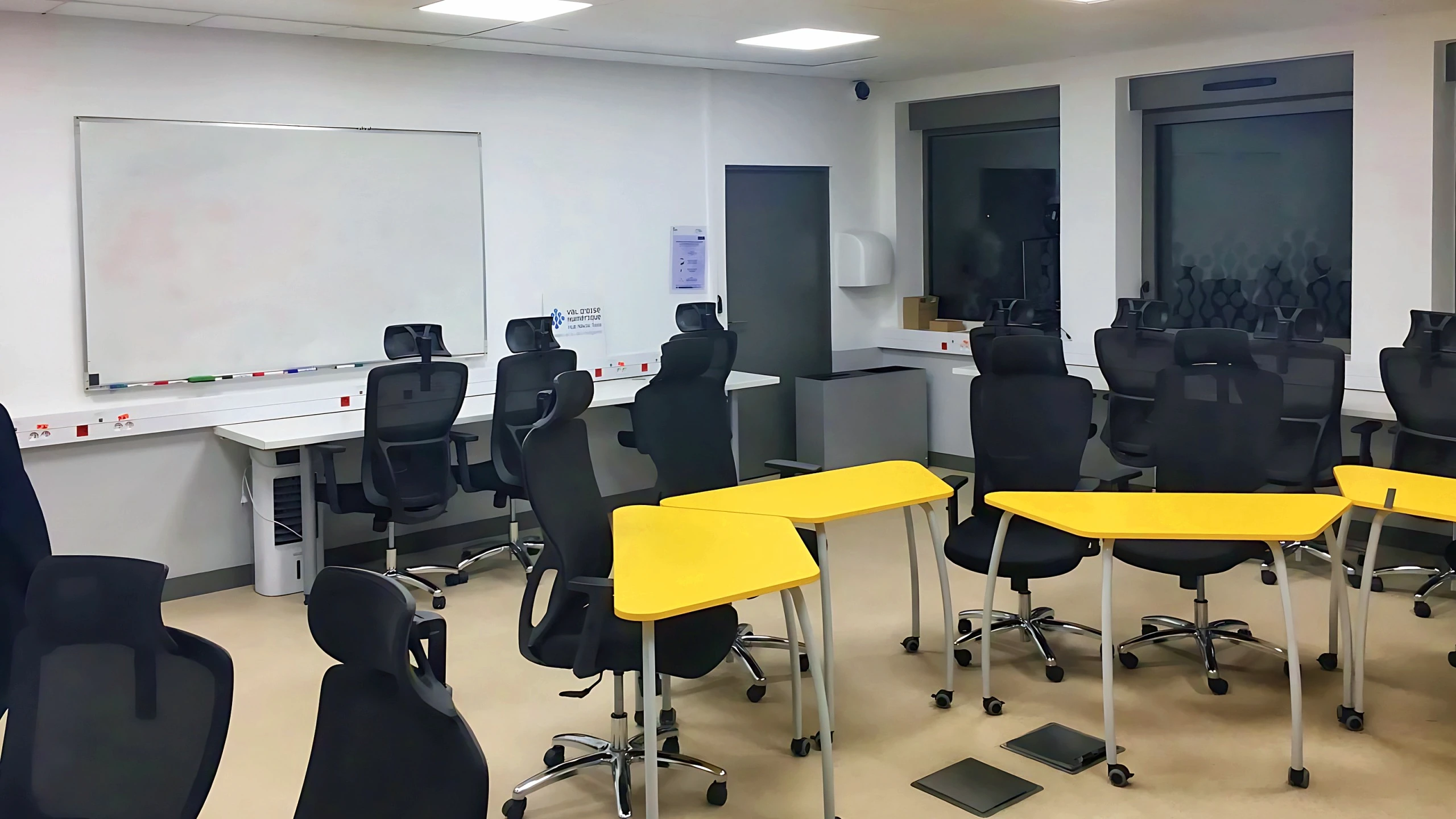
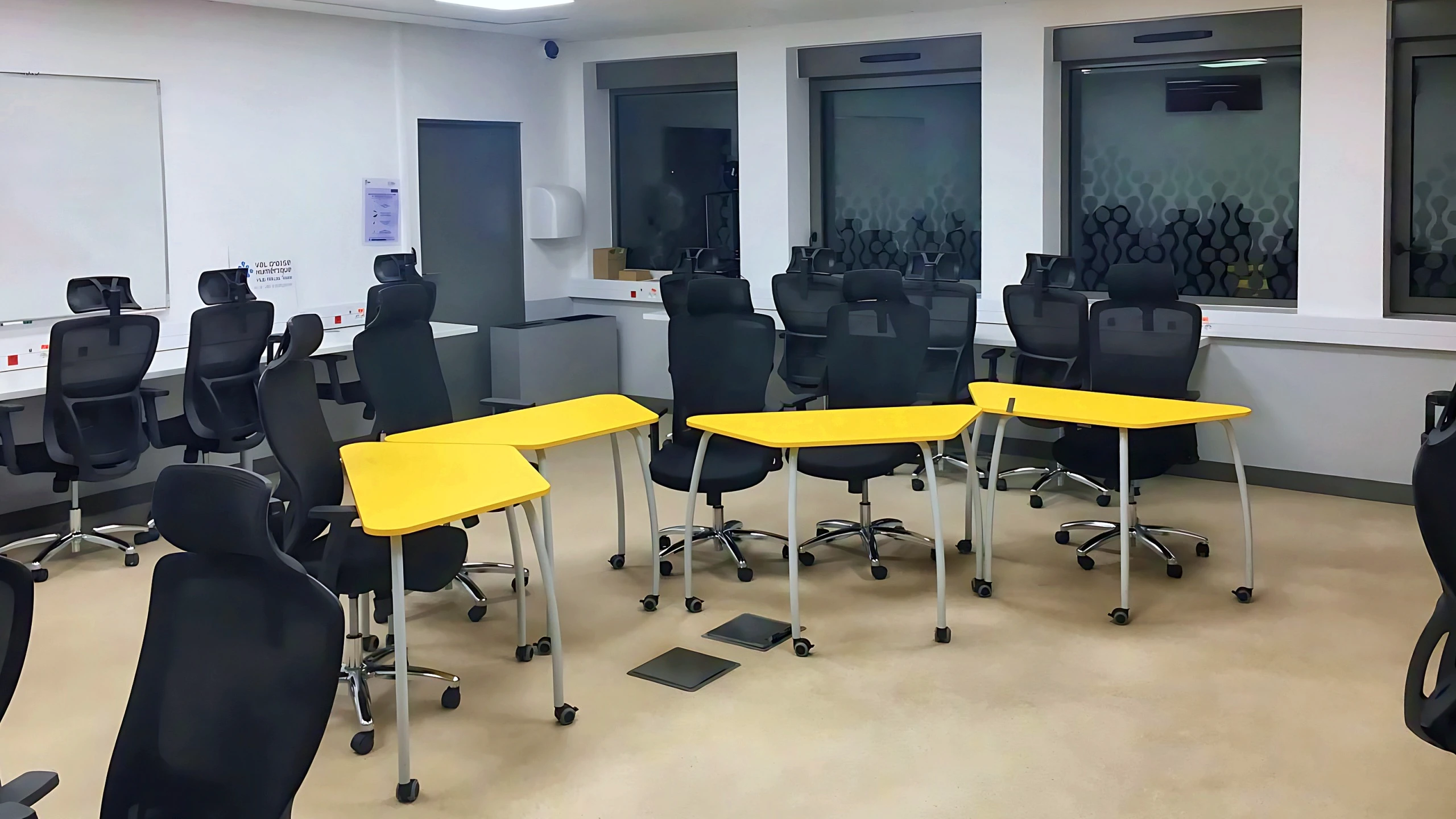
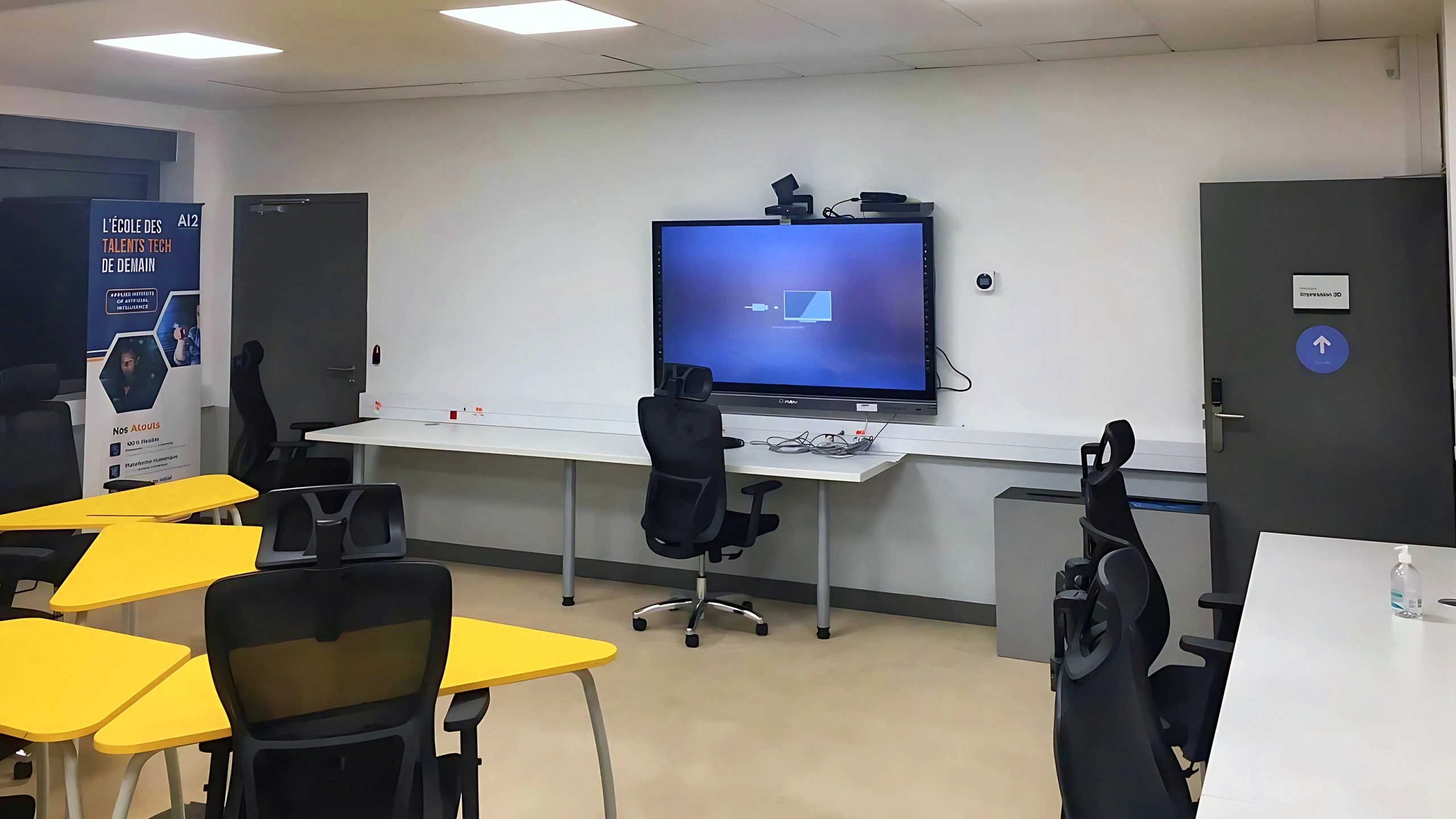
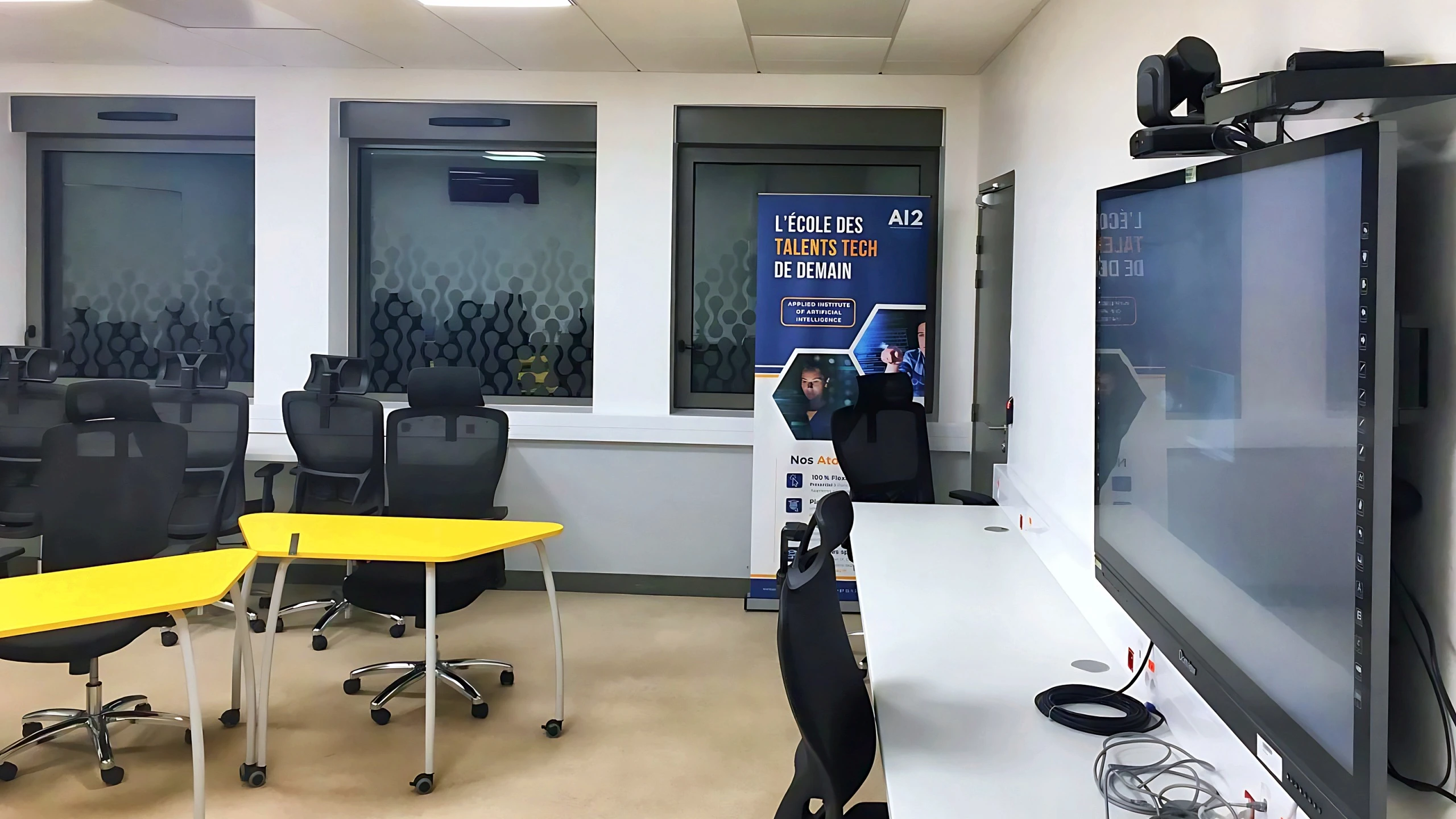
The France option at AI2
An English-taught MSc in applied AI near Paris, with a six-month internship in France.
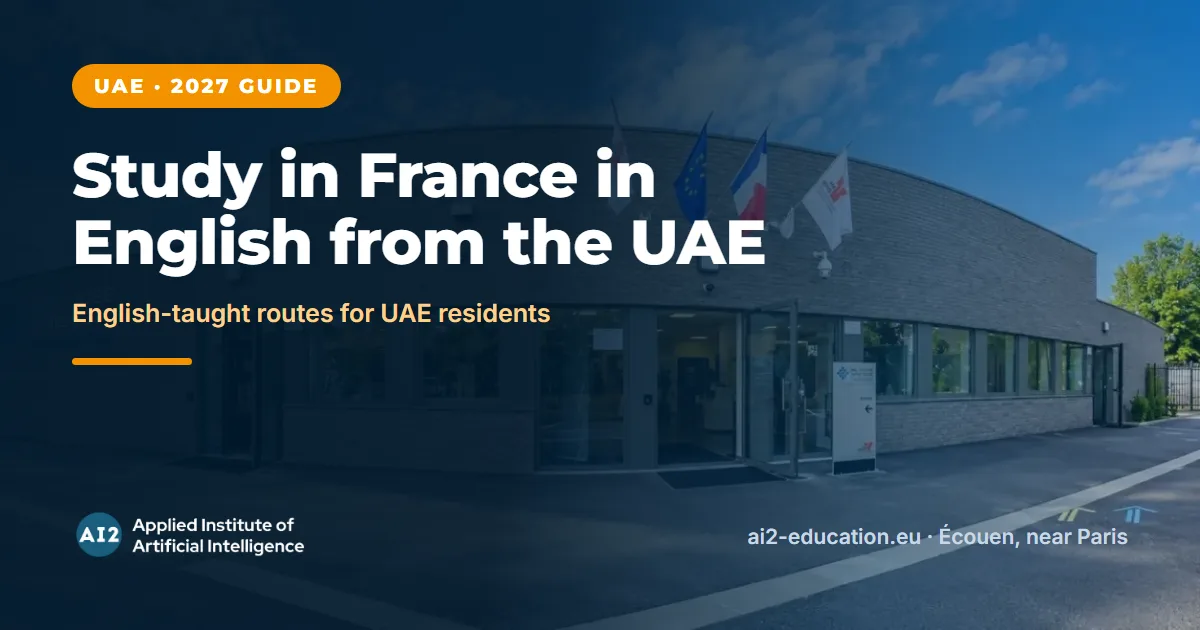
AI2, the Applied Institute of Artificial Intelligence, runs three MSc programmes: Applied AI and Data Science, Applied AI & Cybersecurity and Applied AI & IoT. Teaching is 100% in English at B2 level, with no French required, on the Écouen campus, 22 minutes from Paris Gare du Nord by Transilien line H. GRE and GMAT are not required. Each final year awards the AI2 MSc diploma and prepares a professional certification recognised by the French State and registered in the RNCP at level 7 (EQF 7), certified by DATAKOO, AI2’s parent company. For residence purposes, RNCP level 7 titles appear on the official list of diplomas at least equivalent to a master’s.
| AI2 format | Who it is for | Tuition (2027) | In rupees |
|---|---|---|---|
| MSc, 2 years | Three-year bachelor’s (BSc, BCA, BA) in computing, maths, engineering or science | Year 1 €12,500, from €10,500 after scholarship; Year 2 €13,000 | Year 1 from ₹11.15 lakh |
| Direct entry into Year 2, 18 months | Related four- or five-year degree, after academic review | €13,000, from €11,300 | from ₹12.00 lakh |
| Fast-Track, 11 months (Data Science only, February 2027) | Four-year accredited B.Tech or BE (Washington Accord) or a master’s | €12,500, or €11,000 for applications before 15 November 2026 | ₹11.68 lakh with the early rate |
Work-study is possible from MSc Year 2 in France, subject to an employer contract, and the six-month internship carries the legal minimum stipend. Every international application is assessed for the AI2 scholarship. The priority deadline for February 2027 is 30 November 2026. Compare formats on the MSc Applied AI and Data Science page and the AI2 tuition fees page.
Frequently asked questions
Is an MS in France cheaper than an MS in the USA?
France publishes a capped fee for public institutions: €3,950 a year for a master’s for non-EU students in 2026-27, according to Campus France. US tuition is set by each institution, and EducationUSA advises budgeting for increases of 6 to 10% a year.
How long can Indian students stay in France after a master’s?
Service-Public describes a one-year job-search permit after a master’s-level diploma. For Indian nationals, Campus France India describes a post-study visa of 12 months renewable once, for 24 months in total.
How long is OPT in the USA after an MS?
Study in the States allows 12 months of OPT for each higher level of study. Graduates of eligible STEM degrees can request a one-time 24-month extension, for up to 36 months in total.
How many hours can students work in France and in the USA?
In France, a student residence permit allows up to 964 hours a year. In the USA, F-1 students may work on campus up to 20 hours a week while school is in session; off-campus work needs CPT, OPT or an approved authorisation.
Can I do an MS in France with a three-year bachelor’s?
Yes. Under the India-France agreement on academic recognition, an Indian bachelor’s is comparable to the French licence, which leads into Year 1 of a two-year master’s. US universities each evaluate three-year degrees themselves.
What is the H-1B cap for US master’s graduates?
USCIS sets a regular annual cap of 65,000, plus 20,000 for beneficiaries with a master’s or higher from a US institution. From fiscal year 2027, selection is weighted by wage level.
Is AI2’s MSc taught in English?
Yes. AI2’s MSc programmes are 100% taught in English at B2 level, with no French required, on the Écouen campus near Paris. Intakes are planned in February, May and September 2027.
Sources consulted on 29 October 2026: Campus France: French degrees, LMD and equivalences · Campus France: tuition fees 2026-27 (updated 25 June 2026) · Campus France India: visa procedure · Campus France India: Études en France fee increase · Campus France India: mutual recognition of academic qualifications · Campus France India: post-study and 5-year visas · Service-Public: F2231 (verified 1 August 2026) · Service-Public: F2713 (verified 7 October 2025) · Service-Public: F32131 (verified 1 January 2026) · Service-Public: F17319 (verified 1 June 2026) · Service-Public: F16922 (verified 1 June 2026) · EducationUSA: what is a graduate student · EducationUSA: finance your graduate studies · Study in the States: Form I-20 · Study in the States: working in the United States · Study in the States: training opportunities (updated 24 August 2026) · Study in the States: F-1 OPT · Study in the States: STEM OPT extension (updated 27 July 2026) · Study in the States: paying the I-901 SEVIS fee · ICE: I-901 SEVIS fees · USCIS: OPT for F-1 students · USCIS: H-1B specialty occupations (reviewed 21 September 2026) · USCIS: H-1B cap season (reviewed 21 September 2026) · Reserve Bank of India: FBIL reference rates · AI2: tuition fees 2027 · AI2: MSc Applied AI and Data Science
AI2’s admissions team reviews your degree, holds an online interview and confirms your format, tuition and any scholarship in writing. Priority deadline for February 2027: 30 November 2026.