Two to eight years into your career in India and thinking about a master’s in France? The questions are no longer about marks. They are about which year you can enter, how long you will be away from a salary, how to explain the move at the Campus France interview, and what it costs in rupees.
Can you do a master’s in France after working in India?
Yes. What counts is your degree, your study project and your funding.
A French master’s is built on the European credit system. Campus France explains that a bachelor’s takes six semesters and 180 ECTS credits, and a master’s four more semesters and 120 ECTS. That two-year structure, often called M1 and M2, is the reason an experienced applicant’s degree matters so much: the further your previous studies go, the later you can enter.
The conditions Service-Public lists for the long-stay student visa concern your enrolment in higher education and your resources, at least €877.50 a month. Work history is not a condition, but it shapes the story you tell. A gap between your degree and your application is normal for a professional, and at the Campus France interview you will explain your study project, so the programme should follow logically from the job you are leaving.
Which entry level do your degree and experience open?
Your degree decides the year you join. Experience decides how convincing you are.
| Your profile | Realistic entry | Typical length | What your experience adds |
|---|---|---|---|
| Three-year degree (B.Sc, BCA, B.Com) plus work experience | First year of a master’s | Two years, including any internship | A sharper project and better internship prospects; it rarely shortens the programme |
| Four-year B.Tech or BE | Direct entry into the final year, after a review of your syllabus | One taught year plus an internship, or an accelerated format | Evidence that you already apply the basics; often a technical check at interview |
| Four years of study plus at least three years of professional experience | Mastère Spécialisé, a label of the Conférence des grandes écoles | 12 months, 75 ECTS, with at least 350 hours of teaching and a company project | It is an admission criterion here, not just a bonus |
| Master’s degree (M.Tech, MCA, M.Sc) | Final-year or specialised post-master programmes | About one year | A change of field (for example, into AI) becomes credible |
Two checks are worth doing before you apply. First, if you hold a B.Tech or BE, find out whether your programme was accredited by India’s National Board of Accreditation under Tier I. The NBA states that it became a permanent signatory of the Washington Accord on 13 June 2014, and that recognition by other signatories covers only NBA-accredited programmes of Tier I institutions, for graduates after that date. Some French programmes use this as an entry criterion. Second, gather the syllabus of your degree: direct-entry admissions are decided on course content. Campus France also notes that the ENIC-NARIC centre can issue an attestation on the French value of a foreign degree, for €120 per request, which some institutions require.
Our guides for a master’s in France after a B.Tech and a master’s with a three-year degree go further on each case.
When should you resign? A sequence that protects your income
Resign last, not first.
The French procedure has fixed steps, and none of them requires you to have left your job. Campus France India asks you to submit your Études en France file as soon as you hold an unconditional acceptance letter and at least three months before the intake. France-Visas then requires a long-stay visa application to be lodged at least one month before departure and no more than six months before. A sensible order for a salaried applicant:
- 1Apply and get admitted while employedOnline applications and online interviews fit around a working week.
- 2Complete Campus FranceFile, fee and an in-person interview at your local Campus France office.
- 3Lodge the visa applicationAt a VFS Global centre, in the window between six months and one month before departure.
- 4Resign once the visa decision is inTime your notice period so that your last working day falls before your flight, and ask for your relieving and experience letters.
- 5Keep your proof of experienceExperience letters, appointment letters and a portfolio of projects are useful for admission, internships and later job applications in France.
Why the documents matter: the France Compétences sheet of the level 7 certification RNCP39978, for example, asks candidates for a complete file that includes their diplomas, a detailed description of their professional experience, a list of projects carried out and the results of pre-entry technical tests. An experienced applicant who can document each role has a stronger file.
How do you explain leaving a job at the Campus France interview?
A clear line from your last role to your next one.
Campus France India states that at the interview you explain your study project, and its procedure page adds that you will be asked about your reasons for choosing France and your institution. For an applicant with several years of work, that is an opportunity: your job gives concrete reasons for the programme. Prepare answers to the questions that follow naturally from your profile:
- Why now? Name the skill your current role lacks (for example, deploying machine-learning models rather than only reporting on data) and how the programme fills it.
- Why give up a salary? Show that you have counted the cost and that your funding covers it: savings, family support or an education loan.
- What about the gap since your degree? Account for every period with dates and documents. If you had a break without work, say what you did.
- What next? Describe a target job and, if relevant, how a French qualification plus an internship in France leads to it.
- Why this programme rather than a course online? Point to the internship, the jury or the hands-on format.
Consistency matters more than polish: the dates on your CV, your statement of purpose, your experience letters and your answers must match. Our list of Campus France interview questions helps you rehearse before the day.
Can you work during and after the programme?
Yes, within limits during the course, and with a one-year permit to find a job afterwards.
| Situation | What the rules say | Source |
|---|---|---|
| Paid work while you study | Up to 964 hours a year with a student permit, without a separate work authorisation | Service-Public F2713 |
| Internship of more than two months | Gratification of at least €4.50 an hour in 2026 | Service-Public F32131 |
| Apprenticeship or professionalisation contract | As a rule, you must have been in France for more than one year; for an apprenticeship, Service-Public waives this for programmes leading to a national master’s or a level I diploma recognised by the Conférence des grandes écoles | Service-Public F2713 |
| After the diploma | A one-year job-search or business-creation permit, applied for in the two months before your student permit expires, if your diploma is at least master’s level | Service-Public F17319, verified 1 June 2026 |
| Your first job | A job related to your studies paid from €2,800.53 gross a month gives access to the employee permit without the job-market test | Service-Public F17319 |
For a professional, the one-year job-search permit is the real prize: it lets you convert the programme into a French job. Our guide to the post-study work visa for Indian students explains each step.
What does the move cost, in rupees?
Tuition, living costs and the salary you give up.
All rupee figures use the FBIL reference rate shown on the Reserve Bank of India website for 29 October 2026: €1 = ₹106.2145.
| Budget line | Amount | Source |
|---|---|---|
| Resources required for the student visa | €877.50 a month, about ₹93,200 | Service-Public F2231, verified 1 August 2026 |
| Same, for twelve months | €10,530, about ₹11.18 lakh | Service-Public F2231 |
| ENIC-NARIC attestation, if an institution asks for one | €120 per request | Campus France |
| Transferring savings abroad | Up to USD 2,50,000 per financial year (April to March) per resident individual under the Liberalised Remittance Scheme | Reserve Bank of India |
| Salary forgone | Your own net salary multiplied by the months away from work | Your payslips |
Many professionals fund the move from savings plus a loan. If you are comparing lenders, start with our guide to the education loan for studying in France.
AI2’s formats for experienced applicants
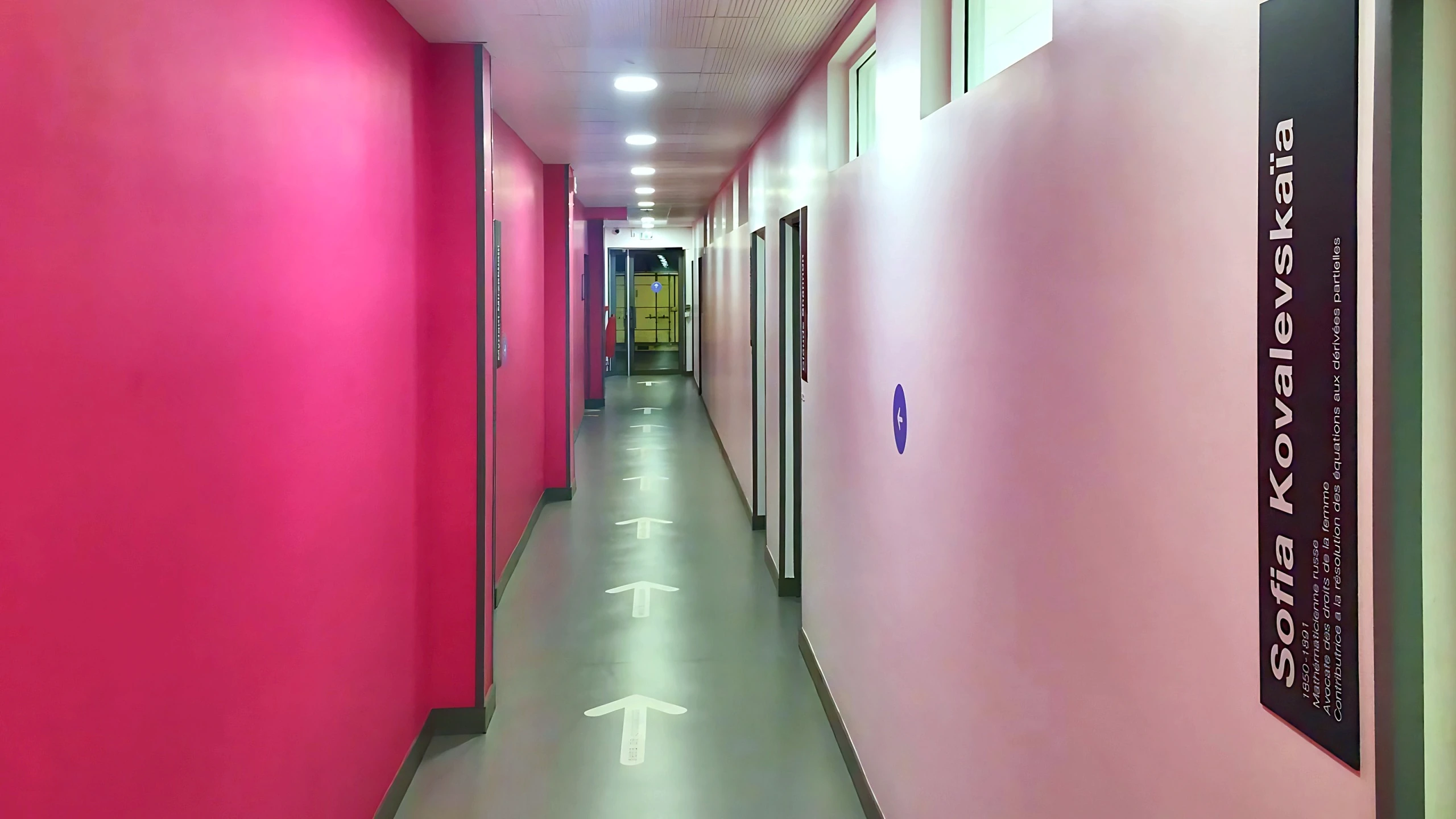
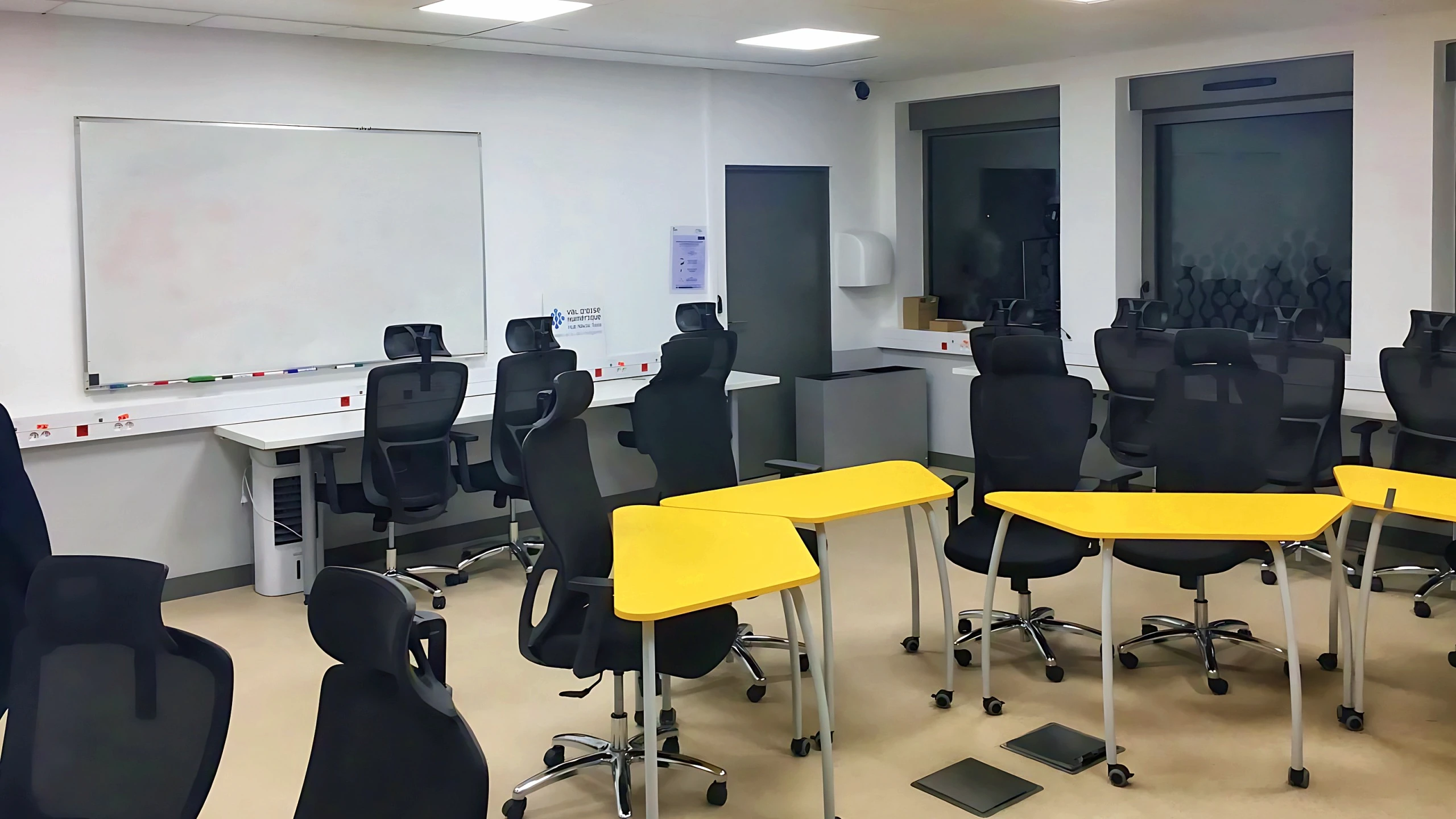
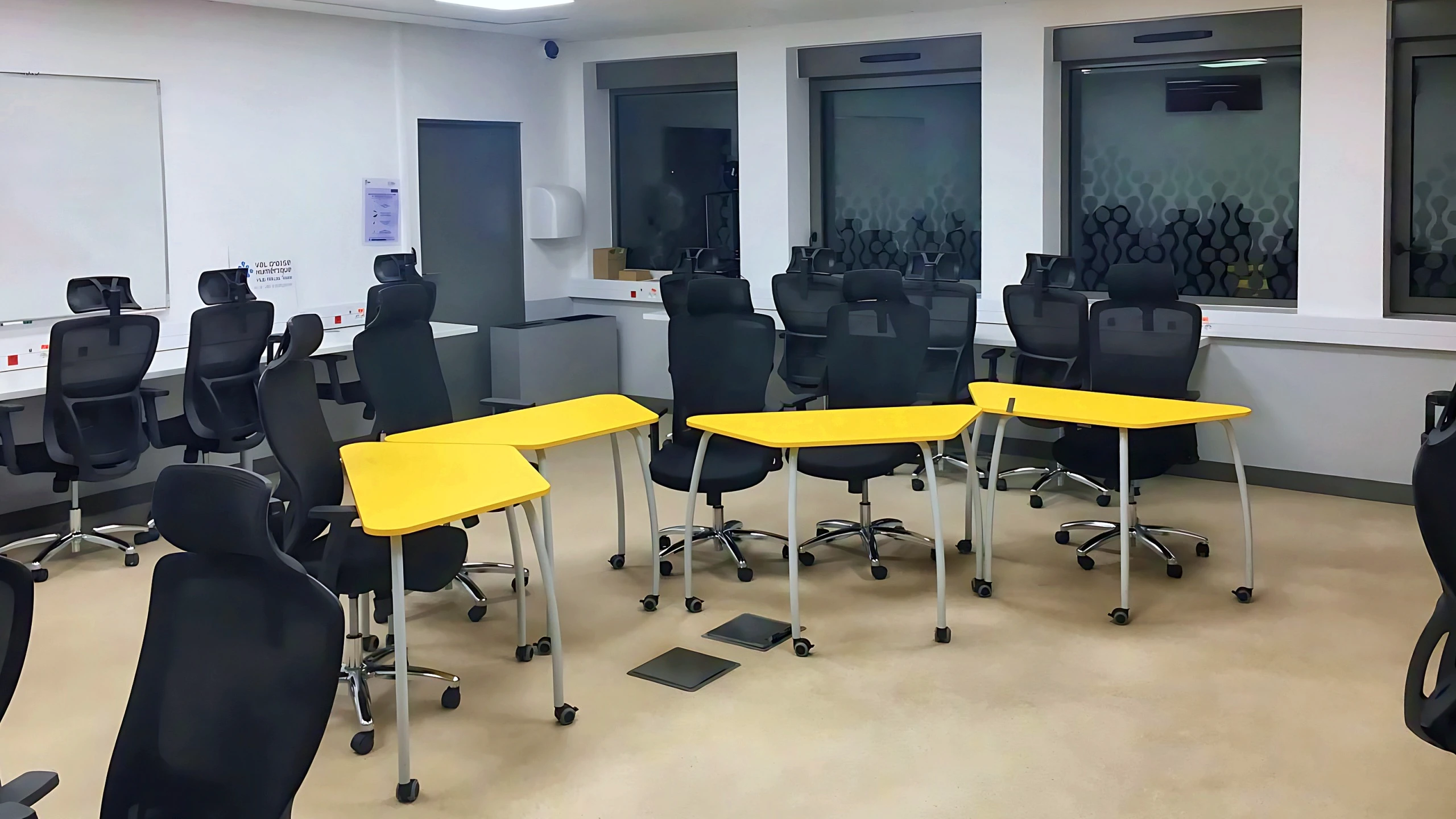
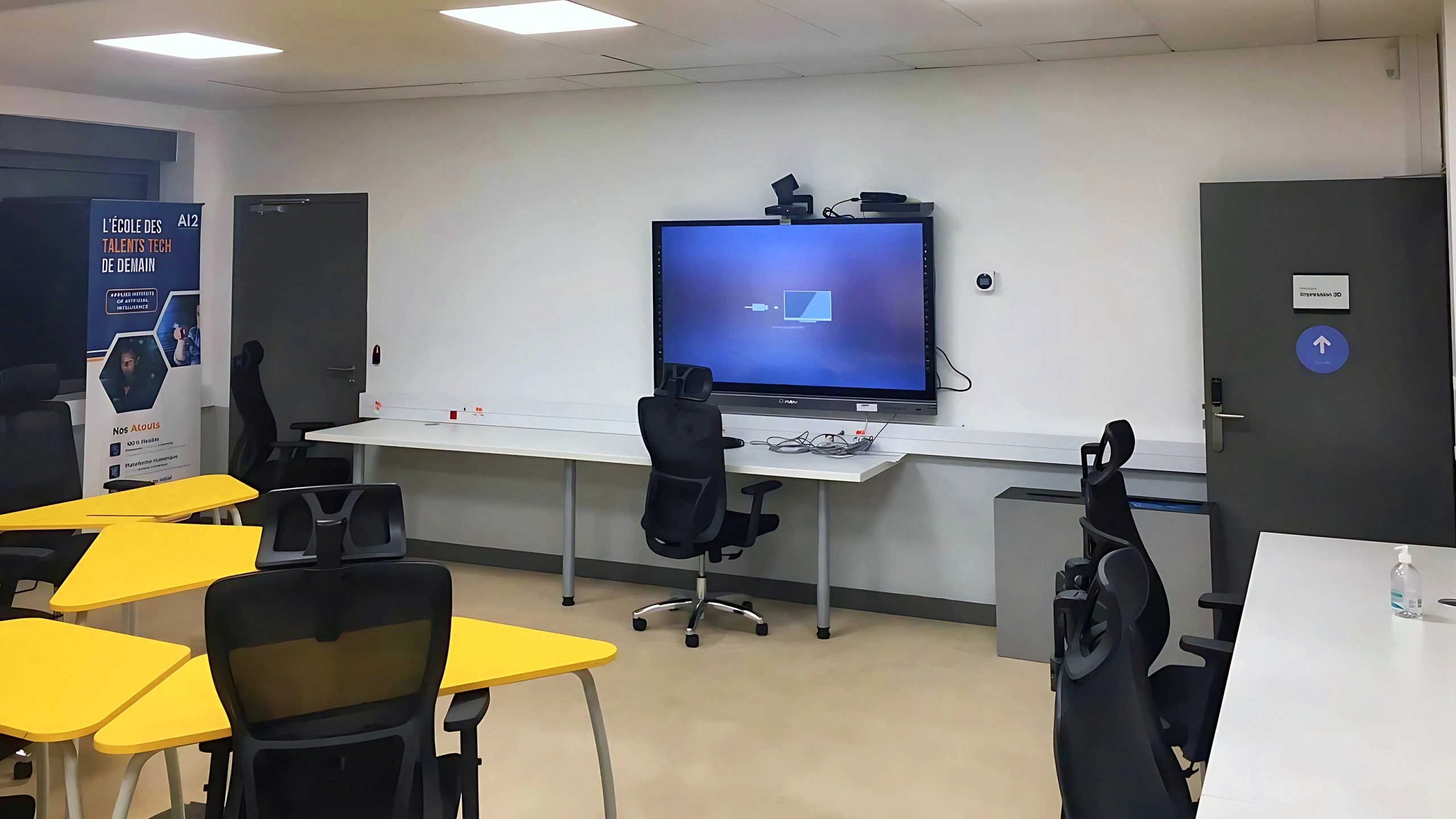
AI2, the Applied Institute of Artificial Intelligence, runs three MSc programmes in applied AI (data science, cybersecurity and IoT), taught entirely in English on its campus at the Hub Nikola Tesla in Écouen, 22 minutes from Paris Gare du Nord by Transilien line H. No French is required, and admission is based on your file and an online interview, without the GRE or GMAT. Each MSc leads to the AI2 MSc diploma and prepares a professional certification recognised by the French State and registered in the RNCP at level 7, the master’s level (EQF 7): RNCP39978 « Architecte des systèmes d’information dans les processus industriels » for data science and cybersecurity, and RNCP40554 « Architecte Internet des objets (IoT) » for IoT, both certified by DATAKOO, AI2’s parent company.
For a professional, two formats skip the foundation year:
| Format | Who it is for | Calendar | Tuition (INR approx.) |
|---|---|---|---|
| Fast-Track, MSc Applied AI and Data Science | A four-year accredited B.Tech or BE (Washington Accord) or a master’s in a related field; Python, statistics and SQL checked at interview. AI2 describes the typical candidate as working for one to five years in IT, software, data or industrial automation | 11 months: February to June 2027 on campus (500 hours, 70% hands-on), July to December 2027 in a company in France; jury at the end of December 2027 | €12,500 (₹13.28 lakh), or €11,000 (₹11.68 lakh) for applications before 15 November 2026 |
| MSc direct entry into Year 2 (data science, cybersecurity or IoT) | A related four- or five-year degree, subject to academic review of your syllabus | 18 months: 12 taught months, then a 6-month internship; intakes in February, May or September 2027 | €13,000 (₹13.81 lakh), from €11,300 (₹12.00 lakh) after scholarship; IoT from €11,800 (₹12.53 lakh) |
| Full MSc | A three-year bachelor’s (B.Sc, BCA, BA) in computing, mathematics, engineering or science | Year 1, Year 2, then a 6-month internship; February, May or September 2027 | Year 1 €12,500 (₹13.28 lakh), from €10,500 (₹11.15 lakh); Year 2 €13,000 |
A few points matter for someone leaving a job. The Fast-Track keeps the four certification blocks of RNCP39978 in full (224 hours) and adds a 276-hour data and AI core, from Python to generative AI and MLOps, so an engineer moving into AI is not expected to know everything on day one. It is not designed for part-time study or for paid work-study in the first year: AI2 lists those as reasons to choose another route. Work-study can be possible from Year 2 in France, subject to eligibility and an employer contract, and the Service-Public rules above apply.
The final jury is made of professionals: the France Compétences sheet of RNCP39978 sets a jury of four members, three of them external professionals with at least three years of experience in the field. From March to May, AI2 helps Fast-Track students land their internship with offers from its network and interview coaching, then follows them monthly in the company. Full details are on the MSc Applied AI and Data Science page.
Every international applicant is assessed automatically for the AI2 scholarship; the amount appears in the admission letter and applies to the first year of enrolment. The Fast-Track has its own €1,500 award for applications before 15 November 2026, which cannot be combined with other AI2 discounts. For February 2027, the priority deadline and complete visa file are due on 30 November 2026, and enrolment with the deposit by 15 December 2026. See the AI2 tuition fees page for every format.
📘 Related guide: Masters in France after MCA: 18-month direct entry and budget in INR.
Frequently asked questions
Can I do a master’s in France after five years of work experience?
Yes. French admission looks at your degree and your study project. With a four-year degree or a master’s you can often enter the final year directly; with a three-year degree, plan on a two-year master’s. Experience strengthens your file and your Campus France interview.
Is there a one-year master’s in France for working professionals?
Several routes take about a year: direct entry into the second year, the 12-month Mastère Spécialisé (open after four years of study plus at least three years of professional experience, according to Campus France) and accelerated formats such as AI2’s 11-month Fast-Track in data science.
Will a career gap cause a problem for my French student visa?
The visa conditions on Service-Public concern your enrolment and your resources, not your work history. At the Campus France interview you explain your study project, so account for every period with dates and documents and show how the programme follows from your work.
Should I resign before applying for a master’s in France?
No. You can apply, be admitted, complete Campus France and lodge your visa while employed. France-Visas accepts long-stay applications from six months up to one month before departure, so resign once your visa decision is in.
Can I work in France after the master’s?
If your diploma is at least master’s level, Service-Public describes a one-year job-search permit, applied for in the two months before your student permit expires. A related job paid from €2,800.53 gross a month gives access to the employee permit.
How much money do I need to show for the visa?
At least €877.50 a month according to Service-Public, about ₹93,200 at the FBIL reference rate of 29 October 2026, or about ₹11.18 lakh for twelve months, on top of tuition.
Which AI2 format suits a B.Tech graduate with work experience?
If you hold a four-year accredited B.Tech or BE and know Python, statistics and SQL, the 11-month Fast-Track in data science (February 2027) or the 18-month direct entry into Year 2. AI2 confirms the format after reviewing your file and an online interview.
Sources consulted on 29 October 2026: Campus France: French degrees, LMD system and equivalences · Campus France: The Mastère Spécialisé programs (January 2020, PDF) · Campus France India: application and admission procedure · Campus France India: preparing the visa application · France-Visas: applying in India · National Board of Accreditation: international recognition · France Compétences: RNCP39978 · Service-Public: student visa and residence permit, F2231 (verified 1 August 2026) · Service-Public: work for foreign students, F2713 (verified 7 October 2025) · Service-Public: job-search or business-creation permit, F17319 (verified 1 June 2026) · Service-Public: internship gratification, F32131 (verified 1 January 2026) · Reserve Bank of India: FBIL reference rates, 29 October 2026 · Reserve Bank of India: Liberalised Remittance Scheme FAQ · AI2: MSc Applied AI and Data Science · AI2: MSc Applied AI and Cybersecurity · AI2: MSc Applied AI and IoT · AI2: tuition fees 2027 · AI2: scholarships
Apply while you are still employed: AI2 reviews your file, holds an online interview with a technical check and confirms your format and tuition in writing. Fast-Track rate of €11,000 for applications before 15 November 2026; priority deadline 30 November 2026.