Finished your GCE A/Ls and thinking of a bachelor’s in France? How French admissions read Sri Lankan school results, the two application routes, what three years cost in rupees, and the Campus France interview in Colombo that comes before the visa.
Can you study a bachelor’s in France after your A/Ls?
Yes: the GCE A/L opens the first year of a three-year French bachelor’s.
Yes. France organises higher education in three cycles, licence, master and doctorate, known as the LMD system. Campus France gives the arithmetic: a bachelor’s requires six semesters and 180 ECTS credits, and each semester carries up to 30 credits that can be transferred to other countries. The first year of a bachelor’s is open to students who hold a secondary-school leaving qualification, so a Sri Lankan applicant starts from the GCE Advanced Level.
In Sri Lanka’s own framework, the University Grants Commission places the Advanced Certificate (GCE A/L or equivalent) at level 2 of the Sri Lanka Qualifications Framework, one step above the GCE O/L Certificate at level 1, and below the Diploma (level 3), the Higher Diploma (level 4) and the Bachelors (level 5). That is the language French admissions officers will meet in your file: a completed upper-secondary qualification, ready for the first year of higher education.
Admission is decided by each institution, programme by programme, from your transcripts. There is no single national score that converts A/L grades into a French place. What matters is the subjects you took, your results, your English and, for selective programmes, your motivation and an interview.
Public university or English-taught programme: which route applies to you?
The DAP for universities; direct application everywhere else.
Campus France Sri Lanka describes two procedures, and which one you follow depends on where you apply, not on your nationality alone.
Route 1: first year at a public university, through the DAP
The preliminary admission request, or Demande d’Admission Préalable (DAP), is mandatory for non-European students who want to enrol in the first year of a bachelor’s at a university or in a school of architecture. You file it with the Department of Cooperation and Cultural Action of the French Embassy in Sri Lanka and the Maldives: the white file is for first-year university, the yellow file for architecture. Campus France advises completing it as early as possible, ideally in November of the year before the academic year you are aiming for.
Route 2: any other institution, by direct application
For other bachelor’s programmes, you contact the institutions that interest you and follow their own enrolment procedure. If you are accepted, you receive an admission document, and from that point you can start the visa procedure. Sri Lanka is not one of the countries that use the “Études en France” online platform, so there is no national portal to queue in: your file starts with the school.
| Public university, Year 1 | Private institution, English-taught | |
|---|---|---|
| How you apply | DAP white file with the embassy’s cooperation service | Directly to the institution |
| When | Ideally in November of the year before entry | Institution calendar; several intakes at some schools |
| Tuition 2026-27 (non-EU) | €2,902 a year, about LKR 1.08 million | Set by each school; Campus France gives about €6,000 to €18,000 or more a year for private institutions |
| Language of teaching | Stated by each programme | English throughout, if the programme says so |
| After admission | Campus France interview in Colombo, then visa | Campus France interview in Colombo, then visa |
Both routes end at the same step in Colombo, described further down. For a country-neutral overview of English-taught options, see our guide to a bachelor’s in France in English.
Year 1, Year 2 or the final year: where do you start?
Most A/L holders begin in Year 1.
Your entry year depends on what you have already completed after school. A/L holders normally start in Year 1. Students who have validated a year of higher education in a related field can sometimes join Year 2. And holders of two years of higher education in computing, such as a Higher National Diploma, can apply for the final year and finish in about twelve months.
| Your situation in Sri Lanka | Usual entry point | Length in France |
|---|---|---|
| GCE A/L completed, with mathematics or science | Year 1 | Three years |
| One validated year of higher education in a related field | Year 2, after academic review | Two years |
| HND, BTEC Level 5 or Years 1 and 2 of a BSc in computing | Final year (top-up) | About one year |
If you already hold an HND or a higher diploma, our top-up degree guide for Sri Lankan students goes through the Sri Lankan qualifications one by one. This page stays on the school-leaver route.
What do you need to apply from Sri Lanka?
A/L results, English, passport and a clear plan.
Requirements differ by institution, but a complete first-year file from Sri Lanka usually contains the same core pieces. Prepare them before the application window opens, because certified copies and translations take time.
- Your GCE A/L certificate and detailed results, and your GCE O/L results.
- Proof of English: many English-taught programmes ask for B2, shown by a test score or by English-medium schooling.
- A valid passport, which you will also need for the visa.
- A short motivation statement explaining why this field and why France.
- For the visa later: your admission letter and proof of resources of at least €877.50 a month.
You do not need French for an English-taught programme, but a few months of French classes help with daily life and part-time work.
What does a bachelor’s in France cost in rupees?
About LKR 7.3 million for a first year at a private institution, with the visa allowance.
Every rupee figure here uses the euro indicative rate of the Central Bank of Sri Lanka for 29 October 2026: €1 = LKR 370.86. Your bank’s selling rate will differ, and three years of fees are paid over a long period, so keep a margin.
Two costs drive the budget. Tuition, which depends on the institution, and living costs, for which the visa sets a floor: Service-Public F2231 requires resources of at least €877.50 a month, about LKR 325,430, or €10,530 a year (LKR 3.91 million). After arrival, you also validate your long-stay visa within three months and pay a €100 tax.
| Year | Tuition | Living (visa minimum, 12 months) | Total | In rupees |
|---|---|---|---|---|
| Public university, Year 1 (non-EU fee 2026-27) | €2,902 | €10,530 | €13,532 with the €100 tax | LKR 5.02 million |
| AI2 Bachelor Year 1 | €9,000 | €10,530 | €19,630 with the €100 tax | LKR 7.28 million |
| AI2 Bachelor Year 2 | €9,000 | €10,530 | €19,530 | LKR 7.24 million |
| AI2 BSc final year | €9,900 | €10,530 | €20,430 | LKR 7.58 million |
| AI2, three years in total | €27,900 | €31,590 | €59,590 | LKR 22.10 million |
Rent decides whether you live near the visa floor or above it. Campus France gives €450 a month for a room in a CROUS residence in Paris (about LKR 166,887) and at least €800 for a private studio (LKR 296,688); CROUS rooms are hard to get because demand far exceeds supply. A student residence permit allows paid work of up to 964 hours a year (Service-Public F2713), useful once you are settled but never a substitute for the funds shown in the visa file.
For the complete first-year list (flight, deposit, insurance, transport) and how to send money from Sri Lanka, read our guide to the cost of studying in France for Sri Lankan students. Funding options are in our guide to scholarships in France for Sri Lankan students.
What happens after admission: the Colombo interview and the visa
The interview is mandatory for every Sri Lankan student going to France.
- 1Book the Campus France interviewCampus France Sri Lanka interviews every student admitted by a French institution, and the interview is a mandatory step before the visa application. Request a slot by email to colombo@campusfrance.org with “Interview Request” in the subject line.
- 2Attend in ColomboInterviews take place at the library of the Alliance Française de Colombo, 11 Barnes Place, Colombo 07. Be ready to explain your choice of programme, your plans and your budget.
- 3Apply on France-VisasThe French Embassy in Sri Lanka directs applicants to the France-Visas website: use the visa wizard, complete the online form, then submit it at your visa centre. You can apply up to six months before departure.
- 4Travel with the right visaFor a bachelor’s or a master’s, Campus France Sri Lanka says to request a student visa; the long-stay student visa (VLS-TS) is valid for four months to one year.
- 5Validate on arrivalWithin three months of arriving, validate your VLS-TS and pay the €100 tax (Service-Public F2231). After the first year, you apply for a student residence permit.
Not yet admitted anywhere? Campus France Colombo also runs free 15 to 20 minute information sessions on Mondays from 10 am to 12 pm, by appointment with “Counselling Request” as the email subject. To prepare the interview itself, use our list of Campus France interview questions, and for documents and timing see the French student visa from Sri Lanka guide.
An English-taught option near Paris: AI2’s Bachelor in Applied AI
Three years in English, two tracks, a level 6 State title in the final year.
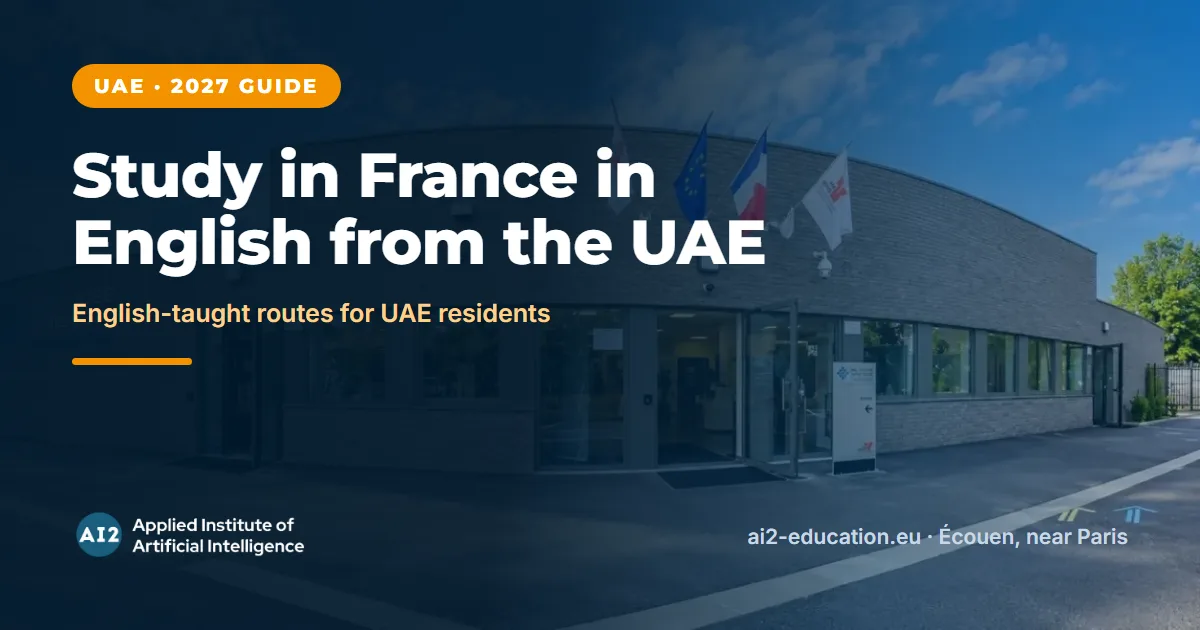
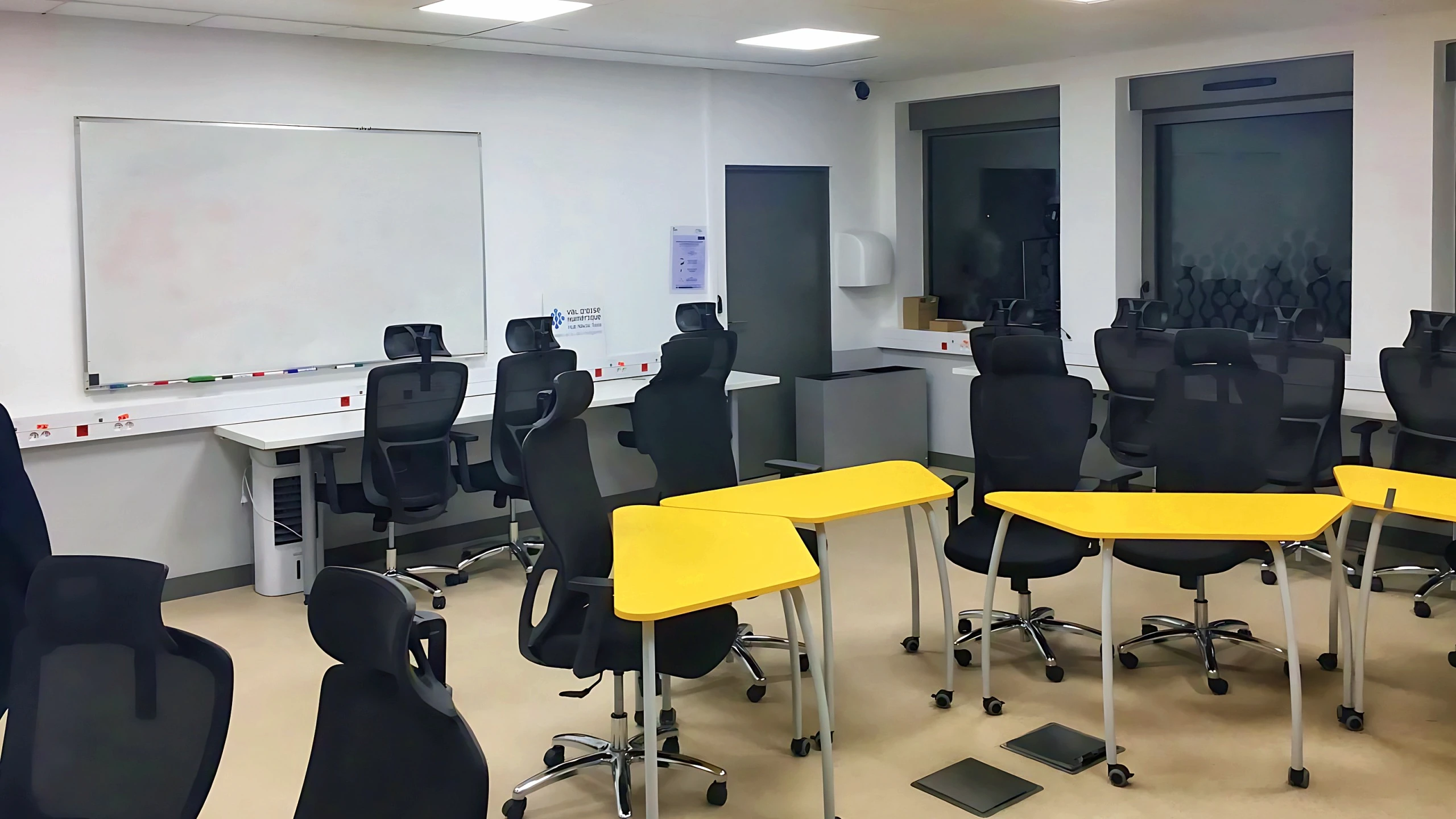
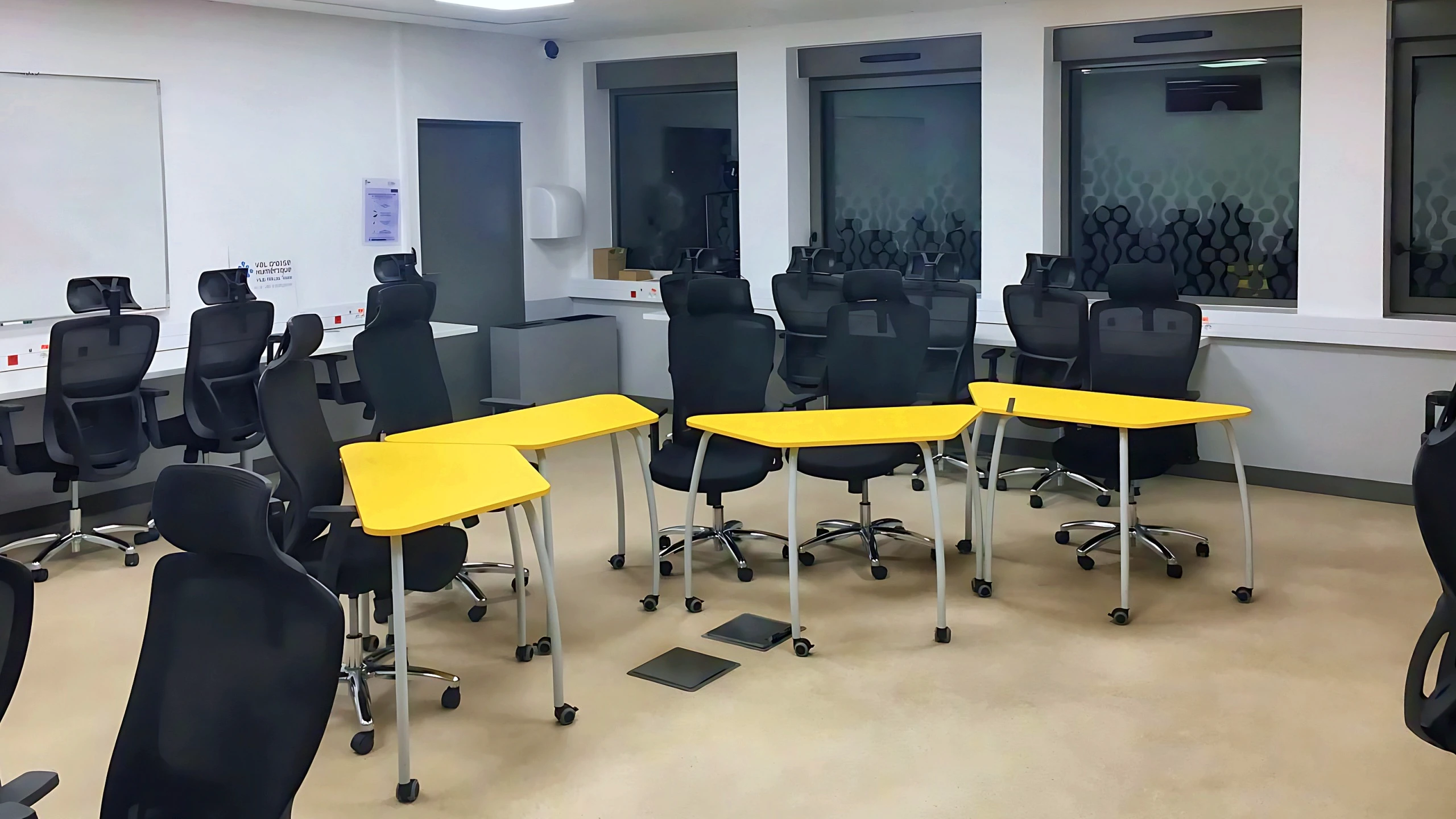
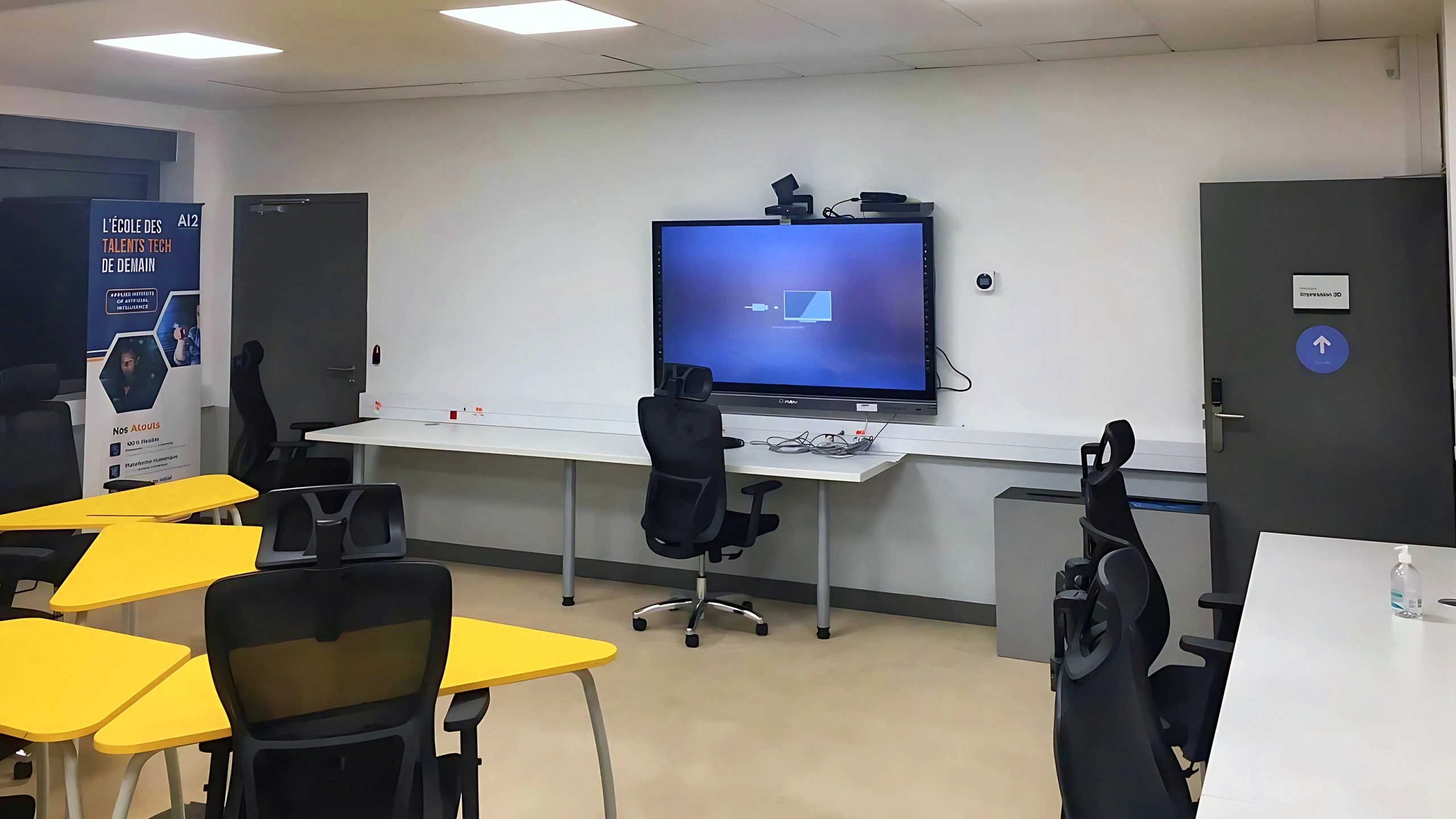
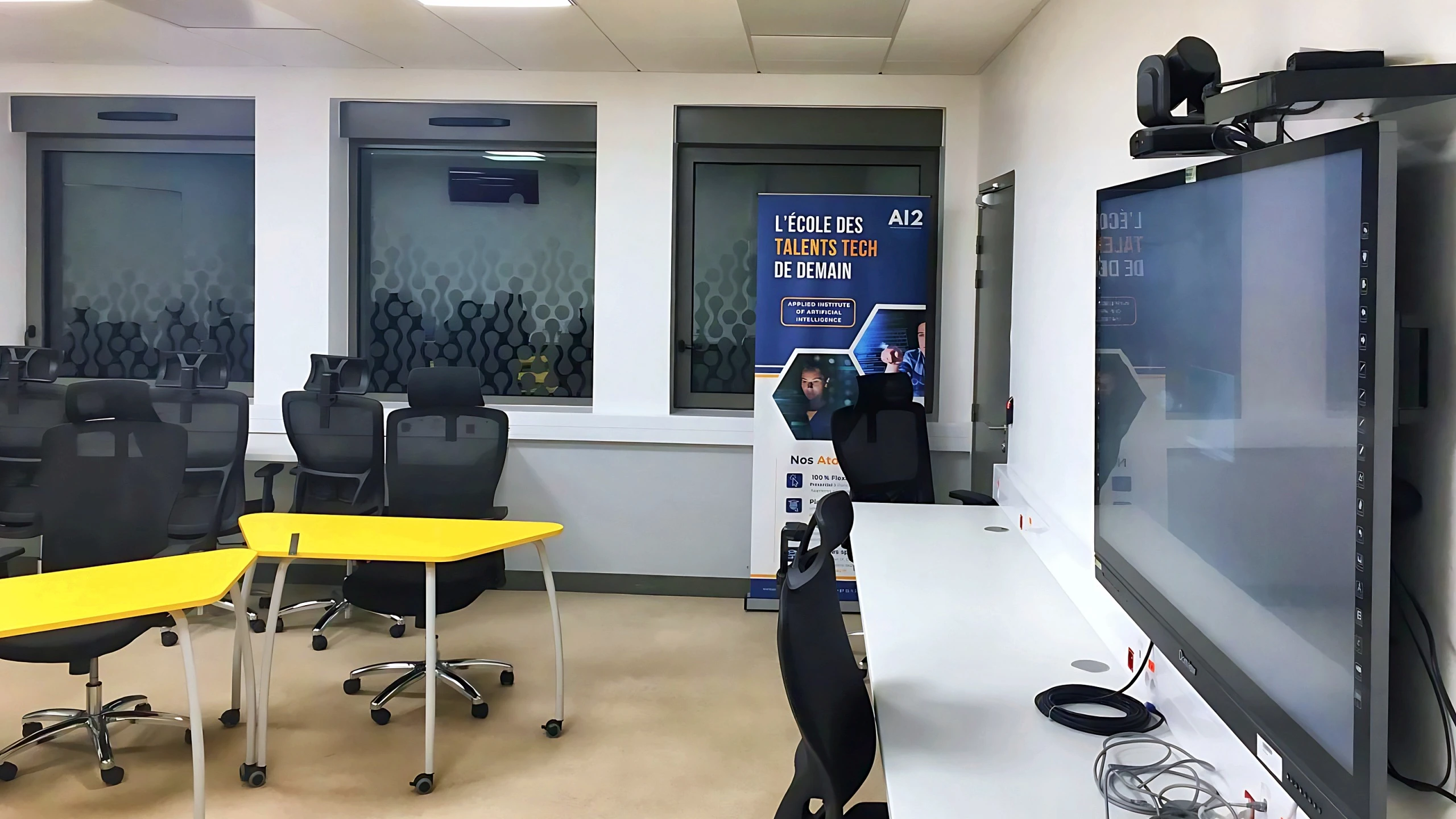
For A/L students drawn to programming, data or industrial technology, AI2’s Bachelor in Applied AI is taught 100% in English on the campus at the Hub Nikola Tesla in Écouen, 22 minutes from Paris Gare du Nord by Transilien line H. No French is required.
Years 1 and 2: two tracks
Year 3: a professional final year
After the Bachelor
Entry rules for Sri Lankan applicants
- Year 1: a secondary-school leaving certificate with mathematics, or science for the Industrial IT track.
- Year 2: one validated year of higher education in a related field.
- English B2: IELTS 6.0, TOEFL iBT 72 or English-medium schooling.
- File review and an online interview; French is not required.
Fees, scholarships and work-study
Years 1 and 2 cost €9,000 a year (LKR 3.34 million) and the final year €9,900 (LKR 3.67 million), with AI2 scholarships possible (excellence, early application). Every international application is assessed for the scholarship automatically, with no separate form, and the amount is stated in the admission letter. Work-study is possible from Year 2, subject to a contract: the employer’s training-fund operator then pays tuition for the contract period. Tuition does not cover housing, living costs, insurance, travel or visa fees.
AI2 also works directly in Sri Lanka. During its 2026 academic tour, the AI2 delegation visited SLIIT, the University of Moratuwa and BCAS Campus in Colombo, and signed a memorandum of understanding with BCAS Campus to open pathways for its Bachelor students into AI2’s advanced programmes.
A timeline for a 2027 start from Sri Lanka
Start eight to ten months before the intake you want.
| When | What to do |
|---|---|
| Now to November 2026 | Choose your route; for a public university Year 1, prepare the DAP with the embassy, ideally in November |
| By 30 November 2026 | AI2 priority application deadline for the February 2027 intake |
| 15 December 2026 | AI2 enrolment and deposit for February 2027 |
| After your admission letter | Campus France interview in Colombo, then the visa application on France-Visas |
| February, May or September 2027 | AI2 intakes for the Bachelor; May and September dates are sent on request by admissions |
Aiming for the autumn? Our September 2027 intake timeline works backwards from the first day of class.
Frequently asked questions
Can I study in France after my A/Ls in Sri Lanka?
Yes. The GCE A/L, placed at level 2 of the Sri Lanka Qualifications Framework, gives access to the first year of a French bachelor’s, which lasts three years and carries 180 ECTS credits. Each institution decides admission from your results.
Do Sri Lankan students need the DAP to apply for a bachelor’s in France?
Only for the first year of a bachelor’s at a public university or a school of architecture. Campus France Sri Lanka says the DAP is filed with the French Embassy, ideally in November of the year before entry. Other institutions are applied to directly.
Is the Campus France interview compulsory in Sri Lanka?
Yes. Campus France Sri Lanka interviews every student admitted by a French institution, and the interview is a mandatory step before the student visa application. It takes place at the Alliance Française de Colombo, by appointment.
Can I study a bachelor’s in France in English without French?
Yes, in English-taught programmes. At AI2, all three years of the Bachelor in Applied AI are taught in English, French is not required, and English B2 can be shown by IELTS 6.0, TOEFL iBT 72 or English-medium schooling.
How much does a bachelor’s in France cost for a Sri Lankan student?
At a public university, non-EU tuition is €2,902 a year in 2026-27. At AI2, Years 1 and 2 cost €9,000 a year and the final year €9,900. Add at least €877.50 a month for living costs, about LKR 325,430 at the CBSL rate of 29 October 2026.
Can I work while studying for a bachelor’s in France?
Yes. A student residence permit allows paid work of up to 964 hours a year without a separate authorisation. At AI2, work-study with an employer is possible from Year 2, subject to a contract.
Sources consulted on 29 October 2026: Campus France: French degrees, LMD system · Campus France: tuition fees in France 2026-27 · Campus France: countries using the Études en France procedure · Campus France: student housing in France · Campus France: long-stay visa for students · Campus France Sri Lanka: how to apply · Campus France Sri Lanka: Campus France near you (interviews) · Campus France Sri Lanka: the different types of visas · French Embassy in Sri Lanka and the Maldives: applying for a visa · University Grants Commission: SLQF FAQ · Service-Public: student visa (F2231) · Service-Public: work for foreign students (F2713) · Central Bank of Sri Lanka: EUR/LKR indicative rate · AI2: Bachelor in Applied AI · AI2: tuition fees 2027
Tell admissions your A/L results and English level: they confirm your entry year, track, tuition and any scholarship in writing.