
Aiming to start in France in September 2027? Ten months sounds like plenty, but admission, Campus France, the visa and housing each have their own clock. Here is what to do each month, starting now, with the official rules behind every step.
Why September 2027 planning starts in autumn 2026
September is the main intake of French higher education, so it is also the busiest. Each stage depends on the one before: you cannot book the Campus France interview without an application file, you cannot apply for the visa without an admission, and most landlords will not sign a lease without a visa and a guarantor. Delays stack up, and the summer months are when appointment slots and student rooms are hardest to find.
Three official rules set the pace. Campus France India asks students to submit their visa application as soon as they receive an unconditional acceptance letter and at least three months before the intake. Service-Public requires proof of resources of at least €877.50 a month for the student visa. And once you arrive, you have three months to validate your visa online. Everything else in this guide is built around those dates.
September 2027 intake in France: the month-by-month timeline
A realistic plan for a non-EU student starting a bachelor’s or master’s in September 2027. Adjust the first months to each programme’s own deadline.
| When | Main task | In parallel |
|---|---|---|
| Late October to November 2026 | Choose your field and level; shortlist 5 to 8 programmes; check whether your country uses Études en France; check your passport validity | Book an English test if you need one |
| December 2026 | Request transcripts, degree certificates and certified translations; ask for a medium-of-instruction letter and references; draft your CV and statement of purpose | Work out your budget and who will sponsor you |
| January 2027 | Submit your first applications as programmes open | Keep a tracker of deadlines and portals |
| February to March 2027 | Interviews and admission tests; submit the rest of your applications | Prepare proof of funds for the visa |
| April 2027 | Admission decisions; accept an offer and pay the deposit; open or complete your Études en France file | Start the Visale guarantor process |
| May 2027 | Campus France file validation, fee and academic interview | Start looking for housing |
| June 2027 | Visa application on France-Visas and biometric appointment, at least three months before the start | Reserve temporary accommodation |
| July 2027 | Visa decision; book flights | Apply for a CROUS room if eligible; arrange travel insurance |
| August 2027 | Pack your document folder; tell your school and landlord your arrival date | Arrive one to two weeks before classes |
| September 2027 | Classes start; validate your visa online within three months and pay the €100 tax | Open a French bank account |
What are the France fall intake deadlines?
There is no single national deadline for September. You will meet five kinds of deadline, set by different bodies.
| Deadline | Who sets it | What to know |
|---|---|---|
| Programme application | Each institution | Varies widely; selective programmes often close months before the start |
| Campus France file and interview | Your country’s Campus France office | Book early: interview slots are limited in spring |
| Visa application | The consulate, via France-Visas | In India, at least three months before the intake, according to Campus France India |
| Visa validation after arrival | French administration | Within three months of arrival, online, with a €100 tax |
| Residence permit renewal | The préfecture | Between four and two months before your visa or permit expires |
If you are applying to the first year of a bachelor’s
First-year bachelor’s admission at public universities has its own national calendar for 2027 to 2028, published by Campus France. Holders of the nationality of an Études en France country who are not taking a French or European baccalauréat file a preliminary admission request (DAP) on Études en France: registrations opened on 1 October 2026, universities answer before 30 April 2027, and students must reply before 31 May 2027. Students taking a French or European baccalauréat use Parcoursup, which opens in December 2026, with registration from January to March 2027. Master’s applicants are not concerned by these two calendars.
How does the Études en France procedure work?
Campus France lists 75 countries and territories where students must apply through the Études en France procedure, including India, Pakistan, Bangladesh, Nigeria, Ghana, Kenya, China and Vietnam. For a master’s, or for the second or third year of a bachelor’s, you follow it all the way to the visa. Elsewhere, you apply for the visa directly on France-Visas once you are admitted.
- 1Create your fileOpen an account on the Études en France platform, enter your academic record, language skills, CV and statement of purpose, and upload your documents.
- 2Validation and feeYour Campus France office reviews the file and requests corrections if needed. You pay the fee only after validation, through the official link: in India it is INR 20,000 since 1 August 2026.
- 3Academic interviewYou explain your study project, with the originals of your documents. In India, an automated email then allows you to book the visa appointment.
- 4Visa applicationComplete the long-stay student visa form on France-Visas, then give your biometric data in person: in India, at a VFS centre.
- 5ArrivalValidate your visa online within three months. The long-stay visa, valid from four months to one year, works as your residence permit for the first year.
Processing times differ by country and season. Our guide to France student visa processing times sets out what to expect at each stage.
How much money do you need to show for the visa?
Service-Public sets the resources requirement for the student visa at at least €877.50 a month, or about €10,530 for a twelve-month stay. Tuition comes on top: the resources are for living costs. Three kinds of proof are commonly accepted:
- Your own funds: a bank certificate showing a sufficient balance in your name.
- A sponsor: proof of the sponsor’s identity and bank statements showing regular transfers, or a sworn statement that they will pay the required amount each month.
- A scholarship: an award letter from the paying body stating the amount and the duration.
When should you look for accommodation?
Earlier than you think. Campus France advises starting your search early and reserving at least a temporary place for your first weeks, so that you have an address while you look for something permanent. Its housing guide, updated on 26 June 2026, gives these benchmarks:
| Option | Typical rent | How to apply |
|---|---|---|
| CROUS student residence | about €450 a month in Paris, €350 on average elsewhere | Free movers apply on the CROUS housing platform, which opened on 7 July in 2026 |
| Youth hostel or foyer | about €600 in Paris, €400 elsewhere | Directly with the non-profit running it |
| Private studio | at least €800 a month in Paris, €400 elsewhere | Agencies or individual landlords |
| Shared flat | Rent and bills split between tenants | Flat-share listings |
Almost every landlord in France asks for a guarantor. If you have no guarantor in France, Visale, run by Action Logement, provides a free rental guarantee for people aged 18 to 30. Campus France recommends starting the Visale process before you arrive: you can obtain the eligibility certificate without knowing your French address yet.
Is September your only option? AI2 also starts in February and May 2027
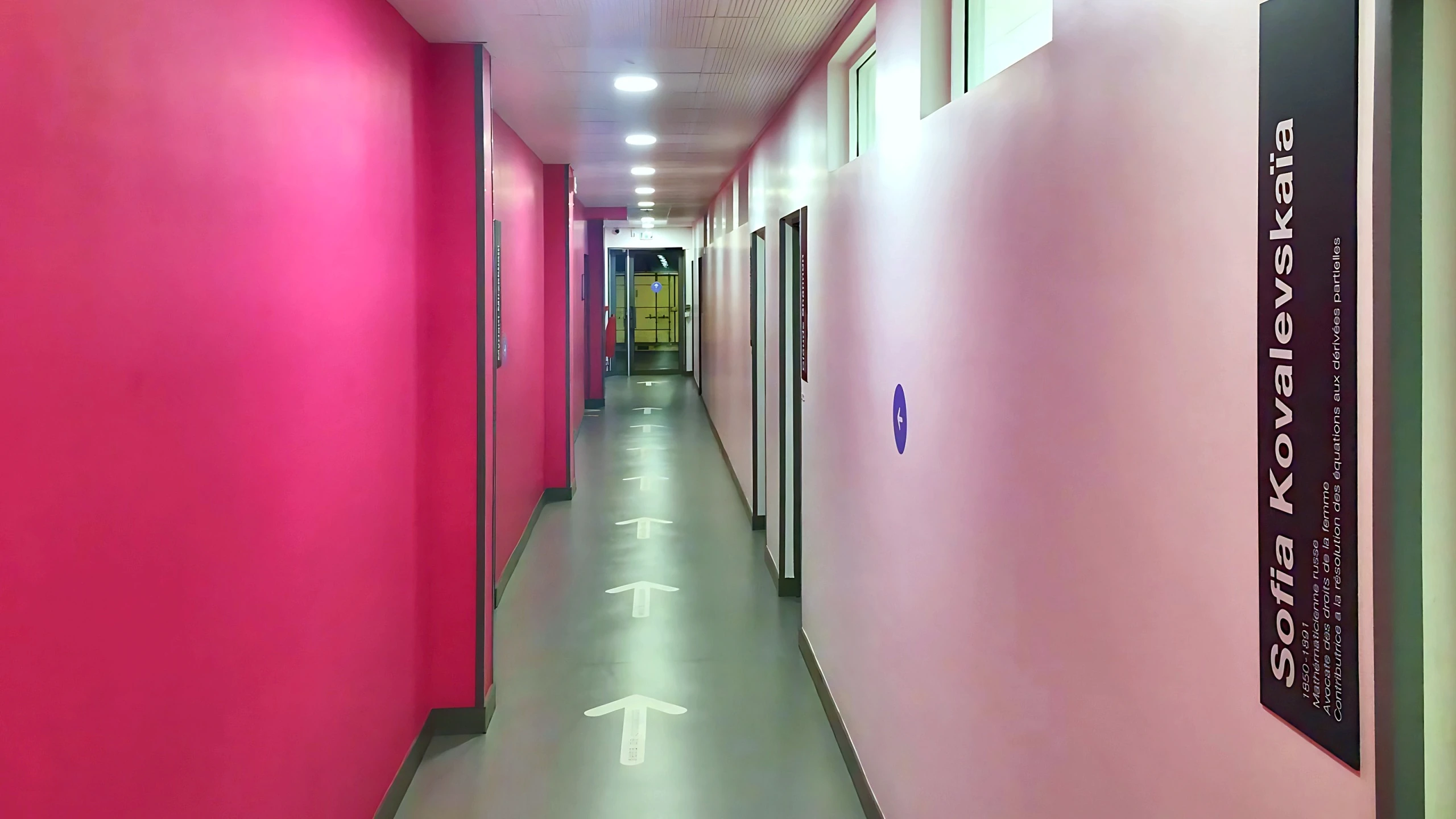
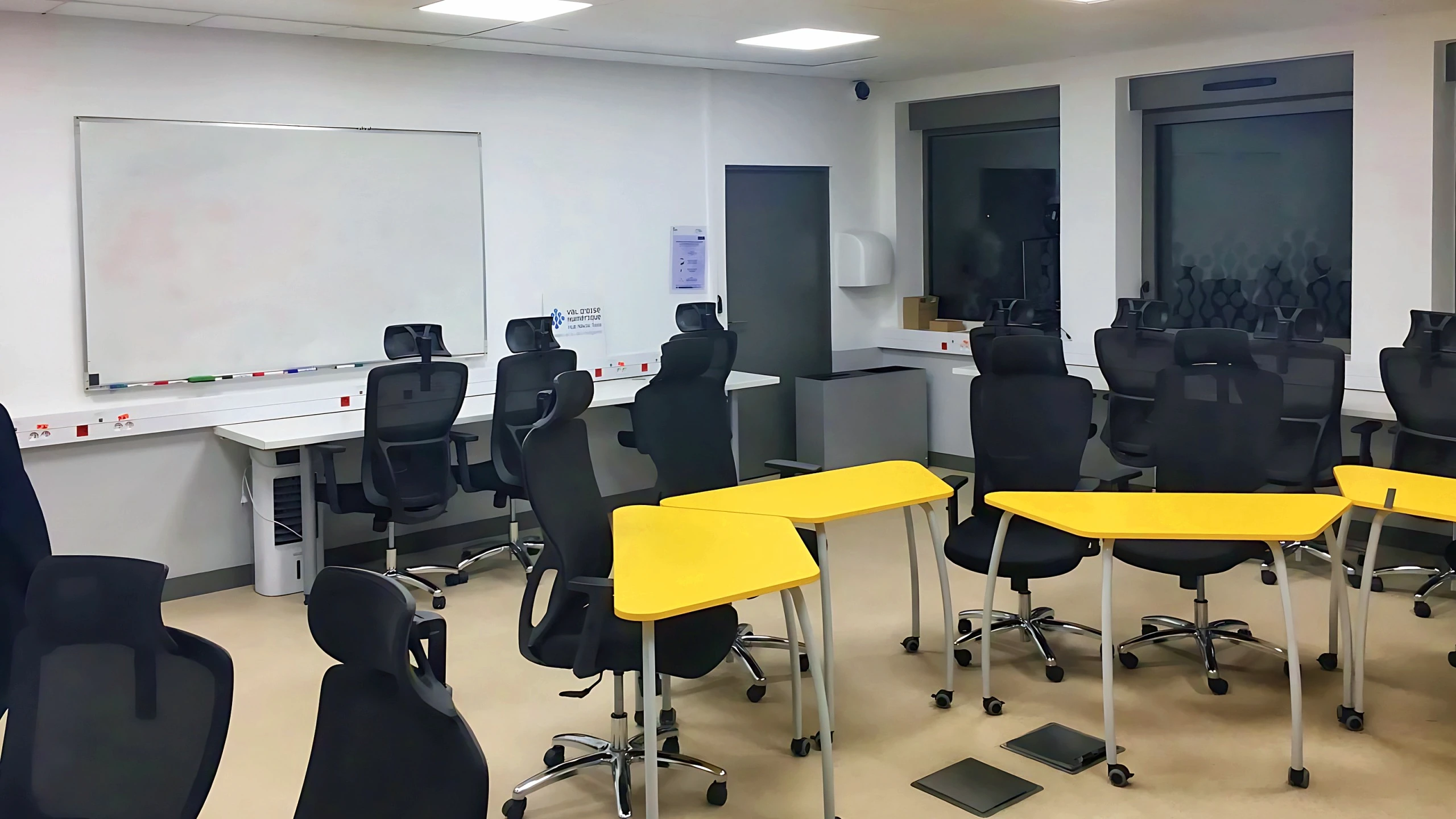
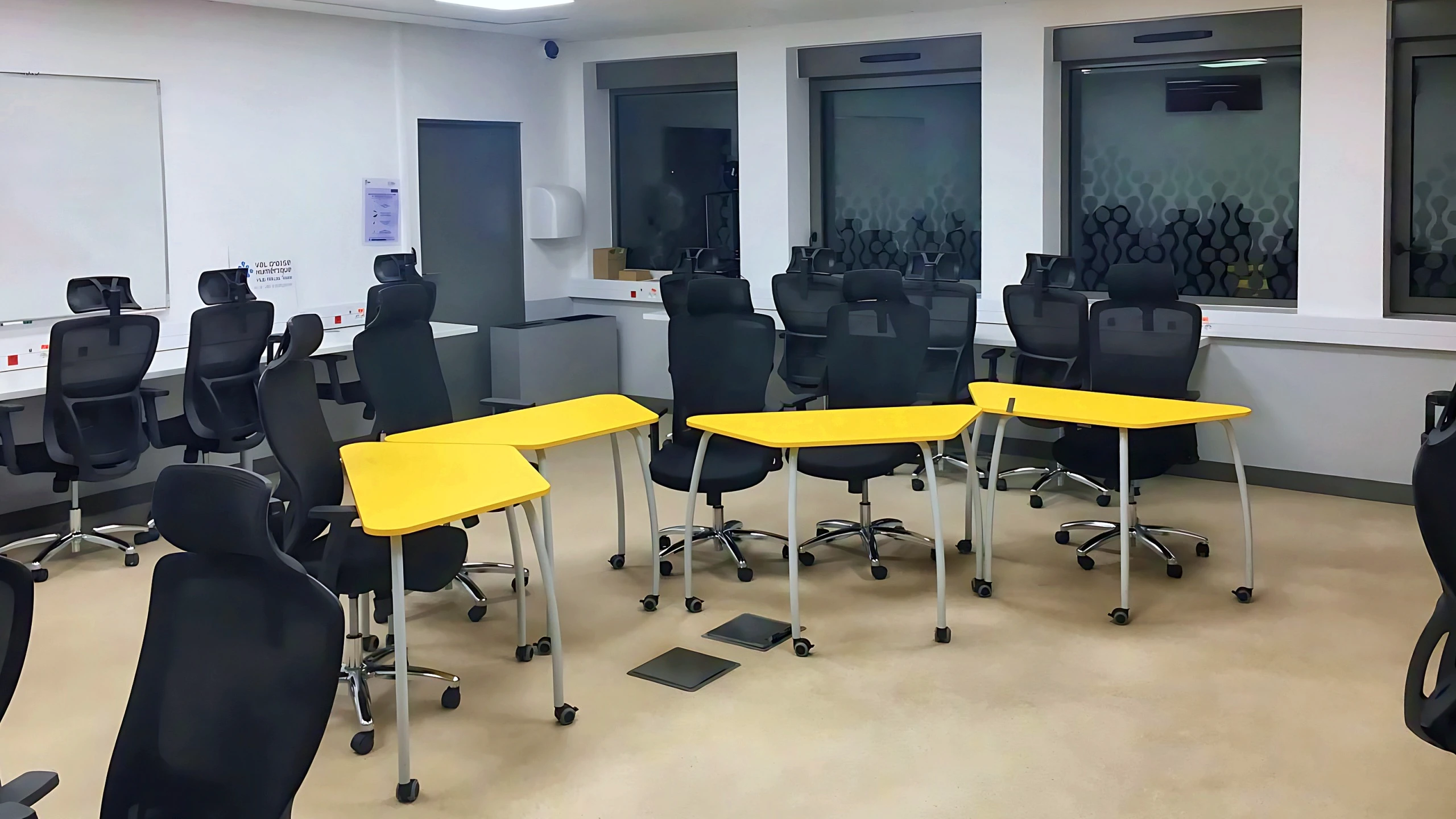
AI2, the Applied Institute of Artificial Intelligence, teaches every programme 100% in English on its campus in Écouen, 22 minutes from Paris Gare du Nord.
Most French universities start only in September. AI2 runs three intakes in 2027, in February, May and September, for its Bachelor in Applied AI, its BSc final years and its three MSc programmes in applied AI and data science, cybersecurity and IoT. If your documents are ready now, February or May lets you start months earlier; if you need the full preparation time, September follows the classic calendar.
| AI2 intake | Dates to plan around | Programmes |
|---|---|---|
| February 2027 | Priority deadline 30 November 2026; complete visa file by 30 November; enrolment and deposit by 15 December 2026 | Bachelor, BSc final years, MSc; the 11-month Fast-Track starts only in February |
| May 2027 | Recommended window: November 2026 to February 2027 | Bachelor, BSc final years, MSc |
| September 2027 | Recommended window: January to May 2027 | Bachelor, BSc final years, MSc |
The programmes, fees and qualifications are the same whichever intake you choose. MSc Year 1 costs €12,500, from €10,500 after the conditional AI2 scholarship, and Bachelor Years 1 and 2 cost €9,000 a year. For the February 2027 Fast-Track in data science, tuition is €11,000 for applications submitted before 15 November 2026, then €12,500. Every final year awards the AI2 diploma and prepares a professional certification recognised by the French State and registered in the RNCP, at level 7 (master’s level) for the MSc.
Admission is a file review and an online interview in English, with no GRE, GMAT or French requirement, and AI2 advises starting six to eight months before your intake. Read more about the February and May 2027 intakes, compare all fees on the tuition page, and check the steps AI2 supports on the visa guidance page. To weigh the MSc options, start with our guide to the English-taught master’s in AI in France; for shorter formats, see AI courses in Paris. Your full living budget is broken down in the cost of studying AI in France.
📘 Related guide: One-year masters in France: options, visa rules and the 11-month Fast-Track.
Frequently asked questions
When should I apply for the September 2027 intake in France?
Shortlist programmes and prepare documents in late 2026, then apply between January and April 2027. Leave May and June for Campus France and the visa: in India, the visa file must be in at least three months before the intake.
Is it too late to apply for September 2027?
No. In late October 2026 you have time for the full process if you start now. The pressure comes in spring, when admission decisions, Campus France interviews and visa appointments all fall in the same few months.
How much money do I need to show for a French student visa?
At least €877.50 a month, or about €10,530 for twelve months, according to Service-Public. Tuition comes on top. You can show your own funds, a sponsor with proof of transfers, or a scholarship letter.
Do I need Campus France for the September intake?
If you live in one of the 75 countries and territories using the Études en France procedure, yes: you follow it until the visa appointment. Elsewhere, you apply for the visa on France-Visas after your admission.
When does CROUS housing open for international students?
Students who are not on an exchange programme apply on the CROUS housing platform. In 2026 it opened on 7 July, according to Campus France. Rooms are scarce, so plan a private or temporary option as well.
What do I do after arriving in France in September?
Validate your long-stay visa online within three months and pay the €100 tax, then open a bank account with your ID, proof of address and enrolment certificate. The visa works as your residence permit for the first year.
Does AI2 have intakes other than September?
Yes. AI2 runs three intakes in 2027: February, May and September. For February, the priority deadline is 30 November 2026; for May, the recommended window is November 2026 to February 2027.
Sources consulted on 27 October 2026: Campus France: Études en France procedure and 2027/2028 calendars (updated 28 September 2026) · Campus France India: preparing the visa application · Campus France India: Études en France fee · Campus France India: arrival checklist · Campus France India: preparing your budget · Campus France: where to live during your stay (updated 26 June 2026) · Visale, Action Logement rental guarantee · Service-Public: student visa, resources and validation (verified 1 August 2026)
Apply online: admissions replies within two working days, holds an online interview and confirms your intake, entry year and tuition in writing.