

Analyst, data scientist or AI engineer? In France, the word “analytics” covers programmes that lead to quite different jobs. Before comparing fees and schools, decide which role you are training for: the right master’s follows from that choice.
Data analytics, business analytics, data science or AI: what is the difference?
The labels overlap, but the daily work does not. Data analytics describes and explains what happened, mostly with SQL, statistics and dashboards. Business analytics applies the same tools to management questions such as pricing, marketing or supply chains, and is often taught in business schools. Data science adds predictive modelling and machine learning. AI engineering goes further, into deep learning, language models and deploying models in production.
| Role | What you do | Core tools | Master’s that fits |
|---|---|---|---|
| Data analyst | Cleans data, builds reports and answers business questions | SQL, Excel, Python, Power BI or Tableau | Data analytics or statistics |
| Business or BI analyst | Defines KPIs and dashboards with managers, links data to strategy | BI tools, data modelling, storytelling | Business analytics |
| Data scientist | Builds predictive models and tests hypotheses | Python, statistics, machine learning | Data science |
| Machine-learning or AI engineer | Takes models to production and builds AI applications | Python, deep learning, MLOps, cloud | AI or data science |
| Data engineer | Builds the pipelines and warehouses everyone else relies on | SQL, Airflow, cloud, Spark or dbt | Data engineering or computer science |
A useful test: if you enjoy explaining numbers to people and want to influence decisions quickly, an analytics master’s fits. If you want to build models or products that run on their own, look at data science or AI programmes. Our comparison of data science and artificial intelligence goes deeper into that second choice.
Where can you study data analytics in France in English?
Three families of institutions teach it, with different emphases.
Public universities
Business schools
Private and applied institutes
Campus France India counts more than 1,700 programmes taught in English in France, across all subjects, in its official catalogue. For analytics, search under several keywords: “data analytics”, “business analytics”, “data science”, “statistics” and “information systems” all return relevant programmes, and the title alone rarely tells you how technical the content is. Read the module list: a programme with machine learning, Python and SQL in the first semester is closer to data science than one centred on Excel and reporting.
What are the entry requirements?
Requirements are set programme by programme, but the same four checks come up almost everywhere.
- 1A bachelor’s degree with quantitative contentMathematics, statistics, economics, engineering, computer science or business with strong quantitative modules. A three-year degree usually leads to a two-year master’s; a four-year degree can shorten the route at some institutions.
- 2Evidence of technical basicsSQL, a spreadsheet tool and some Python or R. Projects, internships and online certificates help when your transcript is light on programming.
- 3English at around B2Shown by IELTS, TOEFL or, at some schools, a medium-of-instruction letter from your university.
- 4Admission tests and interviewSome business-school programmes ask for a GMAT or GRE score, others do not. Many programmes hold an interview, sometimes with a technical exercise.
How much does a data analytics master’s in France cost?
Public universities charge nationally set fees: for the 2026 to 2027 academic year, Campus France lists €3,950 a year for a master’s for students from outside the EU, EEA and Switzerland. Business schools and private institutes set their own fees, which are higher but often include career services, certifications and company projects. Whatever the tuition, non-EU students must show at least €877.50 a month of resources to obtain the long-stay student visa.
| Item | Amount | Source |
|---|---|---|
| Public university master’s, non-EU | €3,950 a year | Campus France, 2026 to 2027 |
| Public university master’s, EU | €255 a year | Campus France, 2026 to 2027 |
| Business school or private institute | Set by the institution | Programme fee page |
| Resources to prove for the visa | €877.50 a month | Service-Public, verified 1 August 2026 |
| Paid work allowed on a student visa | 964 hours a year | Service-Public |
| Minimum internship stipend, over two months | €4.50 an hour | Service Public Entreprendre, 1 January 2026 |
Two figures soften the budget. The student visa allows up to 964 hours of paid work a year without a separate authorisation, and most analytics master’s include an internship, which must be paid at least €4.50 an hour when it lasts more than two months. For a full monthly budget in the Paris region, see our guide to the AI2 tuition and living-cost figures.
What jobs and salaries can you expect after the master’s?
Analytics graduates are hired well beyond the tech sector: retail, banking, insurance, energy, logistics and industry all run BI and analytics teams. The first job title is often data analyst, BI analyst or business analyst, and many analysts move into data science or analytics engineering after two or three years by adding machine learning and pipeline skills.
For salary benchmarks, AI2’s MSc programme page, citing salary guides including the Hays France guide 2026, indicates about €40,000 to €47,000 gross a year for a data analyst or BI profile, and €47,000 to €52,000 for a data scientist. Actual offers depend on your profile, experience and city. Our page on the data scientist salary in France breaks the figures down further.
To stay and work after graduating, Service-Public describes a one-year job-search permit for graduates holding a master’s or an equivalent qualification from France, followed by a work permit: a job related to your studies paid at least €2,800.53 gross a month, or a Talent permit from €39,582 gross a year (verified 1 June 2026). The préfecture decides each case.
Which kind of master’s should you choose?
If you are still unsure, compare the analytics-heavy and AI-heavy curricula side by side, and look at what past students did for their internships. That is the clearest signal of where a programme leads. Our review of data science master’s near Paris in English applies the same method to data science programmes.
Where does AI2 fit for data analytics?
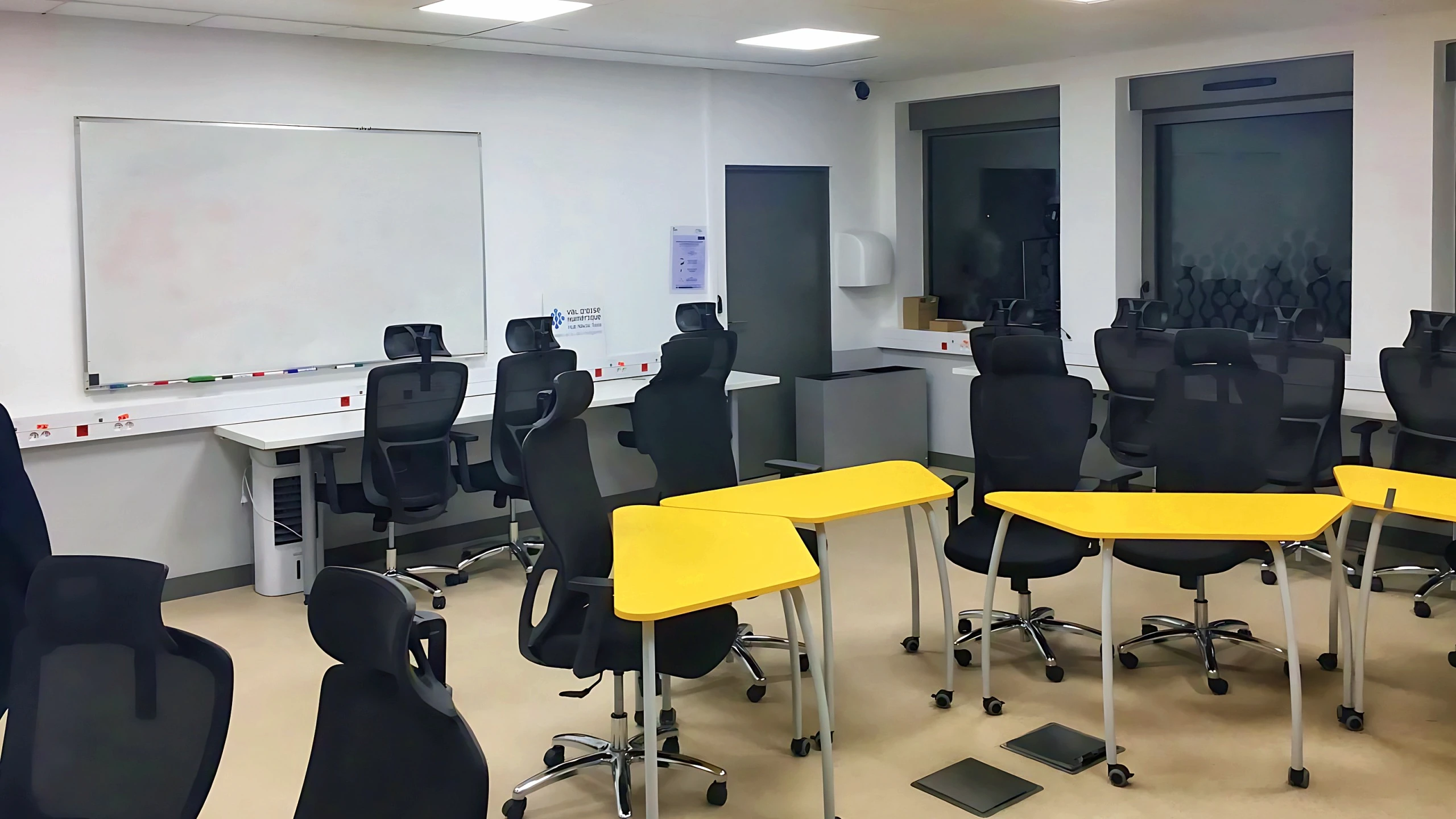
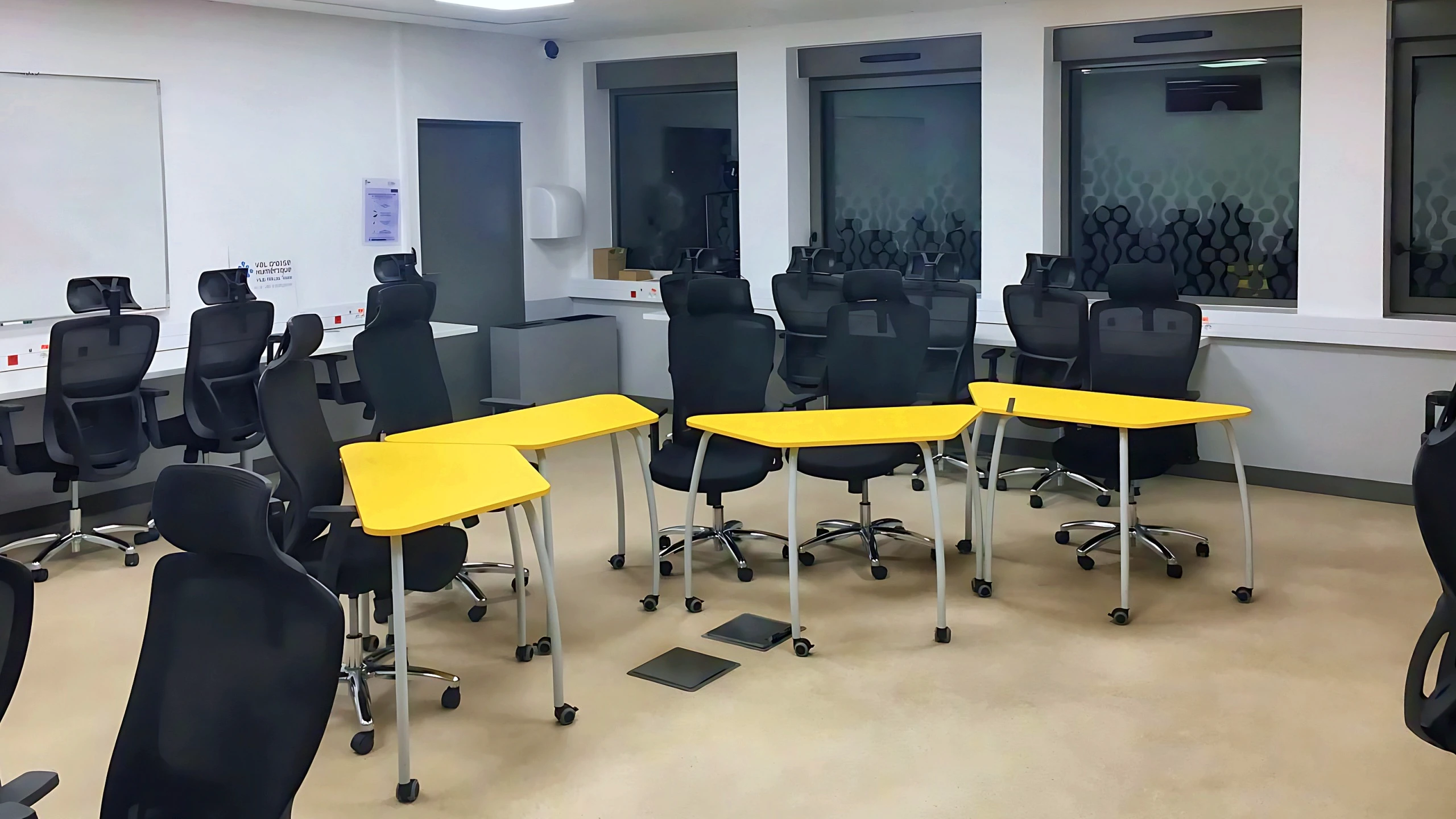
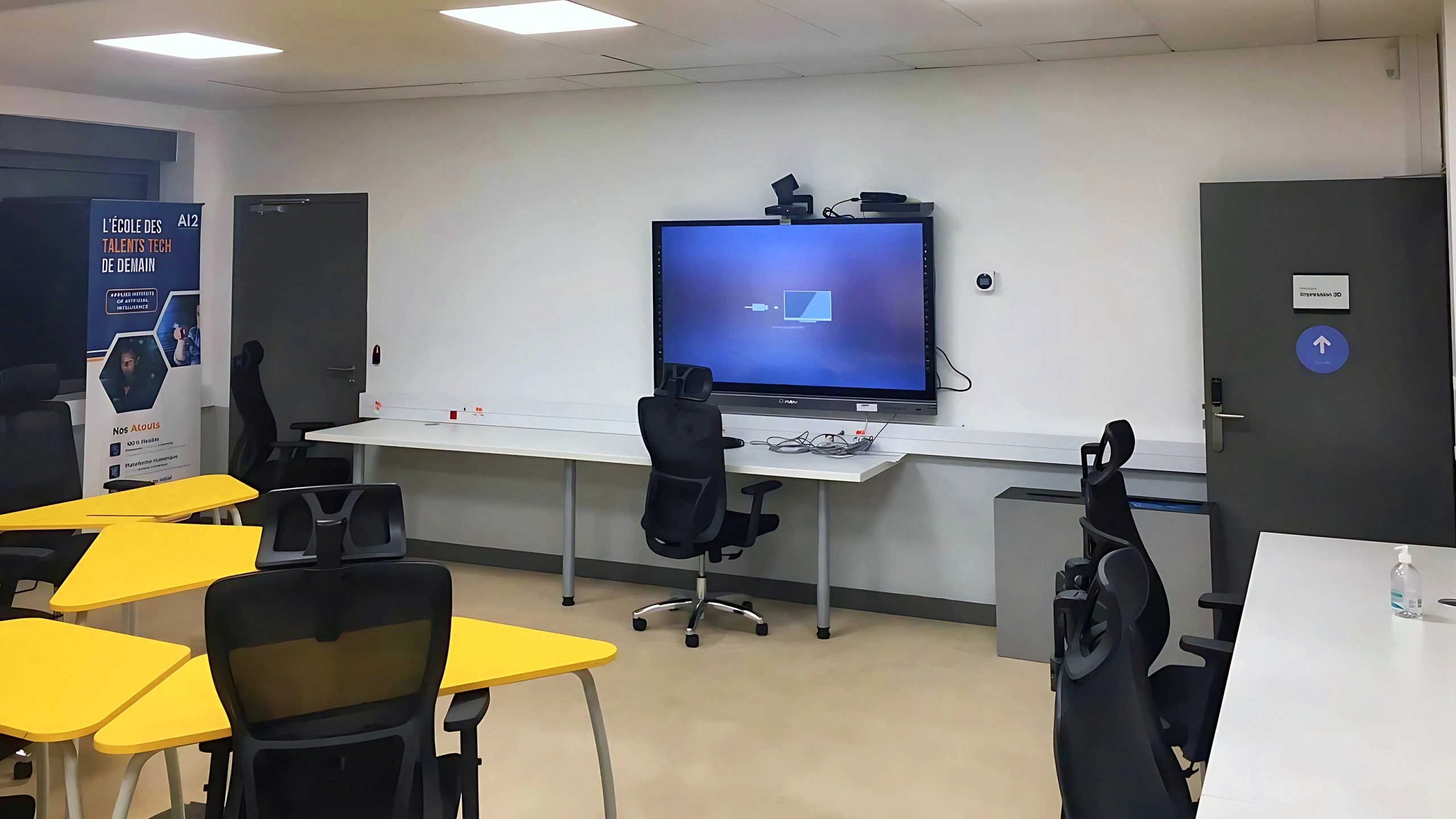
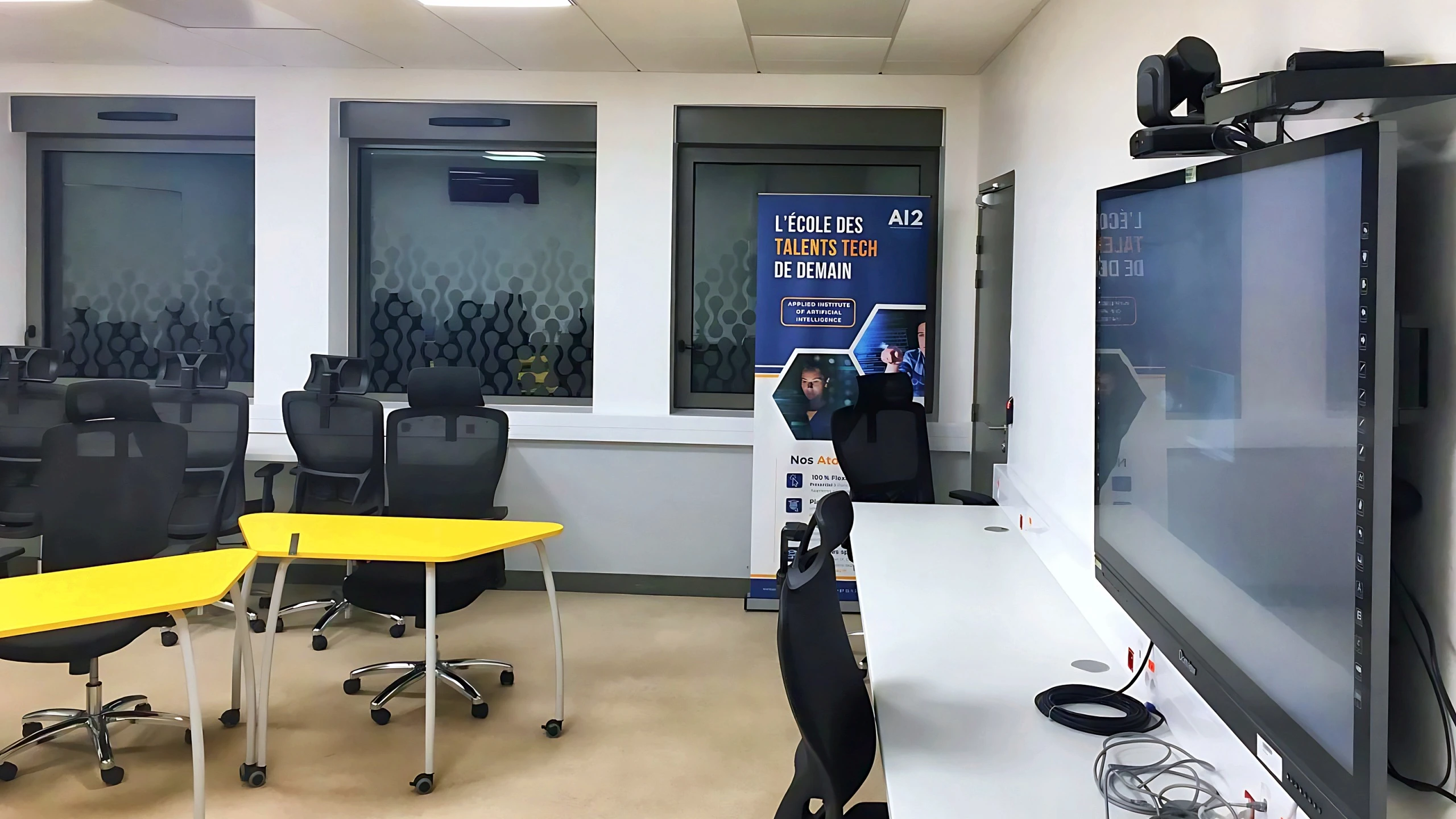
AI2, the Applied Institute of Artificial Intelligence, teaches every programme 100% in English on its campus in Écouen, 22 minutes from Paris Gare du Nord.
AI2 approaches analytics from the broader end. Its MSc Applied AI and Data Science gives you the analyst toolkit and the AI layer on top, which is the third profile above. Year 1 includes SQL and databases (35 hours), data visualisation and storytelling with Tableau (35 hours), machine learning and data engineering. Year 2 adds 84 hours of business data (BI, KPIs, data storytelling for executives) alongside NLP, computer vision, generative AI and MLOps, then a six-month internship. The MSc prepares RNCP39978, a level 7 professional certification recognised by the French State, together with the AI2 MSc diploma.
If you do not hold a bachelor’s yet, the BSc Data Analytics & Applied AI (Industry 4.0) is a one-year final year for students with two years of higher education. It focuses on production and operations data: SQL and time-series databases, ETL pipelines, Power BI and Grafana dashboards, and AI anomaly detection, followed by a company placement. It prepares RNCP41370, a level 6 title of the French Ministry of Labour for which AI2 is an approved centre, and graduates can apply to continue to the AI2 MSc.
| Programme | Entry with | Tuition | Intakes |
|---|---|---|---|
| MSc Applied AI and Data Science, 2 years | Three-year bachelor’s in computing, maths, engineering or science | Year 1 €12,500 (from €10,500 after scholarship), Year 2 €13,000 | February, May, September 2027 |
| MSc, direct entry, 18 months | Related four- or five-year degree | €13,000 (from €11,300) | February, May, September 2027 |
| MSc Fast-Track, 11 months | Accredited four-year B.Tech or BE, or a master’s | €11,000 before 15 November 2026, then €12,500 | February 2027 only |
| BSc Data Analytics & Applied AI, final year | Two years of higher education (HND, BTEC Level 5, BTS, BSc Years 1 and 2) | €9,900 (AI2 scholarship possible) | February, May, September 2027 |
Selection is a file review and an online interview; GRE and GMAT are not required, French is not required, and English is expected at B2 (IELTS 6.0, TOEFL iBT 72 or equivalent). Every international candidate is assessed automatically for the AI2 scholarship. For the February 2027 intake, the priority deadline is 30 November 2026. Shorter formats are compared in our guide to AI courses in Paris.
📘 Related guide: How to become a data scientist in France: skills, degrees and first job.
📘 Related guide: Data science jobs in France for international students: roles, skills and permits.
📘 Related guide: Bachelor in data science in France in English: what you study and where it leads.
Frequently asked questions
Can I study a master’s in data analytics in France in English?
Yes. Public universities, business schools and private institutes offer English-taught programmes in data analytics, business analytics and data science. Search several keywords, because similar content is sold under different titles.
What is the difference between data analytics and data science?
Data analytics explains what happened, with SQL, statistics and dashboards. Data science adds predictive models and machine learning. Many jobs mix both, which is why programmes combining analytics and AI are in demand.
How much does a data analytics master’s cost in France?
Public universities charge non-EU students €3,950 a year for a master’s in 2026 to 2027, according to Campus France. Business schools and private institutes set their own fees. The visa also requires €877.50 a month of resources.
Do I need a computer science degree for data analytics?
No. Degrees in mathematics, statistics, economics, engineering or business with quantitative modules are usually accepted. You will need to show basics in SQL and in Python or R, through modules, projects or certificates.
Is GMAT required for business analytics in France?
Some business-school programmes ask for a GMAT or GRE score and others do not, so check each programme. AI2 does not require GRE or GMAT: selection is a file review and an online interview.
What salary can a data analyst expect in France?
AI2’s MSc page, citing salary guides including Hays France 2026, indicates about €40,000 to €47,000 gross a year for a data analyst or BI profile. Offers depend on experience, sector and city.
Can I work in France after a data analytics master’s?
Graduates with a master’s or an equivalent qualification from France can request a one-year job-search permit, then a work permit, under the conditions listed by Service-Public. The préfecture decides each case.
Which AI2 programme suits a future data analyst?
The MSc Applied AI and Data Science, which combines BI and data storytelling with machine learning and generative AI. Without a bachelor’s, the BSc Data Analytics and Applied AI final year is the entry point.
Sources consulted on 27 October 2026: Campus France: tuition fees in France (updated 25 June 2026) · Campus France India: finding the right programme, English-taught catalogue · Campus France: Études en France procedure (updated 28 September 2026) · Service-Public: student visa and resources (verified 1 August 2026) · Service-Public: work for foreign students, 964 hours · Service-Public: job-search permit and work permits (verified 1 June 2026) · Service Public Entreprendre: minimum internship stipend (verified 1 January 2026)
Apply to the MSc Applied AI and Data Science or the BSc Data Analytics and Applied AI: admissions confirms your entry year and tuition in writing.