
Finished a B.Tech, a BCA or a BSc in computer science? France has English-taught master’s options at three kinds of institutions, with different fees, calendars and awards. This guide compares them, checks your eligibility degree by degree, and walks through the cost and the visa before you pick one.
Can you do a master’s in computer science in France in English?
Yes, and the choice is wider than most search results suggest. What changes from one option to the next is not only the language, but who awards the qualification, how long it lasts, what it costs and when it starts. In France, higher education is shared between public universities, engineering schools (part of the “grandes écoles”) and private institutions, and each family recruits international students in its own way.
Public universities
Engineering schools
Private institutes
In practice, English-taught options are easier to find in specialised tracks (data science, AI, cybersecurity, networks, software engineering) than under a general “computer science” label, and public English programmes are selective, so shortlist across at least two families. Campus France, the French agency for international students, publishes a searchable catalogue of programmes taught in English: Campus France India counts more than 1,700 of them across all subjects, and it is the best place to start a shortlist.
How do the three options compare?
Fees at engineering schools and private institutes vary too much to average: always read the programme’s own fee page.
| Public university master’s | Engineering-school MSc | Private institute (RNCP level 7) | |
|---|---|---|---|
| Who awards it | The university, a national diploma | The school, often an MSc label | The institute, plus an RNCP title |
| Language | Mostly French, some English tracks | English for MSc formats | Often 100% English |
| Usual length | 2 years (M1 + M2) | Varies by school | Varies by institute |
| Non-EU tuition | €3,950 a year (2026 to 2027) | Set by each school | Set by each institute |
| Intakes | Mainly September | Mainly September, some in spring | Often several a year |
| Selection | Academic file, sometimes interview | File and interview | File and interview |
Master, MSc, MS or RNCP level 7: what will your degree be called?
Indian students often search for an “MS in computer science”, the American name. France uses several labels, and knowing them helps you read programme pages correctly.
- Master (university master’s degree): the two-year national diploma of French universities, in the bachelor, master, doctorate system used across Europe.
- MSc: a format used by engineering and business schools for international, often English-taught programmes. Service-Public names the MSc labelled by the Conférence des grandes écoles among the qualifications that open the post-study job-search permit.
- Mastère Spécialisé: a specialisation format of the grandes écoles, also named by Service-Public for that permit.
- RNCP level 7 title: a professional certification registered by France Compétences in the national register and recognised by the French State. Level 7 is master’s level, EQF 7 on the European scale.
For your career, the label matters less than three questions: is it taught entirely in English, does it include an internship in France, and is the qualification at master’s level for residence purposes? Ask each school in writing.
Am I eligible after a B.Tech, BCA or BSc in computer science?
Usually yes. The question is not whether you can apply but which year you enter.
France and India signed an agreement on the mutual recognition of academic qualifications in 2018, in force since 2019. According to Campus France India, it treats an Indian bachelor’s degree as comparable to the French licence and an Indian master’s as comparable to a French master’s, for degrees from recognised institutions. In practice, each French programme still reviews your transcripts and decides where you fit.
| Your degree | Recognised as | Typical entry in France | What to prepare |
|---|---|---|---|
| BCA (3 years) | Bachelor’s level | First year of a two-year master’s or MSc | Strengthen maths and programming evidence: projects, GitHub, online courses |
| BSc Computer Science (3 years) | Bachelor’s level | First year of a two-year master’s or MSc | Same as BCA; statistics modules help for data tracks |
| B.Tech or BE in CSE or IT (4 years) | Bachelor’s level, one more year of study | First year, or a shorter format such as a direct second year, depending on the school | Send the full syllabus: credits are mapped module by module |
| MCA or M.Tech | Master’s level | Second year, a specialised one-year format, or a doctorate | Check that the programme does not repeat what you have done |
Marks and English level
There is no national cut-off for CGPA: each programme sets its own bar, and in applied programmes a strong project portfolio carries real weight. Many schools ask for an English level around B2, shown by IELTS, TOEFL or, for some, a medium-of-instruction letter from your university. If your degree was taught in English, read our guide to studying in France without IELTS before booking a test.
How much does a computer science master’s in France cost?
Tuition at public universities is low by international standards because the State funds most of the real cost. For 2026 to 2027, Campus France lists €3,950 a year for a master’s for students from outside the EU, EEA and Switzerland, against €255 for EU students. Engineering schools and private institutes set their own fees, so compare what is included as well as the price.
| Item | Amount | Source |
|---|---|---|
| Tuition, public master’s (non-EU) | €3,950 a year | Campus France, 2026 to 2027 |
| Tuition, engineering school or private institute | Set by the institution | Programme fee page |
| Resources to prove for the visa | €877.50 a month, about €10,530 a year | Service-Public, verified 1 August 2026 |
| Études en France fee, India | INR 20,000 | Campus France India, from 1 August 2026 |
| VLS-TS validation tax after arrival | €100 | Service-Public, verified 1 August 2026 |
| CROUS student residence | about €450 a month in Paris, €350 elsewhere | Campus France, 26 June 2026 |
| Private studio | at least €800 a month in Paris | Campus France, 26 June 2026 |
The figure that shapes your visa file is the resources requirement: at least €877.50 a month for the length of your stay, shown by a bank certificate, a sponsor’s attestation with proof of income, or a scholarship letter. Tuition comes on top. Housing is the biggest living cost in the Paris region, which is why Campus France advises reserving at least temporary accommodation before you travel.
How does the student visa work for Indian students?
India is one of the 75 countries and territories where Campus France runs the “Études en France” procedure. For a master’s, you follow it all the way to the visa, whichever type of institution admits you.
- 1Open your Études en France fileCreate an account on the platform, fill in your academic records, language skills, CV and statement of purpose, and upload your documents.
- 2Validation and feeCampus France reviews the file and asks for corrections if needed. Once it is validated, you pay the fee, INR 20,000 since 1 August 2026, through the official link only.
- 3Academic interviewYou explain your study project and bring the originals of your documents. After the interview you receive an automated email allowing you to book the visa appointment.
- 4Visa application and biometricsYou complete the long-stay visa form on France-Visas and attend a VFS centre in person to register your biometric data.
- 5Validate on arrivalWithin three months of arriving, you validate your long-stay visa online and pay the €100 tax. The visa then works as your residence permit for the first year.
Can you work during and after your master’s?
During your studies, the student visa allows paid work of up to 964 hours a year, 60% of the legal working time, without a separate work authorisation (Service-Public). Most computer science master’s also include an internship: when it lasts more than two months, French law requires a minimum stipend of €4.50 an hour (Service Public Entreprendre, verified 1 January 2026).
After graduation, a holder of a master’s or an equivalent qualification obtained in France can request a one-year job-search or business-creation permit. A job related to your studies paid at least €2,800.53 gross a month, or a Talent permit from €39,582 gross a year, then lets you stay on as an employee (Service-Public, verified 1 June 2026). Campus France India also describes a bilateral arrangement that lets Indian graduates extend their stay by up to 24 months after their studies, as a 12-month visa renewable once.
When should you apply?
Public universities start almost all their master’s programmes in September, and each programme publishes its own application window, often several months before the start. Engineering schools follow a similar calendar, sometimes with several admission rounds. Private institutes are more flexible and often open more than one intake a year. Whatever you choose, plan six to eight months between your first application and your flight: admission, the Campus France file, the interview and the visa each take time, and appointment slots fill up before the September rush.
Where does AI2 fit for a computer science graduate?
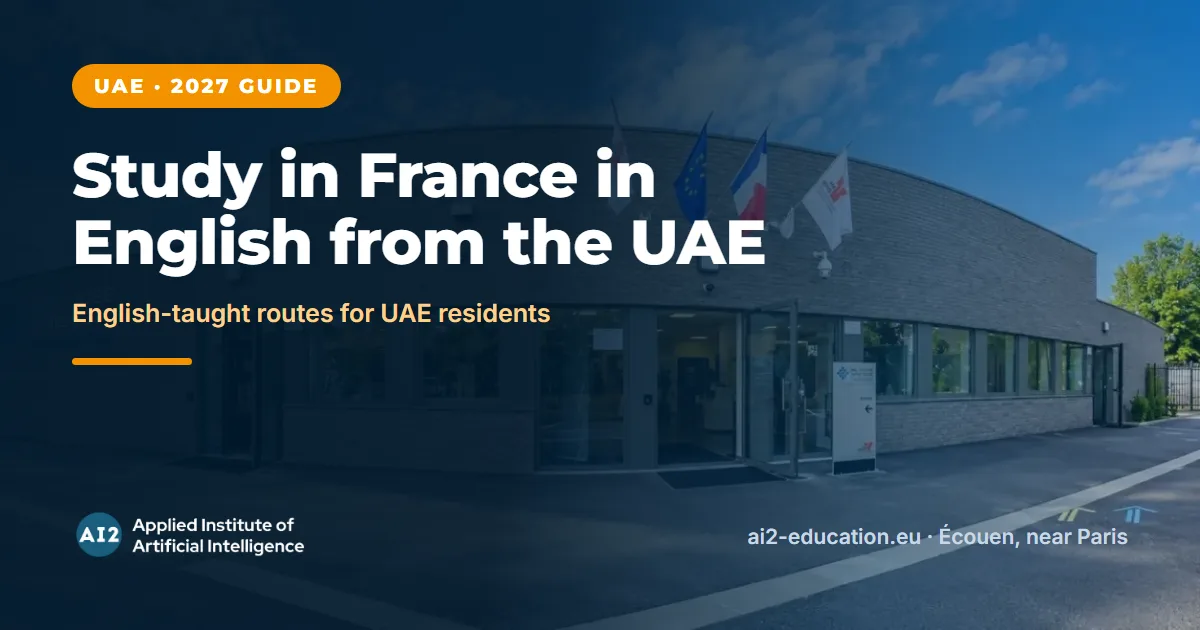
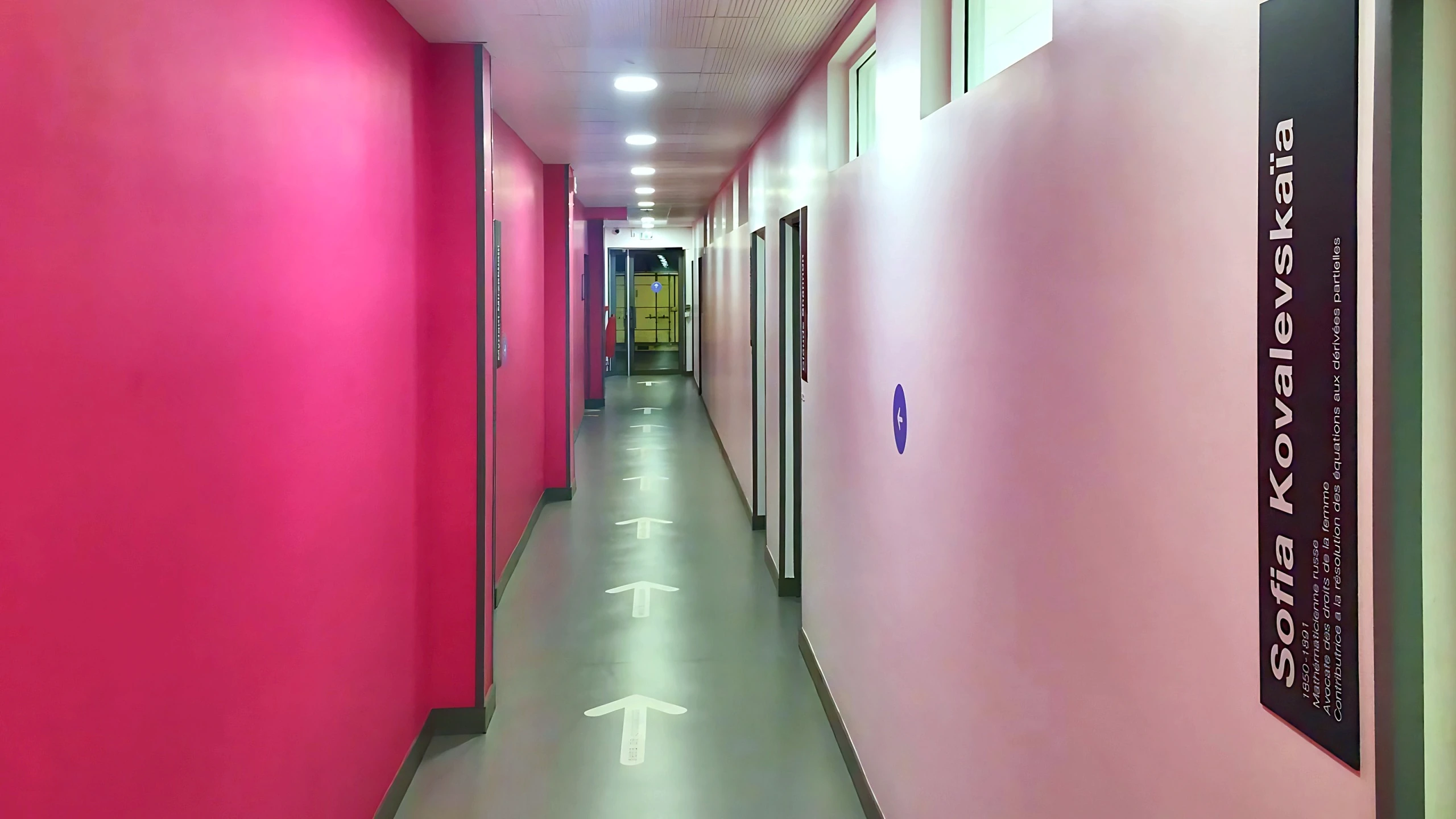
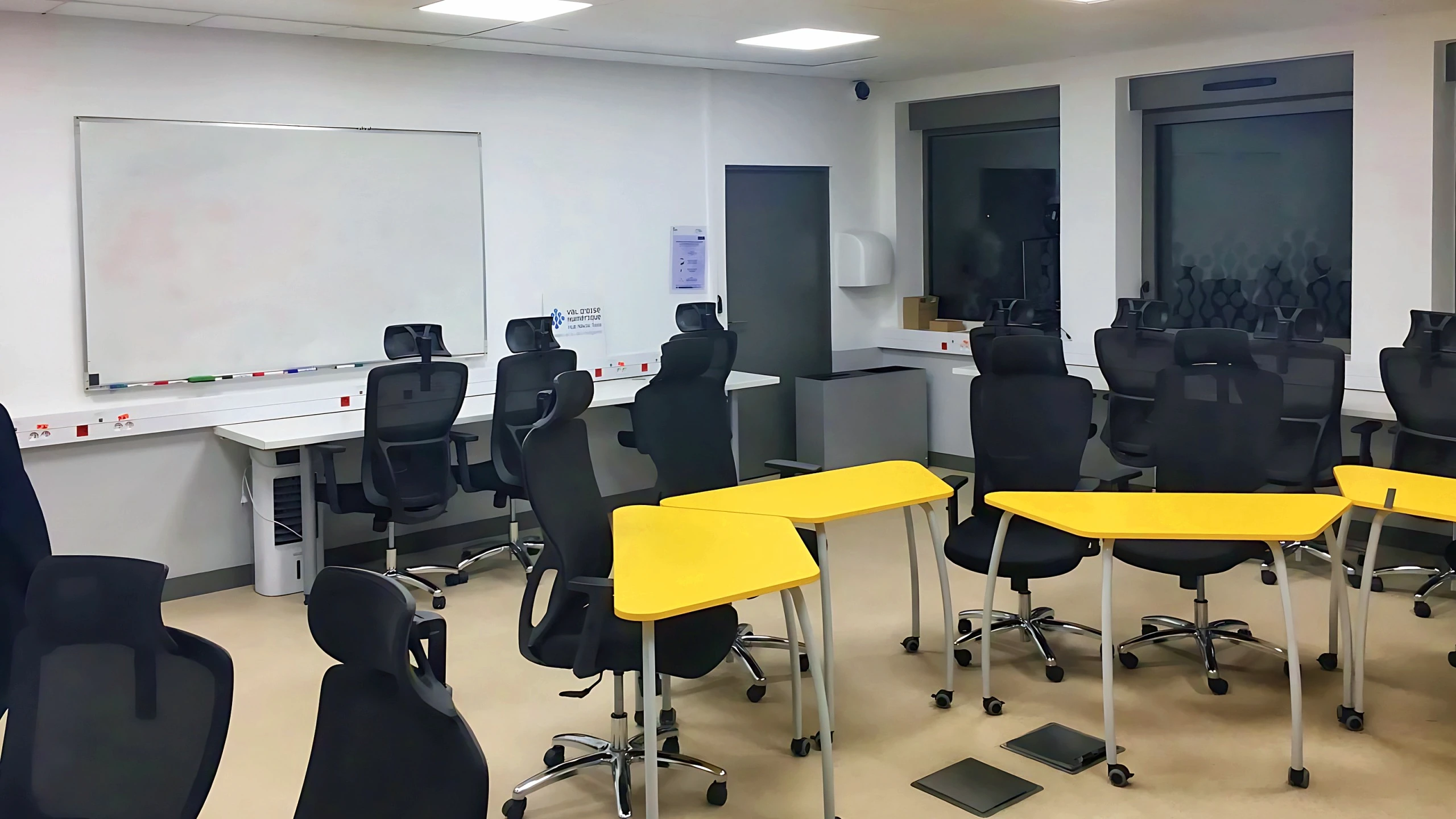
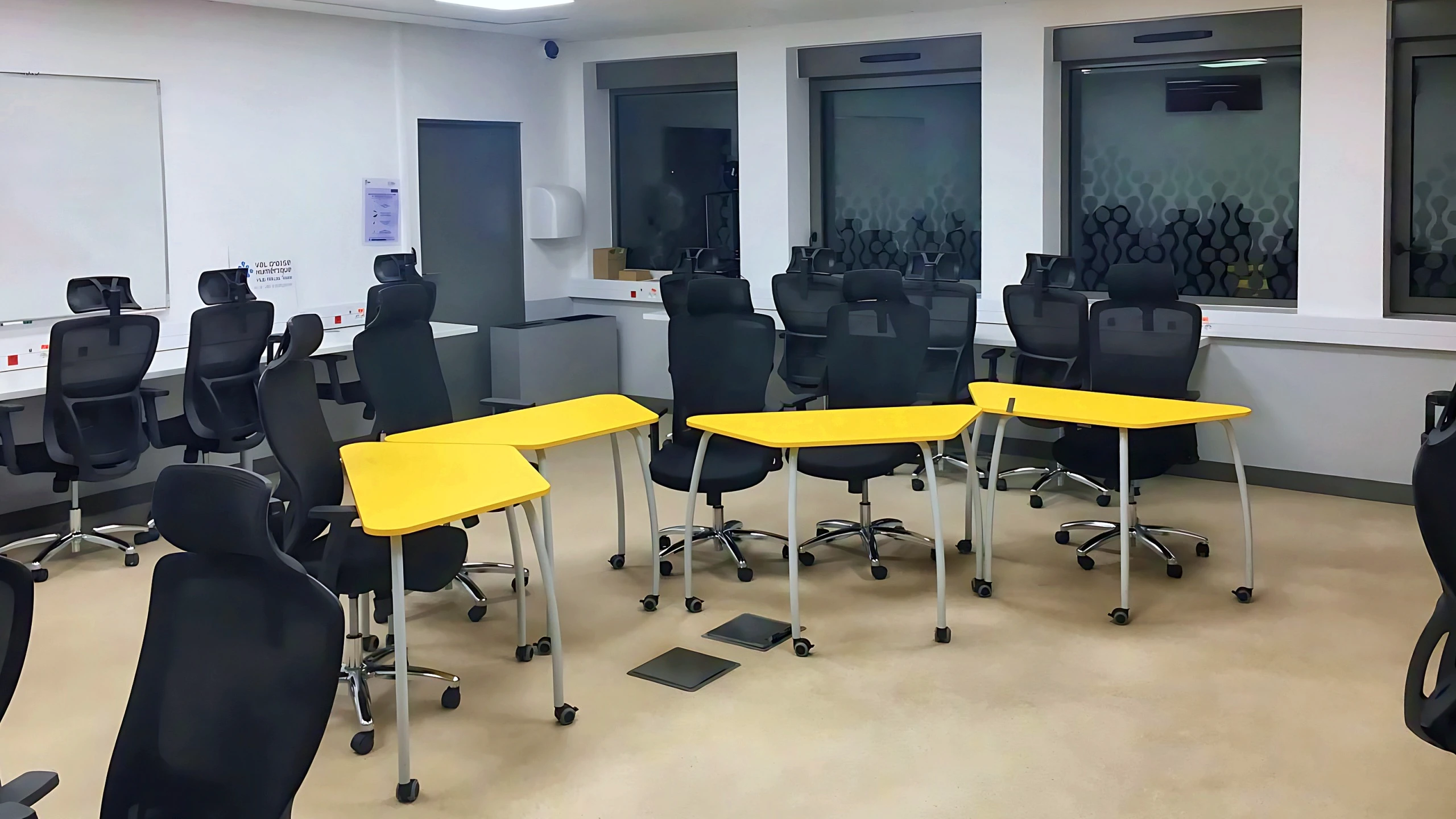
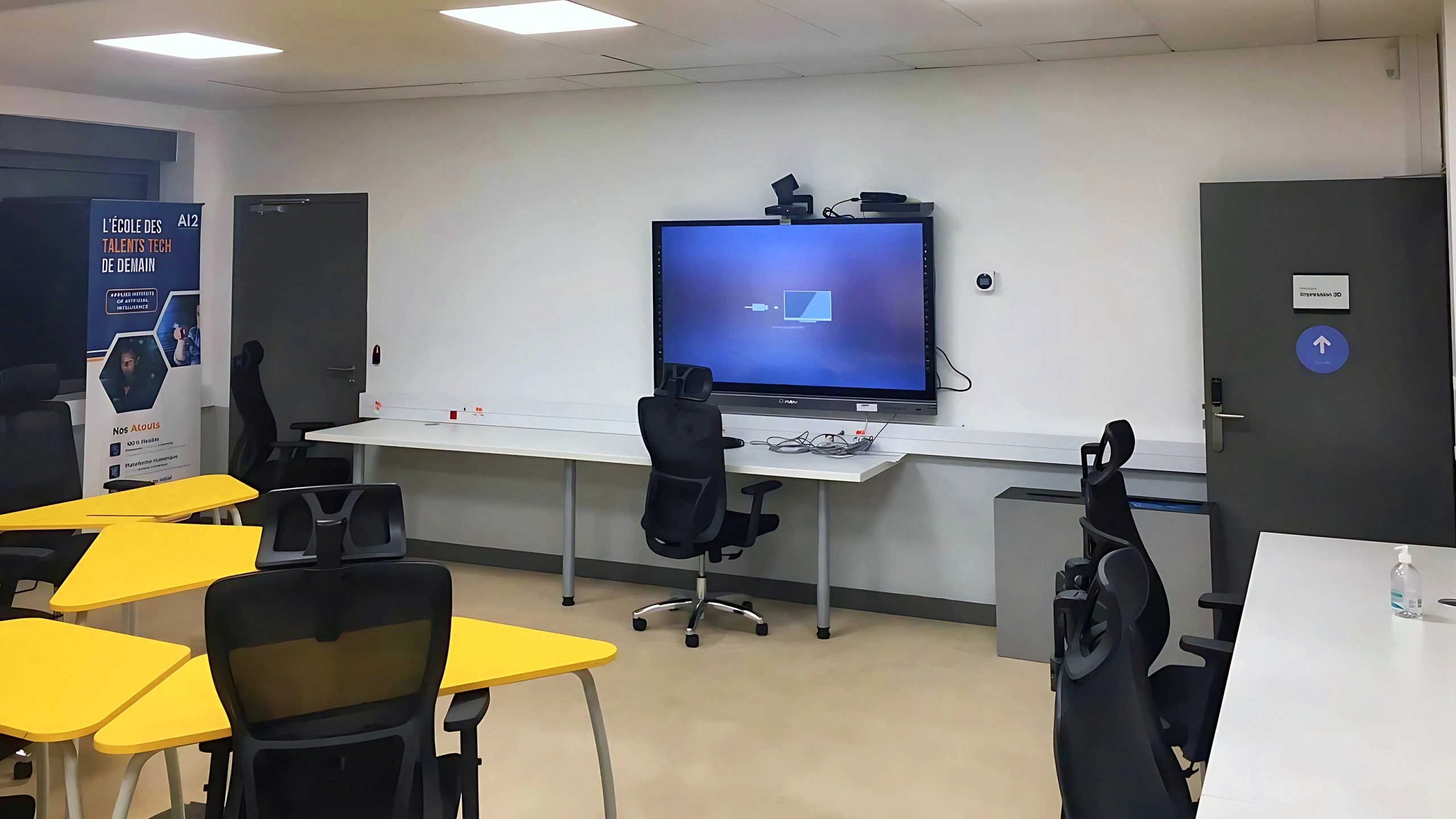
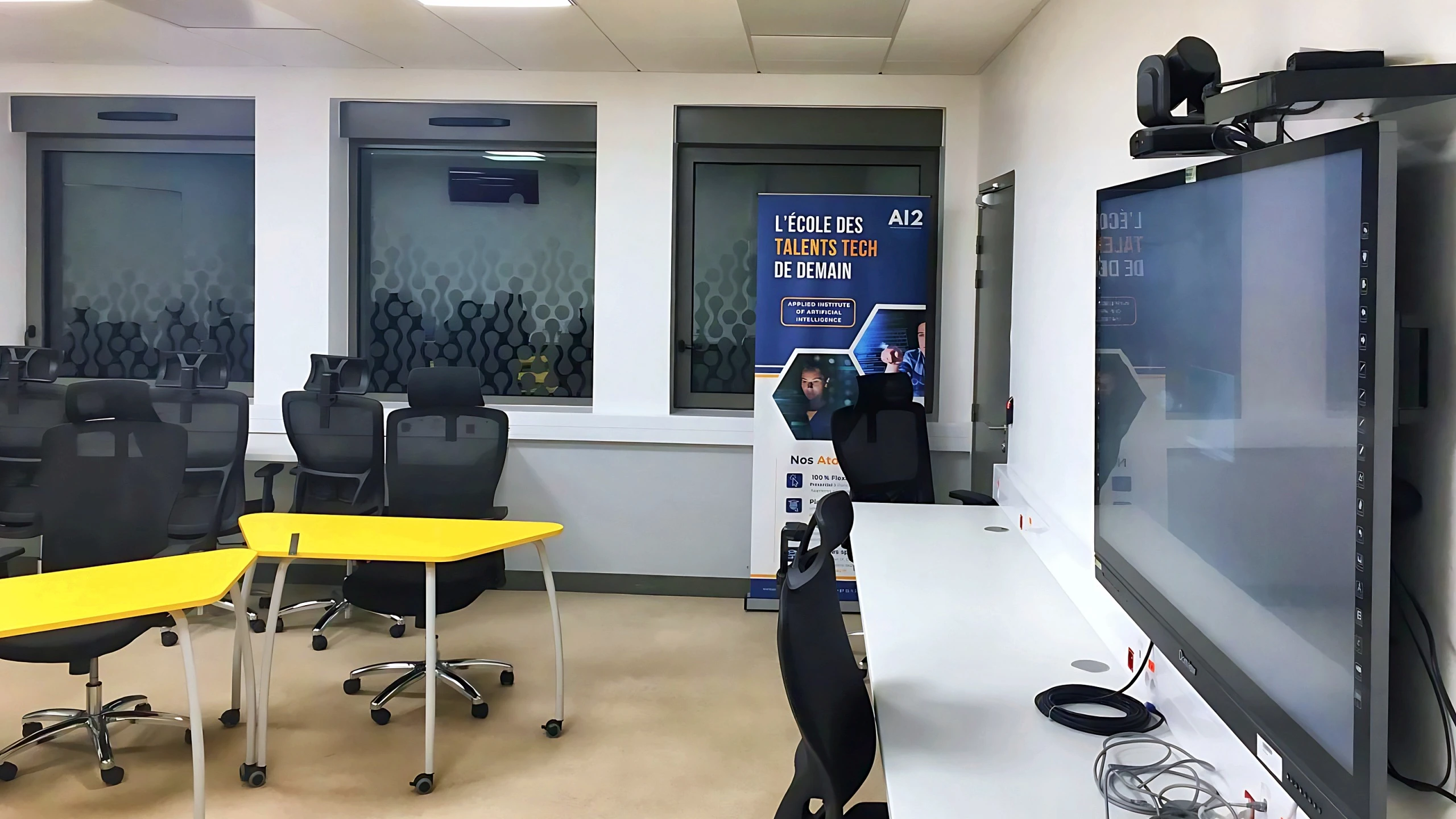
AI2, the Applied Institute of Artificial Intelligence, is a private institute in the third family above. Its campus is in Écouen, 22 minutes from Paris Gare du Nord by train, and every programme is taught 100% in English.
AI2’s three master’s programmes are built for graduates who can already code and want to specialise. All three share an applied AI first year (Python, SQL, machine learning, deep learning, data engineering, cloud), then branch into a specialisation and end with a six-month internship in a company. Each final year awards the AI2 MSc diploma and prepares a professional certification recognised by the French State and registered in the RNCP at level 7. The certifier of both titles is DATAKOO, AI2’s parent company.
MSc Applied AI and Data Science
MSc Applied AI & Cybersecurity
MSc Applied AI & IoT
| If you hold | Your AI2 route | Tuition | Intakes |
|---|---|---|---|
| BCA or BSc CS (3 years) | MSc, two years | Year 1 €12,500 (from €10,500 after scholarship), Year 2 €13,000 | February, May, September 2027 |
| B.Tech or BE (4 years) | Direct entry into Year 2, 18 months | €13,000 (from €11,300; IoT from €11,800) | February, May, September 2027 |
| Accredited B.Tech or BE, or a master’s | Fast-Track, MSc Applied AI and Data Science, 11 months | €11,000 if you apply before 15 November 2026, then €12,500 | February 2027 only |
Admission is a file review and an online interview that checks Python and SQL foundations. GRE, GMAT and French are not required, and the English level is B2 (IELTS 6.0, TOEFL iBT 72 or equivalent; a medium-of-instruction certificate may support a waiver). Every international candidate is assessed automatically for the AI2 scholarship. For the February 2027 intake, the priority deadline is 30 November 2026; the September 2027 window runs from January to May 2027.
Compare the programmes in detail on the MSc Applied AI and Data Science, MSc Applied AI & Cybersecurity and MSc Applied AI & IoT pages, and see all fees on the tuition page. If you are weighing a full master’s against shorter training, our overview of AI courses in Paris sets out the formats, and B.Tech holders will find the Fast-Track route explained in master’s in France after a B.Tech.
📘 Related guide: Cybersecurity and AI master’s in France, in English: what to study and where it leads.
📘 Related guide: How to become a SOC analyst in France: skills, tools and first job.
📘 Related guide: Data science master’s in Paris in English: programmes, fees and careers.
📘 Related guide: One-year masters in France: options, visa rules and the 11-month Fast-Track.
📘 Related guide: Bachelor in computer science in France in English: programmes, entry and careers.
Frequently asked questions
Can I do a master’s in computer science in France in English?
Yes. Public universities offer a growing number of English-taught tracks, and engineering schools and private institutes run English MSc programmes. English options are most common in specialised fields such as data science, AI, cybersecurity and networks.
How much does an MS in computer science in France cost?
For 2026 to 2027, public universities charge non-EU students €3,950 a year for a master’s, according to Campus France. Engineering schools and private institutes set their own fees. You must also show at least €877.50 a month of resources for the visa.
Is a BCA enough for a master’s in France?
Yes. A three-year BCA or BSc in computer science is recognised at bachelor’s level and usually gives access to the first year of a two-year master’s or MSc. Each programme reviews your transcripts and decides your entry year.
Can a B.Tech graduate do a shorter master’s in France?
Often, yes. A four-year B.Tech or BE includes an extra year of study, so some programmes admit you to a shorter format, such as 18 months or a direct second year, after reviewing your syllabus module by module.
Do I need the GRE for a master’s in France?
Many French programmes do not ask for the GRE, but rules vary by institution, so check each programme. AI2 does not require the GRE or GMAT: selection is a file review and an online interview.
Do Indian students need Campus France for a master’s?
Yes. India is one of the 75 countries and territories using the Études en France procedure, which runs from the application file and academic interview to the visa appointment. The fee is INR 20,000 since 1 August 2026.
Can I work in France after a computer science master’s?
Graduates holding a master’s or an equivalent qualification from France can request a one-year job-search permit, then a work permit. Campus France India also describes a post-study extension of up to 24 months for Indian graduates.
Which AI2 MSc suits a computer science graduate?
All three do: Applied AI and Data Science for machine learning and generative AI, Applied AI and Cybersecurity for security roles, and Applied AI and IoT for connected systems. All are taught in English with a six-month internship.
Interested in connected systems and embedded AI? Read our guide to a master’s in IoT in France.
Sources consulted on 27 October 2026: Campus France: tuition fees in France (updated 25 June 2026) · Campus France: Études en France procedure, 75 countries (updated 28 September 2026) · Campus France India: application and admission procedure · Campus France India: preparing the visa application · Campus France India: Études en France fee · Campus France India: mutual recognition of qualifications · Campus France India: post-study extension · Campus France India: finding the right programme, English-taught catalogue · Campus France: student housing (updated 26 June 2026) · Service-Public: student visa and resources (verified 1 August 2026) · Service-Public: work for foreign students, 964 hours · Service-Public: job-search permit (verified 1 June 2026) · Service Public Entreprendre: minimum internship stipend (verified 1 January 2026)
Send your transcripts and syllabus: the academic team confirms your entry year, format and tuition in writing, then invites you to an online interview.